U.S. Central Command (CENTCOM), the agency overseeing U.S. military operations in the Middle East, announced on 28/4 that its forces boarded the cargo ship Blue Star III in the Arabian Sea. The vessel was suspected of violating a U.S.-imposed blockade by potentially heading to Iran.
Video released by CENTCOM showed service members from the 31st Marine Expeditionary Unit (MEU) deploying by helicopter from the amphibious assault ship USS Tripoli. They then fast-roped onto the Blue Star III and accessed its control room.
CENTCOM stated, "U.S. forces released the vessel after searching it and verifying the ship had no plans to dock in Iran." This incident marks the fourth cargo ship inspected since the U.S. imposed a maritime blockade on Iran, but the first to be released. Previously, at least three ships—the Touska, Tifani, and Majestic X—were seized by U.S. forces.
CENTCOM did not provide a specific reason for suspecting the Blue Star III was Iran-bound. Maritime tracking data indicated the ship had departed Pakistan's Qasim port and was en route to Oman's Sohar port.
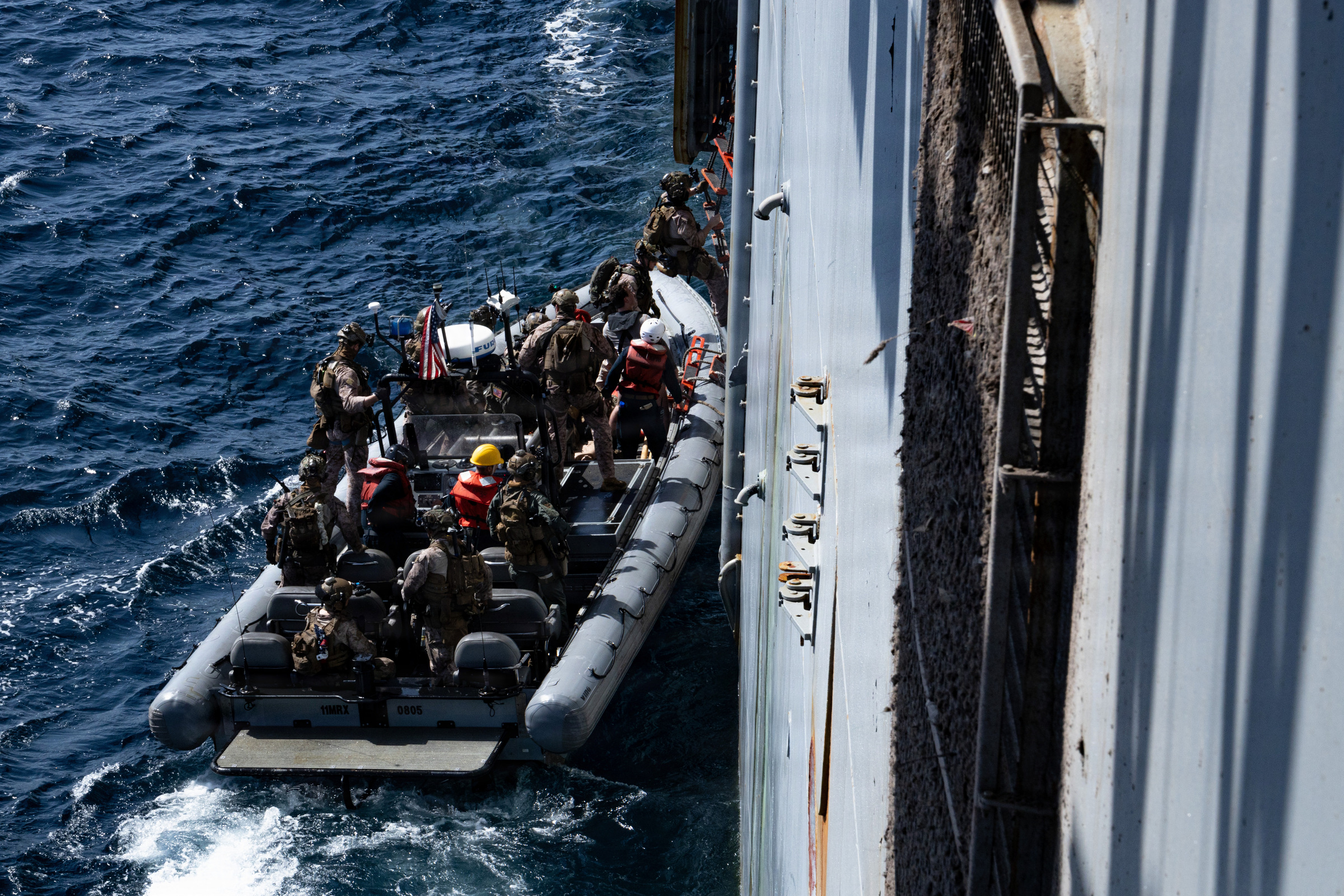 |
U.S. Marines approach a cargo ship in the Arabian Sea by rigid-hull inflatable boat. Photo: CENTCOM. |
CENTCOM reported the blockade operation has forced 39 ships to change course over the past two weeks. The command reiterated that U.S. forces will continue enforcing the blockade across the Middle East, asserting this operation has "cut off all two-way trade with Iran."
The Strait of Hormuz is a strategic shipping lane, through which about 20% of the global oil and gas supply passes. Iran has largely blockaded this strait, requiring commercial ships to obtain permission or pay fees to transit, and prohibiting vessels linked to the U.S. and Israel, among others involved in the conflict.
In parallel, the U.S. Navy enforces the blockade outside the Gulf of Oman. It has warned it will seize any ship arriving at or departing from Iranian ports, including those that have paid fees to Tehran.
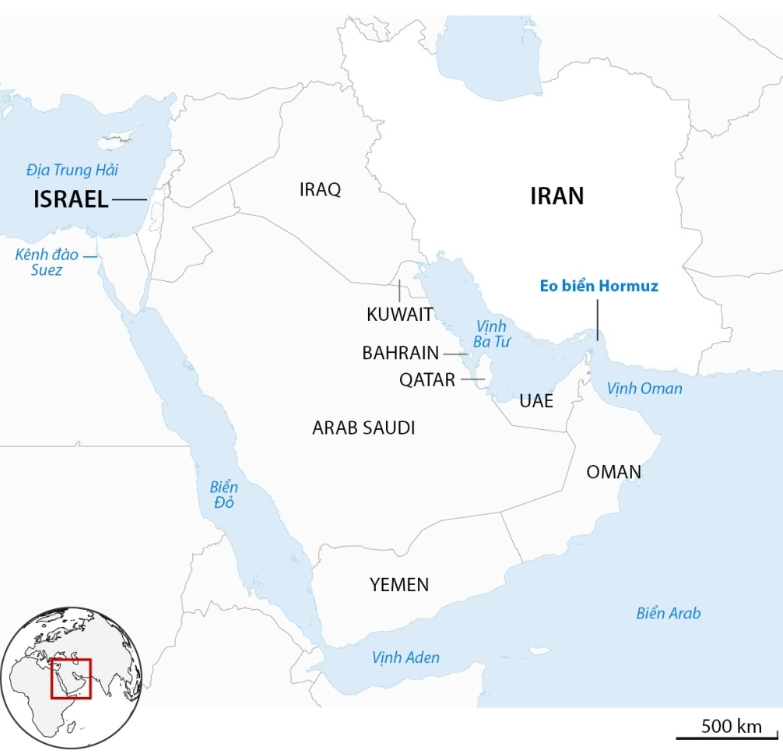 |
Location of Iran and the Arabian Sea. Graphic: Guardian. |
The U.S. has also expanded the enforcement scope of the blockade, including types of goods that could lead to cargo ships being inspected or seized if linked to Iran. Some maritime experts believe controlling all vessel traffic through the Strait of Hormuz presents a significant challenge, suggesting ships could evade detection by altering navigation data or moving through other national waters.
By Thanh Danh (AP, CNN)