"A typical polar vortex from western Canada is set to descend. By late this week and into early next week, the central and eastern United States will experience some of the coldest temperatures globally, potentially the coldest," USA Today reported on 9/12, quoting meteorologist Judah Cohen, an expert at the Massachusetts Institute of Technology.
According to the National Weather Service, temperatures in many areas will drop by up to 17 degrees Celsius below seasonal averages as the polar vortex moves in.
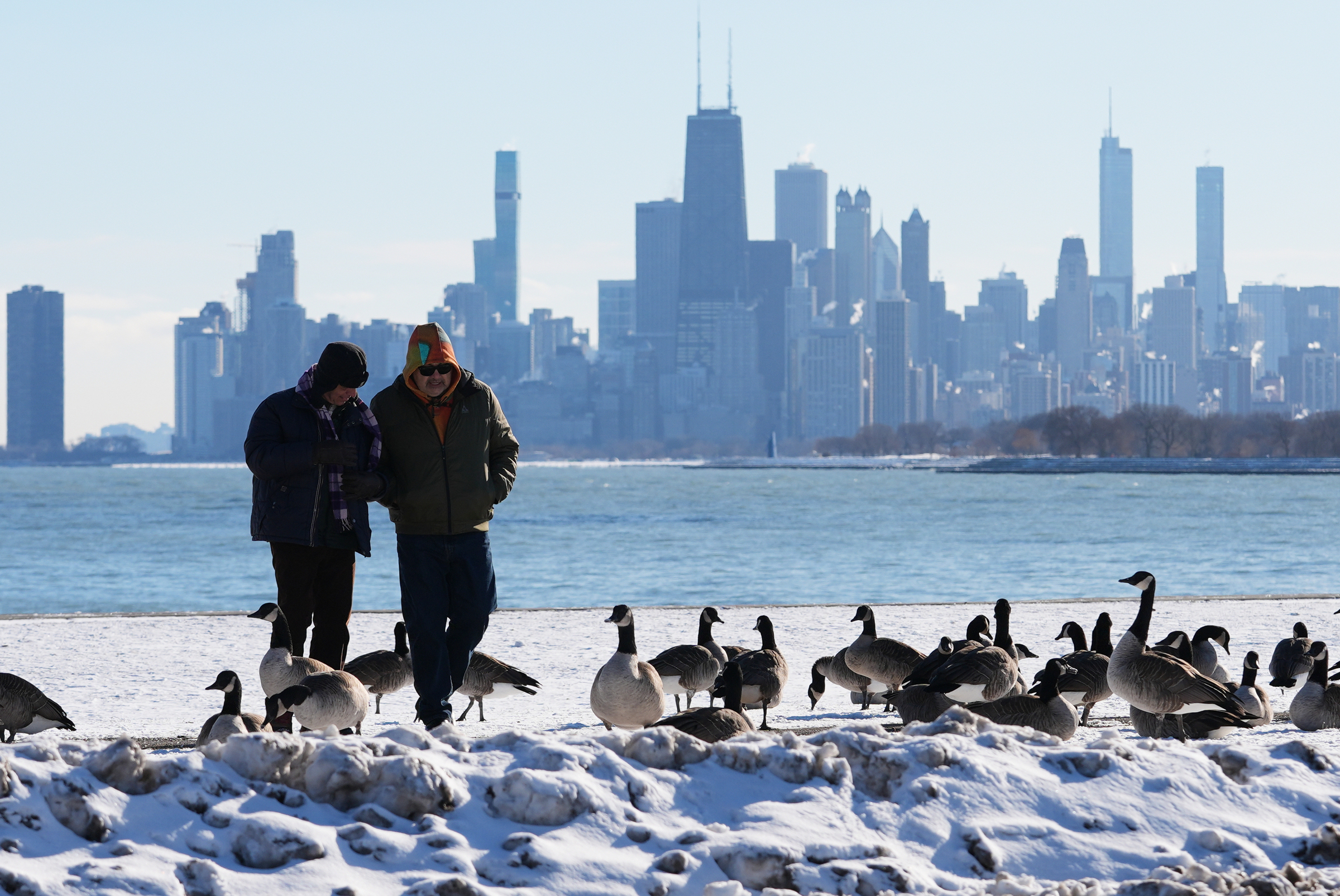 |
People walk along Lake Michigan in Chicago on 4/12. *AP*. |
In Chicago, wind chill temperatures could plunge to -29 degrees Celsius, while parts of the Dakota states may see -43 degrees Celsius. At these temperatures, exposed skin can develop frostbite in as little as 10 minutes.
The polar vortex is a large, high-altitude low-pressure system typically located over the Arctic Circle. When strong, it tends to trap the coldest air in the northern hemisphere around the pole. However, when the polar vortex weakens or stretches, this extremely cold air spills south, covering nearly all of Canada.
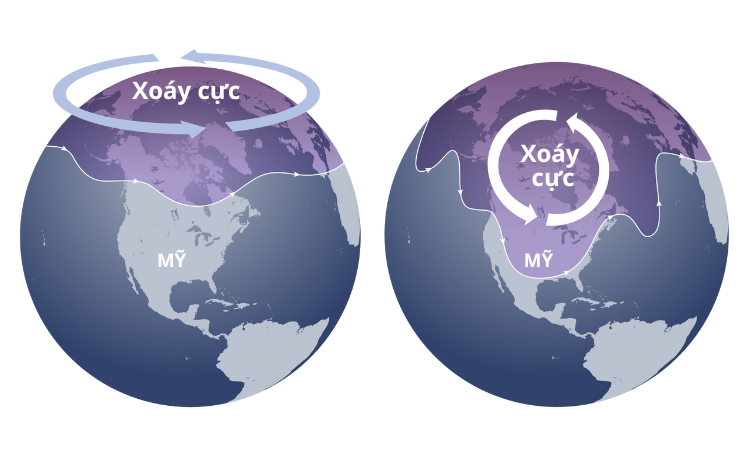 |
The polar vortex descends on the U.S. *USA Today*. |
Lobes of the polar vortex will descend into the U.S., moving intermittently and causing temporary cold snaps. Experts indicate this is not an unusual phenomenon, with the cold spell projected to last until around 18-19/12.
By the end of this month and early next month, the polar vortex is expected to retreat northward, and the La Nina phenomenon will once again influence weather patterns, returning U.S. winter temperatures to more familiar levels.
Duc Trung (According to USA Today, AP)