The United Arab Emirates (UAE) Ministry of Defense announced on 31/12 that it had voluntarily concluded the mission of its counter-terrorism units in Yemen. These were the last UAE forces present in Yemen since 2019, when Abu Dhabi declared an end to its military presence there.
The Gulf nation stated that units stationed in Yemen over the past six years carried out limited missions, "including specialized personnel for counter-terrorism efforts and coordination with international partners". The UAE Ministry of Defense said the decision followed "recent developments that necessitated a comprehensive assessment of the situation".
Hours earlier, the Saudi-led coalition launched an airstrike on Mukalla port in southern Yemen. Riyadh stated the target was an arms shipment linked to the UAE, accusing the crew of disabling navigation equipment and offloading large quantities of weapons and military vehicles to support the separatist Southern Transitional Council (STC).
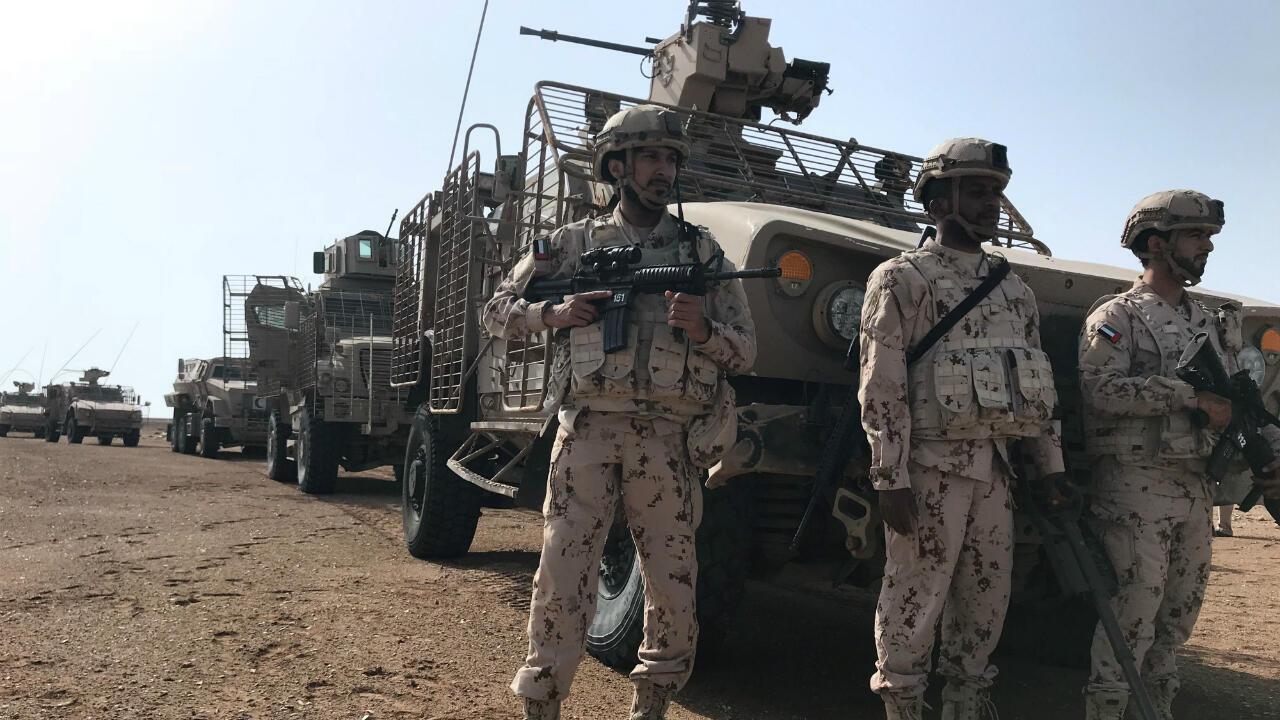 |
UAE military protecting the Al-Mokha area in Yemen in 3/2018. *France 24*.
STC forces have recently been more openly displaying the flag of South Yemen, which was an independent nation from 1967-1990. Protests have occurred for several days, showing support for political factions advocating for South Yemen's renewed separation from Yemen.
These forces also repelled allies of the National Shield Forces, an armed group backed by Saudi Arabia within the anti-Houthi coalition, from the two Yemeni provinces of Hadramout and Mahra.
The attack marked the most serious escalation to date in the deepening disagreement between the two Gulf nations. Saudi Arabia accused the UAE of pressuring the STC, encouraging these forces to advance near the Yemen - Saudi Arabia border. Saudi Arabia declared national security a "red line" and supported the Yemeni government's proposal that the UAE withdraw all forces within 24 hours.
The UAE expressed surprise at the airstrike, asserting that the shipments contained no weapons and were intended for UAE forces, not the STC. The government in Abu Dhabi called for a de-escalation solution based on "reliable facts and existing coordination mechanisms".
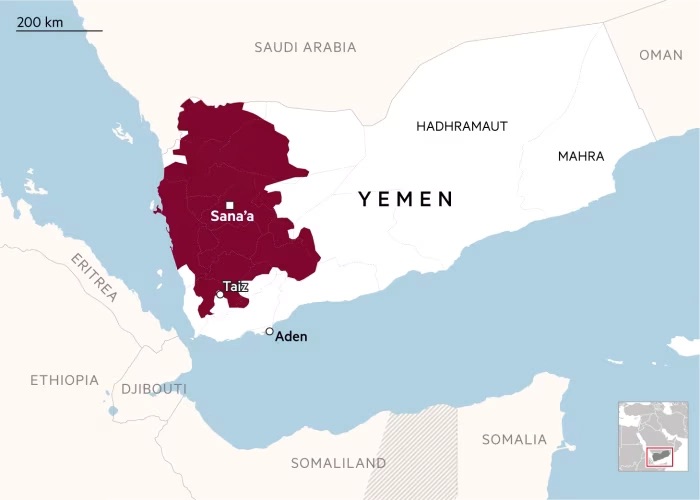 |
Houthi-controlled areas in Yemen (red) and the two provinces of Hadramout, Mahra. *FT*.
The UAE's withdrawal of its last units may immediately de-escalate regional tensions, but it leaves open the question of whether Abu Dhabi will continue to support the STC. Saudi Arabia continues to back the internationally recognized Yemeni government and expressed its desire for the UAE to cease all military or financial aid to the STC.
United States Secretary of State Marco Rubio held phone discussions with the foreign ministers of Saudi Arabia and the UAE regarding tensions in Yemen and other security issues in the Middle East.
Several Gulf nations, including Kuwait and Bahrain, declared support for all efforts to promote dialogue and political solutions. Qatar affirmed that the security of Saudi Arabia and other Gulf states is an "inseparable part" of national security.
A civil war severely ravaged Yemen, erupting in 2014 when Houthi forces overthrew the internationally recognized government from the capital, Sanaa. The conflict escalated in 2015 after a Saudi-led coalition intervened to restore government control.
The fighting reportedly killed over 150,000 people and caused one of the world's most severe humanitarian crises.
When the conflict first broke out, the STC and other separatist forces, pursuing independence for southern Yemen, formed a coalition government to prevent Houthi forces from seizing the southern city of Aden. However, in recent years, the STC and its allies have turned to confront the internationally recognized government, gradually gaining control of Aden and most of southern Yemen.
By Thanh Danh (Reuters)