


Speaking after meeting US President Donald Trump on the sidelines of the World Economic Forum (WEF) in Switzerland on 22/1, President Volodymyr Zelensky announced that the document on US security guarantees for post-war Ukraine "has been completed".
"We need to approve the document. That can only happen when the conflict ends. The document requires signatures from all parties, submission to the parliaments of both countries, and approval by the presidents," Zelensky said, noting that this step cannot yet be called an agreement.
President Zelensky added that the "document aimed at ending the conflict" is almost ready, as negotiation teams from the US and Ukraine are working daily towards the goal of ending hostilities. "We are working with the utmost honesty and determination, which brings results. Russia must also be ready to end the war, to cease aggressive actions," he stated.
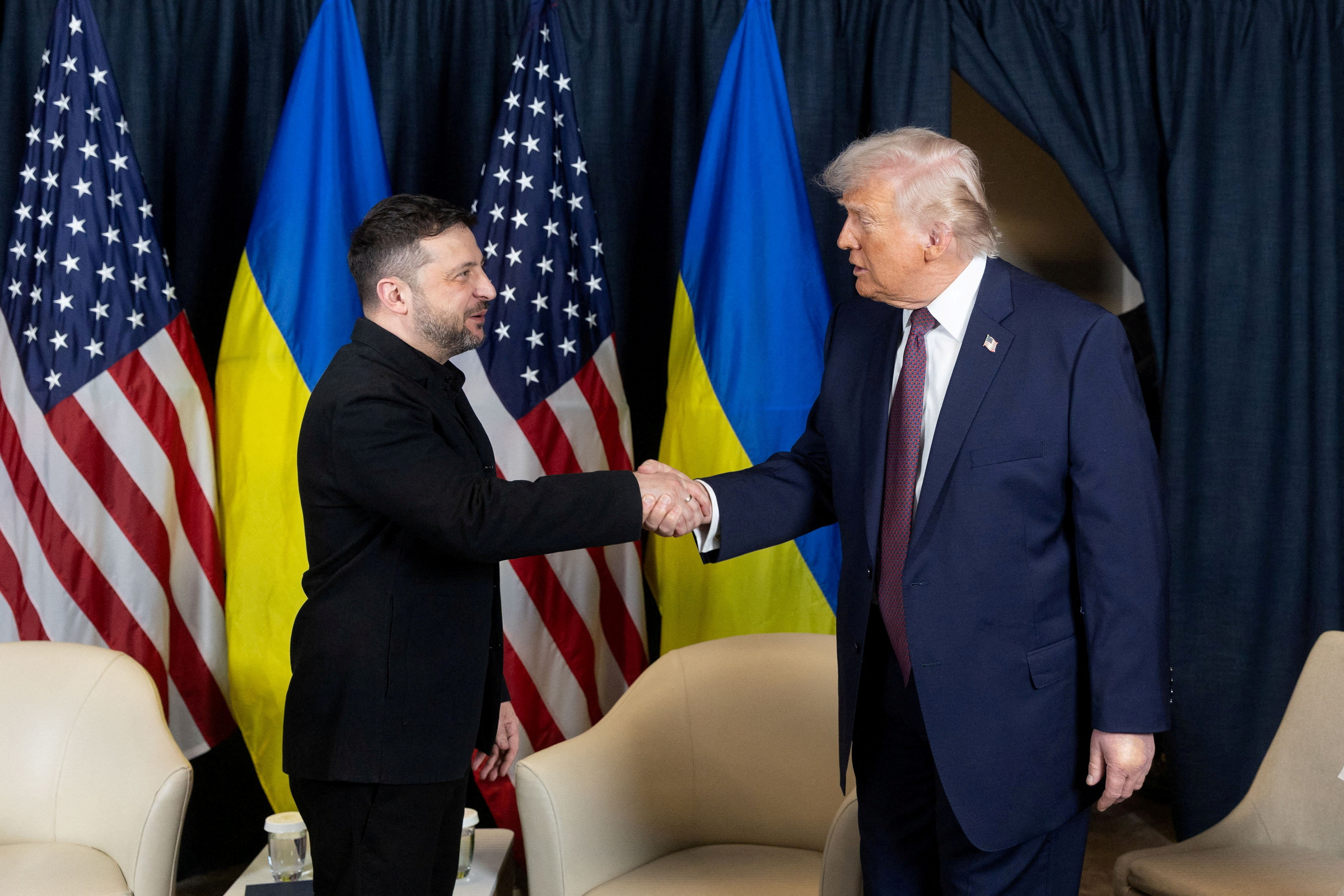 |
President Zelensky (left) met President Trump in Switzerland on 22/1. Photo: Reuters. |
President Zelensky (left) met President Trump in Switzerland on 22/1. Photo: Reuters.
President Trump said his meeting with counterpart Zelensky in Davos went "very well", but emphasized there is still a "long way to go" before the conflict can end. The US President did not elaborate on the details of his private conversation with Zelensky, only confirming that the two sides did not discuss the "Peace Council" he had recently established.
"The remaining sticking points in negotiations are the same issues that stalled these efforts last year," the US President said, referring to earlier remarks by special envoy Steve Witkoff that peace talks "only have one remaining obstacle to resolve".
Ukrainian parliament member Andrii Osadchuk views the agreement on security guarantees and their entry into the signing process as a positive sign. However, he noted that the US side would only approve important documents if the overall framework of a post-war agreement is finalized with Russia.
Osadchuk also expressed concern about the prospect of Russia prolonging the conflict, which could derail the security guarantee negotiation process, hinder consensus among parties, and make it difficult to complete as expected.
Thanh Danh (According to CNN, TASS, BBC)


