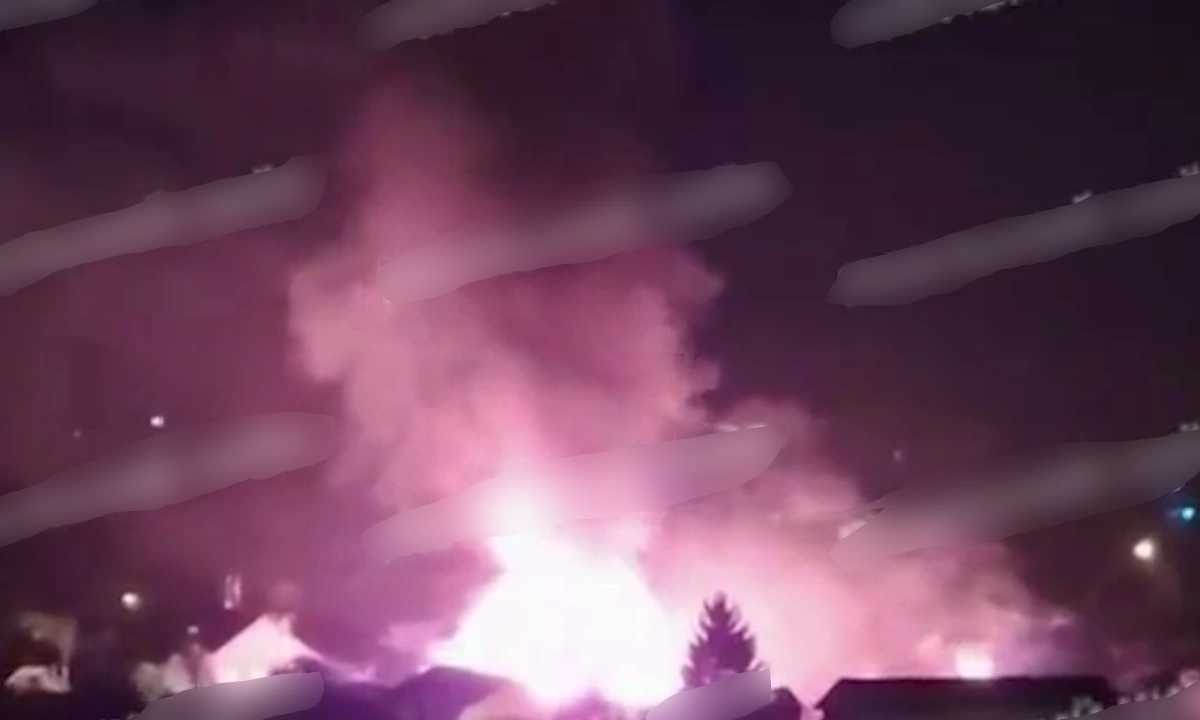
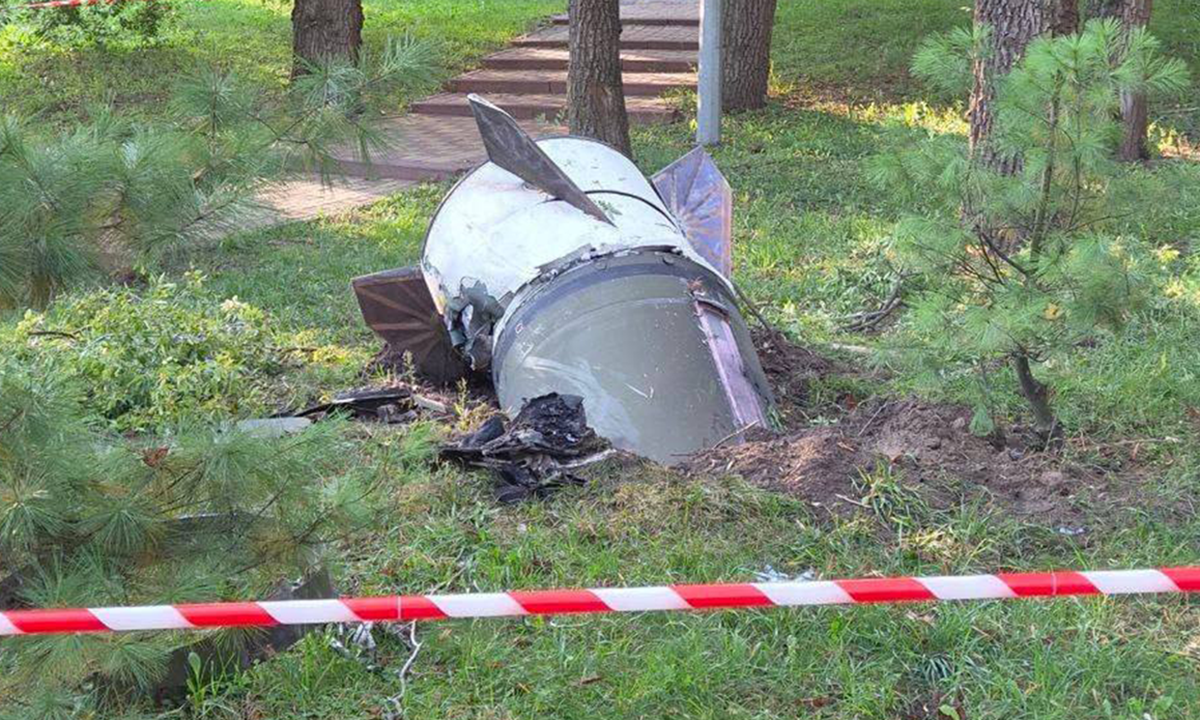
On 30/9, OSINT Warfare, an X account specializing in open-source intelligence, posted photos of debris resembling the solid-fuel engine section of an Iskander-M ballistic missile, embedded in the ground.
Concurrently, UkrMedia News published images of a missile component on the ground. They described it as an unexploded warhead that fell near a residential building in the capital, Kyiv, after Russia's attack on the morning of 29/9 and was subsequently neutralized.
 |
Missile debris in Kyiv in a photo posted on 30/9. *Photo: X/OSINTWarfare*
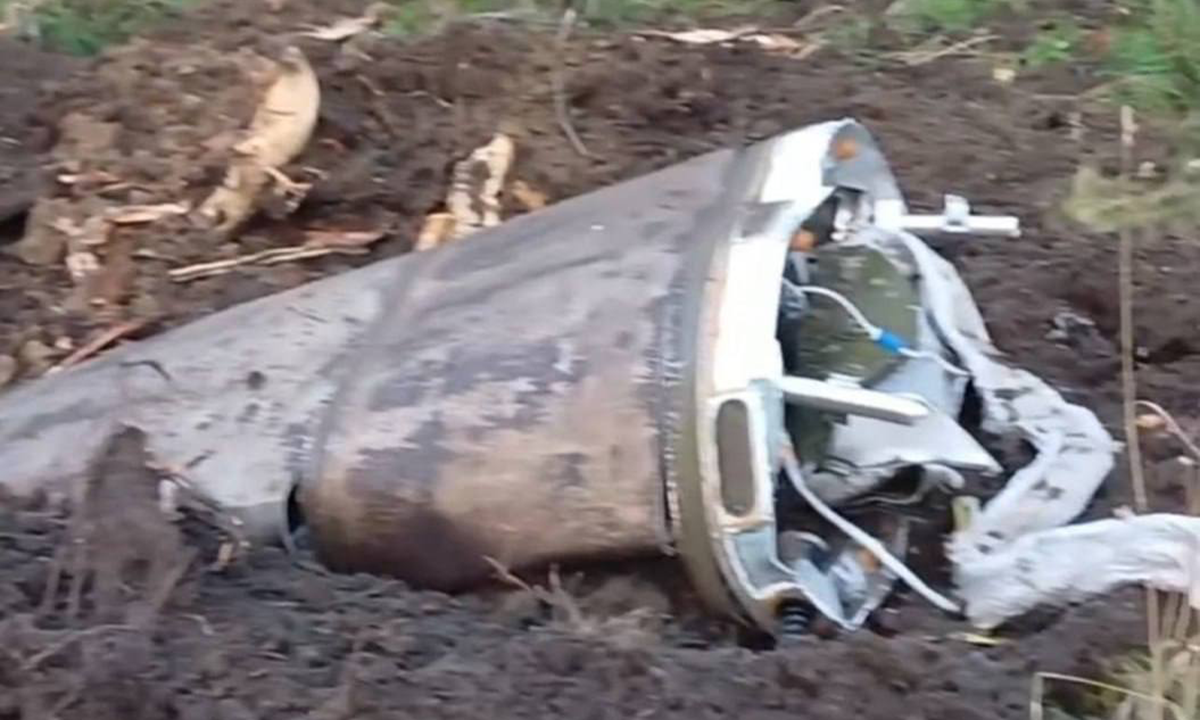 |
Missile debris in Kyiv in a photo posted on 30/9. *Photo: UkrMedia News*
The debris bore the marking "9M723-2F3," which is similar to missile wreckage announced by Ukraine's Defense Intelligence Directorate (GUR) in August. At that time, GUR stated this was an upgraded 9M723-2 ballistic missile, also known as Iskander-1000, part of the Iskander-M complex.
The Iskander-M missile uses 9N722F3, a powerful warhead. The "F3" designation likely indicates this missile version.
According to AMK Mapping, another open-source data collection account, the 9M723-2F3 missile features an improved armor-piercing, high-explosive warhead. This warhead destroys fortified underground structures. It can also launch radar decoys in its terminal phase, challenging enemy air defense systems.
"However, the Patriot air defense system shot down two 9M723-2F3 missiles," AMK Mapping stated. OSINT Warfare, meanwhile, suggested the SAMP/T system, provided to Ukraine by France and Italy, may have intercepted the Russian missiles.
The Russian Ministry of Defense and the Ukrainian military have not commented on the information. President Volodymyr Zelensky on 30/9 said Ukraine had received additional air defense missiles, but did not specify the quantity or type.
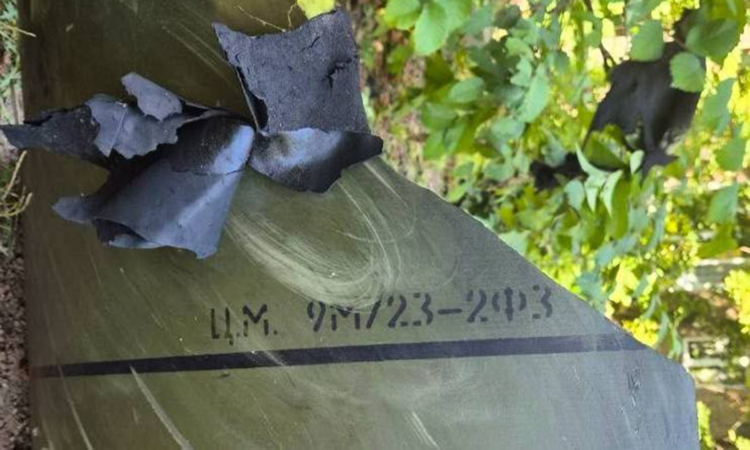 |
Signature on newly discovered missile debris in Kyiv (left) and debris announced by GUR in August. *Photo: X/OSINTWarfare, GUR*
On 29/9, the Ukrainian Air Force reported Russia attacked the country with two Iskander-M ballistic missiles, converted S-400 anti-aircraft rounds, one Oniks or Zircon anti-ship missile, and 152 unmanned aerial vehicles (UAVs). Ukraine claimed it shot down all missiles and 106 UAVs.
The Russian Ministry of Defense announced it used long-range UAVs and high-precision ground-launched weapons. These targeted logistics centers, port and transport infrastructure, and vessels suspected of supporting the Ukrainian military. Russia did not specify the weapons used.
GUR stated that Russia began using Iskander-1000 missiles in attacks on the capital, Kyiv, this summer. However, the US military specialized website War Zone noted it began combat operations in January.
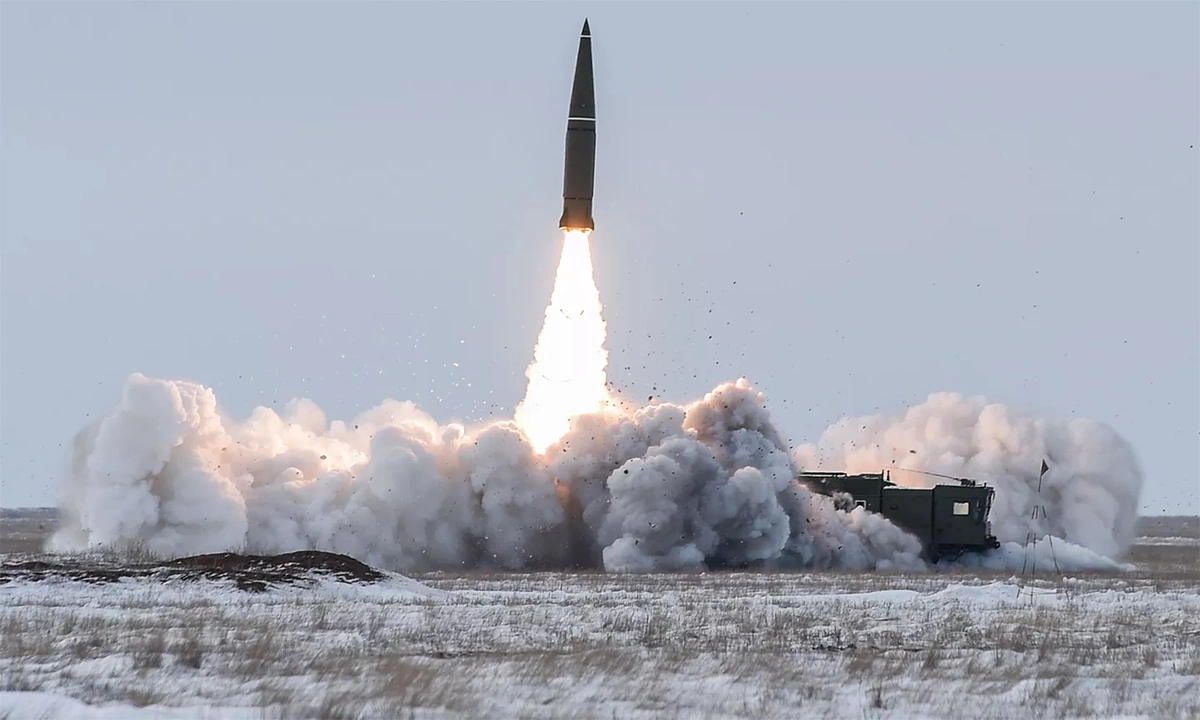 |
Iskander-M missile firing at the Kapustin Yar training ground, Russia, 3/2018. *Photo: Russian MoD*
Ukrainian intelligence states the original 9M723-1 missile of the Iskander-M complex has a 390-400 km range. The upgraded 9M723-2 variant, with its improved engine, can hit targets at 550 km.
Last year, information emerged that Russia was preparing to mass-produce a version of the Iskander-M missile with an approximate 1,000 km range and higher accuracy. This version was also referred to as Iskander-1000 at the time, but it is unclear if it is the same missile mentioned by GUR.
Pham Giang (According to UP, Podrobnosti, UkrMedia News, War Zone)