For the first three years of the Russia-Ukraine war, the United States was the primary military and financial aid provider to President Volodymyr Zelensky's administration. Former US President Joe Biden had pledged to stand with Ukraine until it "achieved victory".
However, when President Donald Trump took office over one year ago, the United States gradually relinquished its role as Ukraine's "companion" in the conflict with Russia. Now, President Volodymyr Zelensky himself indicates he is actively withdrawing and maintaining distance from his nation's once-largest ally.
President Trump had stated he would end the Ukraine conflict within 24 hours of taking office, but later acknowledged this was far more difficult than he initially thought. He also attempted to mediate negotiations between Russia and Ukraine, but this effort stalled as the US President shifted attention to the Middle East and initiated a conflict against Iran.
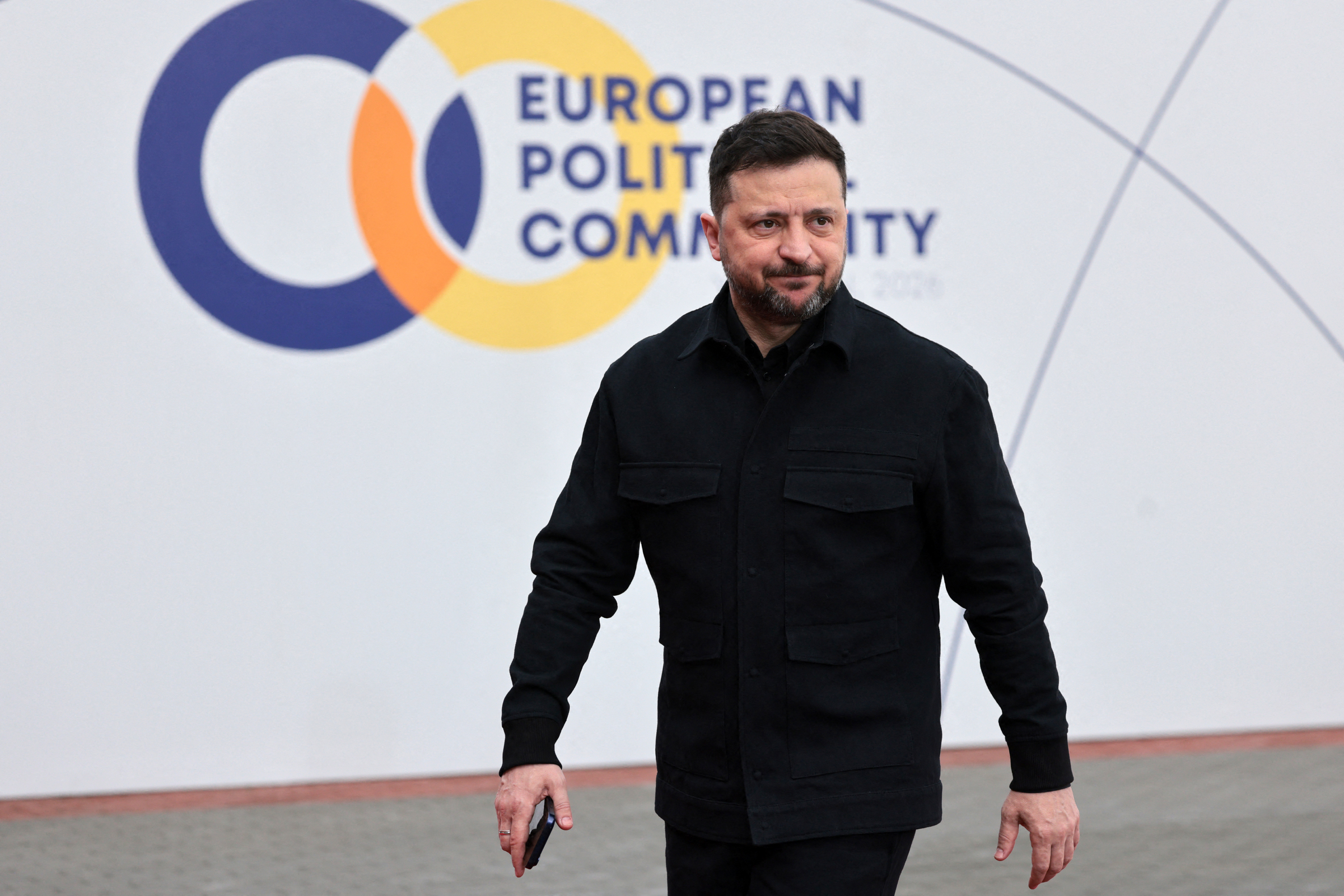 |
Ukraine's President Volodymyr Zelensky attended the 8th European Political Community (EPC) Summit in Yerevan, Armenia, on 4/5. Photo: AFP |
Ukraine's President Volodymyr Zelensky attended the 8th European Political Community (EPC) Summit in Yerevan, Armenia, on 4/5. Photo: AFP
Until recently, Ukraine's leadership largely maintained a neutral stance toward President Trump to avoid a complete breakdown in bilateral relations. The United States continued to provide crucial battlefield intelligence and held a unique position to mediate between Moskva and Kiev.
Although the Trump administration completely halted weapon aid to Ukraine, it still allowed Kiev to purchase them using funds from other Western allies. Ukraine understood that angering the Trump administration could not only eliminate this support but also risk Trump abandoning them entirely to back Russia.
But circumstances changed with the eruption of the Middle East conflict. President Zelensky complained that US negotiators "no longer had time for Ukraine". He also voiced opposition to Washington easing sanctions on Russian oil, a move aimed at mitigating the impact of the Iran conflict on global energy markets.
In early April, Ukrainian officials traveled to Washington and urged the US not to extend the sanctions waiver on Russian oil, according to two Ukrainian officials familiar with the matter.
The Trump administration subsequently extended the waiver. President Zelensky strongly criticized this decision in a social media post, asserting that "every USD paid for Russian oil is money funding their battlefield operations".
Two Ukrainian officials indicated that these developments underscored the reality that Kiev could no longer rely on the United States.
President Zelensky recently issued unusually harsh criticisms against the United States, something considered "unthinkable" one year ago. At that time, Kiev suffered consequences on the battlefield after Washington cut aid following a "disastrous disagreement" at the White House in 1/2025.
The reason for Ukraine's increasing frankness is simple. After years of efforts to achieve self-sufficiency in defense production, they are no longer as dependent on the United States as before, said Harry Nedelcu, managing director at Rasmussen Global, a European political consultancy.
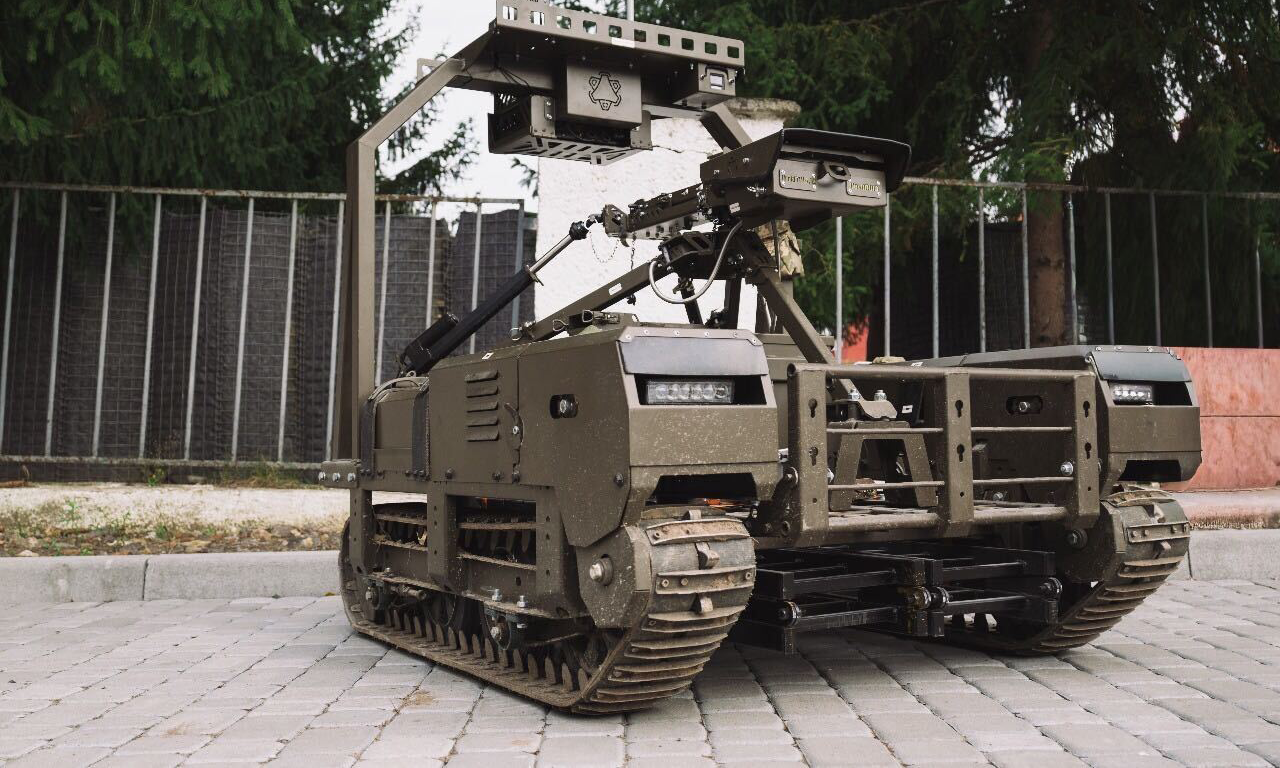
Over the past year, witnessing the Trump administration's fluctuating foreign policy, Ukraine understood the need for greater self-reliance. The country has boosted its weapon production capacity, focusing on unmanned aerial vehicles (UAVs), to gain an advantage over Russia's traditional military equipment.
Ukraine now produces most of the UAVs it uses. Alyona Getmanchuk, Ukraine's Ambassador to NATO, stated that the country's domestic interceptor weapons have neutralized over 60% of Russian UAVs.
"We feel much more self-sufficient than before", she said.
According to Maksym Skrypchenko, President of the Center for Transatlantic Dialogue, a research institution in Kiev, even if US weapon supplies were to dry up, Ukraine could still manage.
"If we woke up one morning without US support, the situation would no longer be as catastrophic as before", he said. "Things are not like during the Biden administration, when we were overly dependent on US equipment".
Intelligence from the United States would be the most difficult to replace, but Skrypchenko believes European alternatives could eventually fill this gap.
Ukraine also needs US Patriot missiles, as they are the only effective shield against Russian ballistic missiles. While Kiev is working to produce its own interceptor missiles, the process requires more time. However, regardless of the relationship between the United States and Ukraine, Washington has a limited number of Patriots to provide Kiev.
Kiev is also openly seeking support from other sources. Over the past month, President Zelensky has actively campaigned for support across Europe.
He thanked countries in the region for assisting Ukraine when the conflict in Iran threatened Kiev's weapon supply. He also signed agreements to share UAV technology with Middle Eastern nations, deals that could bring billions of USD to Ukraine for reinvestment in domestic defense enterprises.
Regarding peace talks, Volodymyr Fesenko, a Ukrainian political analyst, noted that while negotiations are not progressing, they remain important, and Kiev cannot abandon all cooperation with the United States.
"One could say the United States is not the best partner or mediator in peace talks", he stated. "But the United States is the only mediator with the most significant and realistic influence on the peace process. From this perspective, we have no alternative".
Despite minimal progress in negotiations, Ukraine continues to maintain careful diplomatic steps with the United States.
When Mr. Trump proposed a three-day ceasefire beginning last weekend, President Zelensky agreed, despite significant skepticism in Ukraine about whether it could be sustained or promote peace. On the first day, both Kiev and Moskva accused each other of violating the ceasefire agreement.
On 8/5, President Zelensky again expressed hope that US administration negotiators, including special envoy Steve Witkoff and Mr. Trump's son-in-law, Jared Kushner, would visit Kiev. Both individuals had traveled to Moskva multiple times but had not confirmed plans to visit Kiev. By 10/5, President Zelensky spoke with a firm tone, noting that the prisoner exchange agreement under the ceasefire must still be implemented, and affirmed, "we expect the United States to play an active role in ensuring this agreement is enforced".
President Zelensky acknowledged that the conflict against Iran had distracted negotiators' attention from Ukraine and sometimes led to actions detrimental to Kiev.
Last month, US Vice President JD Vance described the ongoing conflict in Ukraine as merely "a bargaining over a few square kilometers of territory". He also questioned whether the territory in eastern Donetsk, which forms the backbone of Ukraine's future defense system, was worth the immense human sacrifices.
In a press conference, President Zelensky responded: "With all due respect, the Vice President does not participate in negotiations. If he did, Mr. Vance would likely understand more deeply what the territory of a truly independent Ukraine is".
A few days later, Mr. Vance declared that the US ending financial support for Ukraine and having Europe cover Ukraine's defense efforts was "one of the things that I am most proud this administration has done".
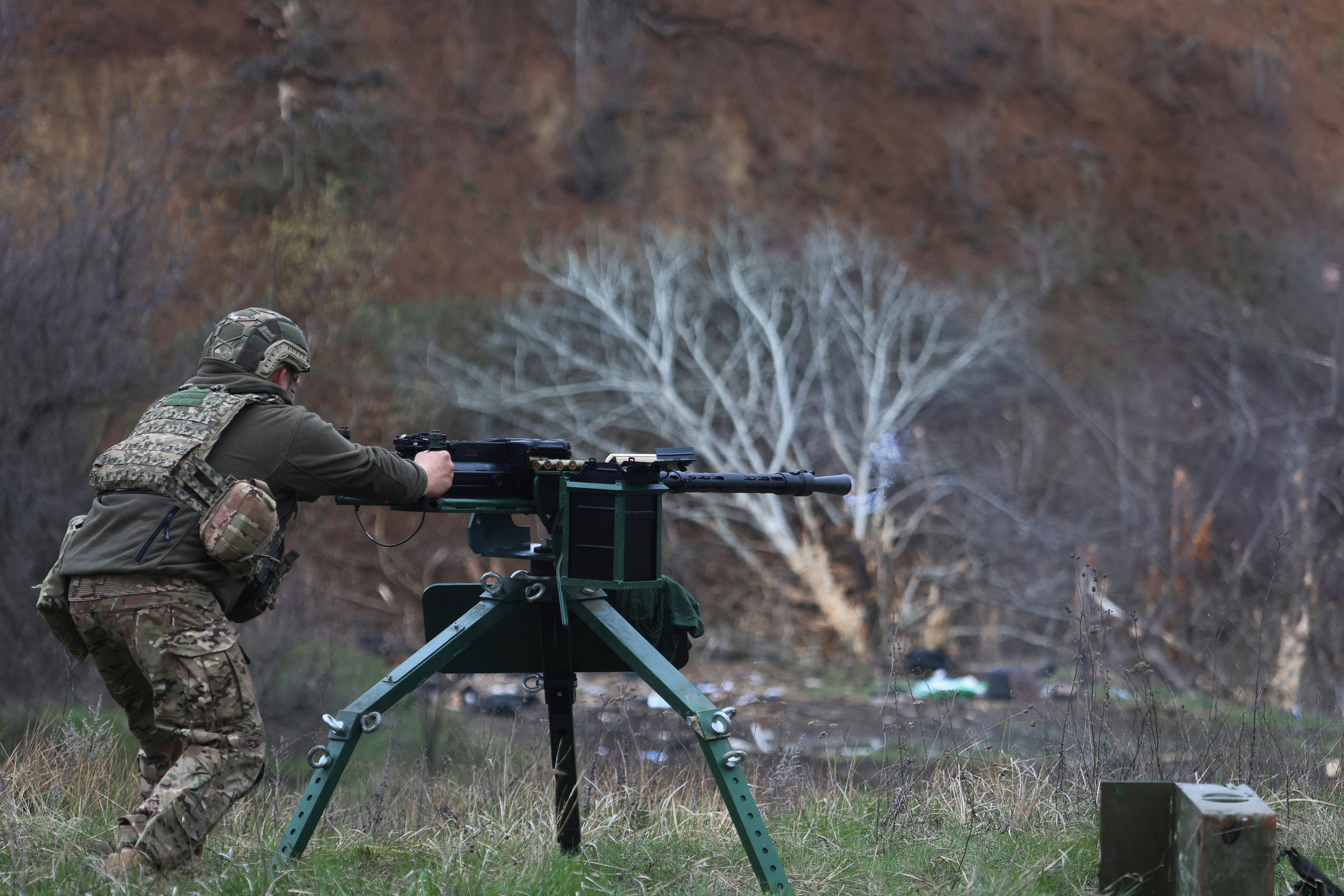 |
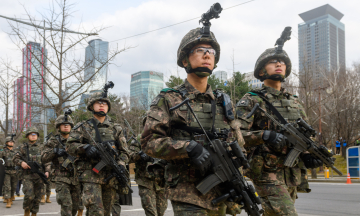
Soldiers from the 13th Khartiia Operational Brigade of the Ukraine National Guard trained with machine guns at a training ground on 15/4. Photo: AFP |
Soldiers from the 13th Khartiia Operational Brigade of the Ukraine National Guard trained with machine guns at a training ground on 15/4. Photo: AFP
The repercussions of the Iran conflict have created many difficulties for President Zelensky, but they have also made him more determined. Beyond publicly criticizing the United States, Ukraine continues its campaign of long-range UAV attacks on oil and gas infrastructure within Russia, despite Washington's calls to cease.
Overall, President Zelensky's actions closely resemble those of other European leaders who are also gradually distancing themselves from President Trump, according to expert Nedelcu.
Europe has replaced the United States as the largest donor to Ukraine's war effort. A recent 106 billion USD loan from the EU, primarily focused on military spending, will provide Kiev with a better foundation to plan for a conflict they believe will not end soon.
Getmanchuk, Ukraine's Ambassador to NATO, believes that deeper cooperation with Europe could ultimately help "Kiev become a pillar of continental security".
Vu Hoang (According to Reuters, AP, AFP)