Daria Bondareva, a 28-year-old resident of Donetsk, speaks enthusiastically about the beauty salon she opened two years ago. It is a warm space that is always bustling with customers.
She does not want to hand it over, along with her hometown of Donetsk in eastern Ukraine, to Russia. Four years after the conflict began, this territory remains a sticking point in US-brokered negotiations. Kyiv is being asked to give up approximately 20% of the remaining area in Donetsk that it controls in exchange for a promise of peace for the country.
"I think Ukraine will never agree to this. I do not know what would happen to force Ukraine to agree to abandon us," Bondareva said.
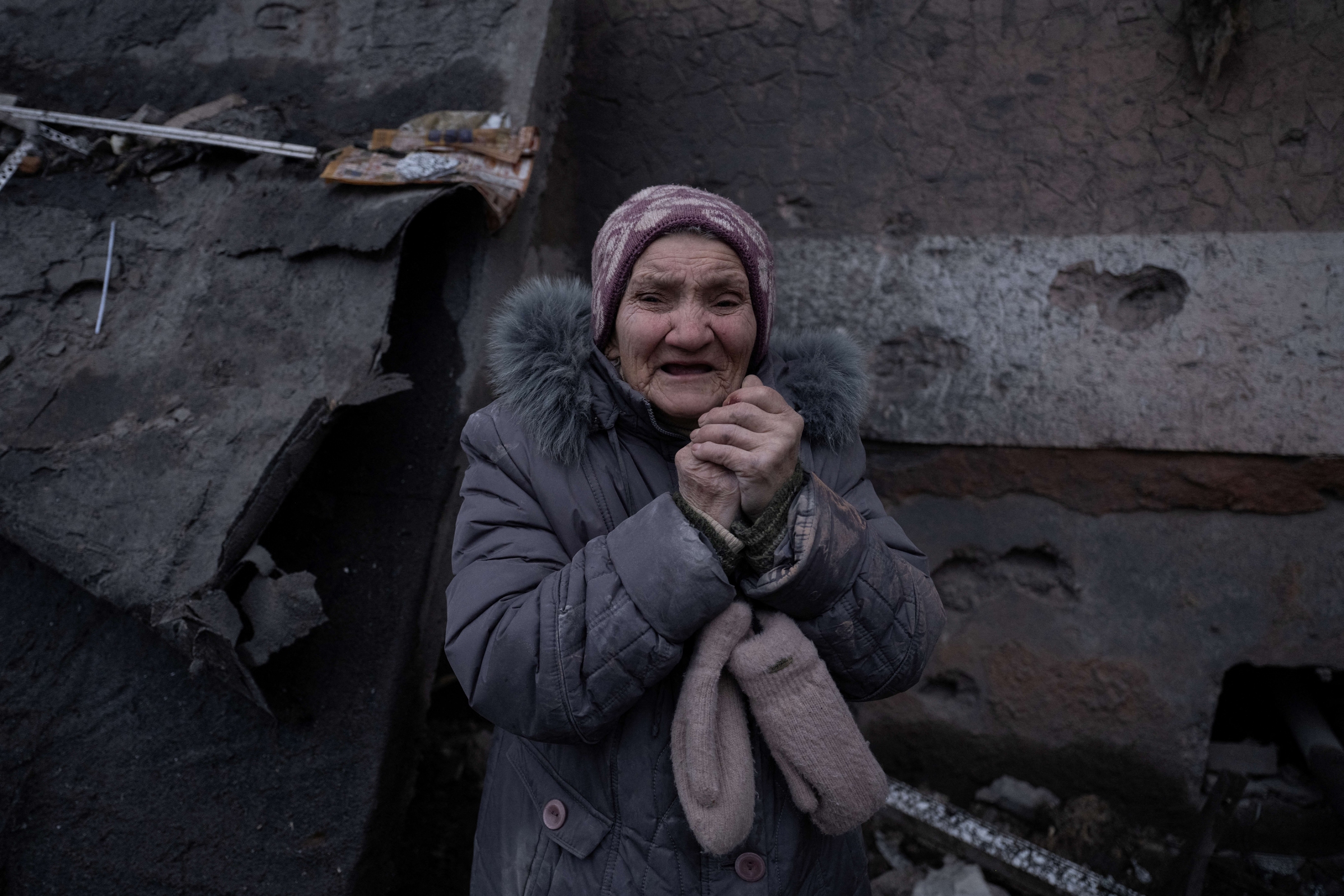 |
A resident stands next to a building damaged by an airstrike in Kramatorsk, Donetsk province on 8/2. Photo: AFP
Negotiations on the Ukraine conflict appear to occur weekly. The parties have narrowed many disagreements and are currently focusing on two core issues: control of Donetsk and post-war security guarantees for Ukraine.
Russia currently controls 46.570 km2 in the Donbass region, which includes the two provinces of Donetsk and Lugansk. The Ukrainian army has fully withdrawn from Lugansk, but still holds several important strongholds in Donetsk such as the cities of Slovyansk, Kramatorsk, Kostyantynivka, forming a critical part of the "fortress belt" in the east that blocks Russia's advance.
Those urging Kyiv to abandon these strongholds argue that Ukraine will eventually lose Donetsk, and therefore should cede the area to end the conflict.
However, President Volodymyr Zelensky on 20/2 rejected any possibility of withdrawing troops from Donbass as part of a peace agreement with Russia.
In an interview with BBC on 23/2, when asked why Ukraine could not give up the small remaining territory in Donetsk in exchange for a ceasefire, Zelensky argued that this would cause deep divisions within Ukrainian society.
"I do not see it simply as a territorial issue. I see it as an act of betrayal, weakening our position, abandoning hundreds of thousands of people living there," he said.
The Ukrainian president affirmed that his country would not lose and could even win the conflict. He emphasized that Russia would not stop at Donbass and would launch a new offensive after a temporary pause.
"Perhaps our withdrawal from Donetsk would satisfy him for a while," he said, referring to Russian President Vladimir Putin. "He certainly wants to continue the war after a period of recovery."
 |
Territories controlled by Russia in Ukraine as of 2/2026. Graphic: CBC
Zelensky also showed openness to compromise, including a proposal for establishing a demilitarized zone along the front line in Donetsk, although it is unclear whether Moscow would accept it. Opinion polls show that approximately 40% of Ukrainians are willing to cede Donetsk if Kyiv's allies provide adequate security guarantees.
But with approximately 190.000 people living in the area, ceding territory is a painful option after many years of enduring war. They may have to leave their homeland and move elsewhere in Ukraine, or they could stay and live under new Russian administration.
Bondareva said she would stay if the area was monitored by international peacekeeping forces. But if Russia were to administer a demilitarized zone there, she would leave.
Sloviansk, the city where she lives, maintains its vitality despite being only about 19 km from the front line. The bowling alley, dance classes, and pilates studios are still open. Cafes are popping up everywhere, as are flower and balloon shops for soldiers to buy gifts for visiting wives or girlfriends.
Kyiv refers to the front-line cities, including Sloviansk, Kramatorsk, Druzhkivka, Kostiantynivka, and Dobropillia, along with smaller settlements, as the "fortress belt."
NY Times on 18/2 quoted Western military and intelligence officials as saying that Putin is willing to continue the war for another two years to fully control the Donbass region. DeepState, a group linked to the Ukrainian military that maps the war, also estimated that the Russian army would take about two years to control the territory still held by Ukraine in Donetsk at its current rate of advance.
Russia is currently advancing only in small groups, fearing that deploying large-scale assault forces would be quickly detected and attacked by unmanned aerial vehicles (drones). These small units employ "thousand cuts" tactics, primarily to probe Ukrainian defensive lines to find weaknesses they can exploit.
"The question is, how much time do they have? How many more people are they willing to lose?" said Colonel Volodymyr Poteshkin, commander of Ukraine's 10th Brigade.
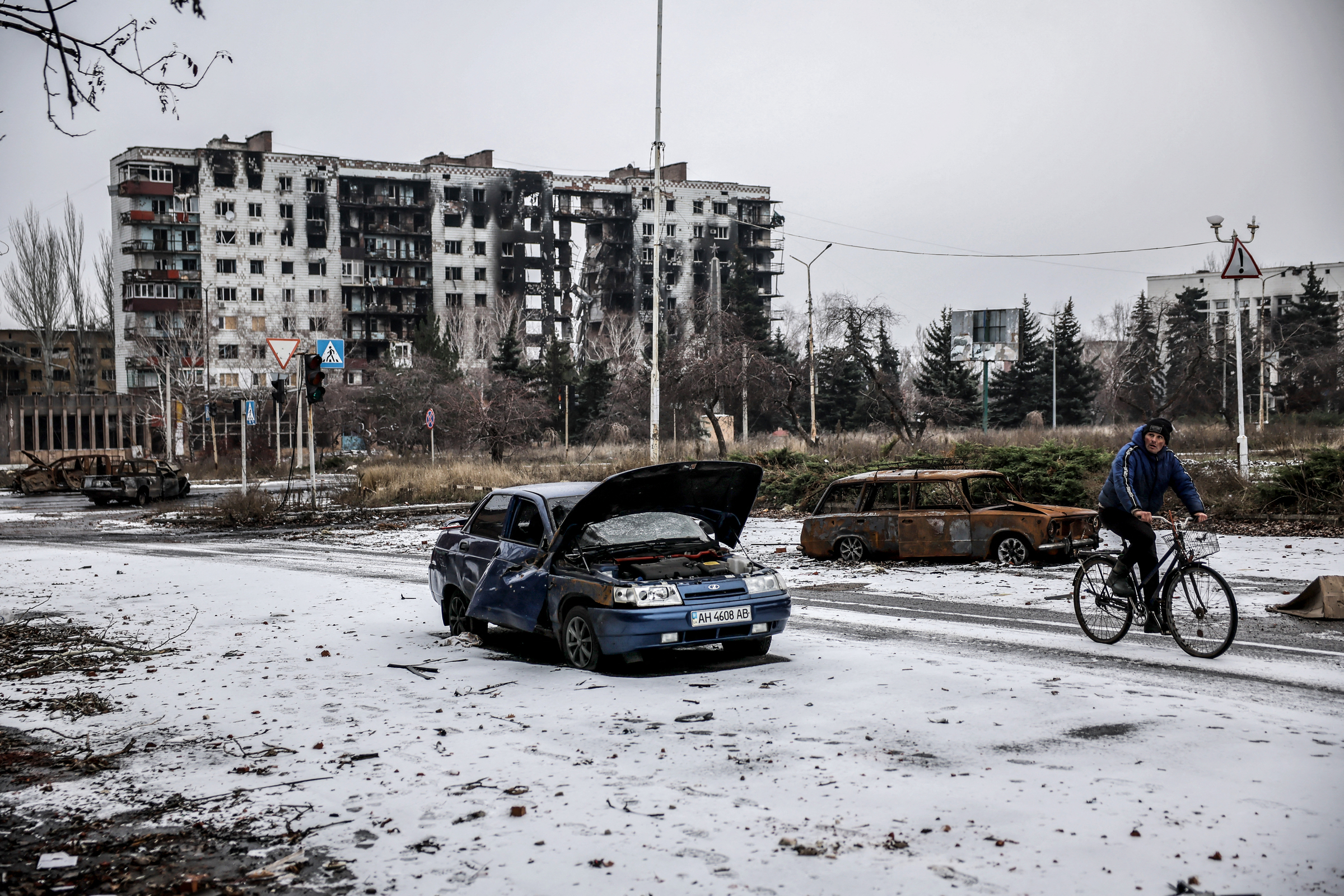 |
The desolate scene of a residential area in Kostiantynivka, Donetsk region, Ukraine on 17/12/2025. Photo: AFP
To impede Russia's advance, Ukraine has deployed mines, barbed wire, and trenches along a front line up to 19 km deep, while also increasing drone deployment to attack enemy targets.
"Russia's advance is not unstoppable," said Lieutenant Colonel Shamil Krutkov, commander of the 93rd Brigade.
Rafila Mirzayeva, a retired nurse, said that after all they have been through, the people of Donetsk would find it difficult to accept living under Russian administration. She herself narrowly escaped death in an airstrike last month.
The explosion also sent debris flying into the bedroom of her 17-year-old granddaughter, who has autism. The girl was not injured, but later had to move to a temporary shelter.
"They should not hand us over like objects. That would be a mistake," Mirzayeva said about the idea of ceding territory in Donetsk.
Olha Chernikova, a humanitarian aid worker in Sloviansk, admitted that some people in the region hope for a Russian victory. She added that many choose to remain in Ukrainian-controlled areas of Donetsk because they have nowhere else to go. The monthly allowance for evacuees is not enough for them to rent an apartment.
"Everyone is very tired and can do nothing but hope we will not be handed over to Russia," she said.
Thanh Tam (According to NY Times, WSJ, The New Voice of Ukraine)