For the first time in over half a century, the world faces a situation without any binding limits on the strategic nuclear arsenals of Russia and the US. These two nations possess the majority of global nuclear weapons, United Nations Secretary-General Antonio Guterres stated on 4/2, referring to the impending expiration of the New Strategic Arms Reduction Treaty (New START).
Guterres emphasized that arms control treaties have "significantly improved the security of all peoples." He added that New START's expiration comes "at the worst possible time" as the risk of nuclear weapons use is at its highest level in decades.
The United Nations Secretary-General urged Moscow and Washington to return to the negotiating table immediately. His aim is for them to reach an agreement on a successor framework to restore verifiable limits, mitigate risks, and enhance shared security.
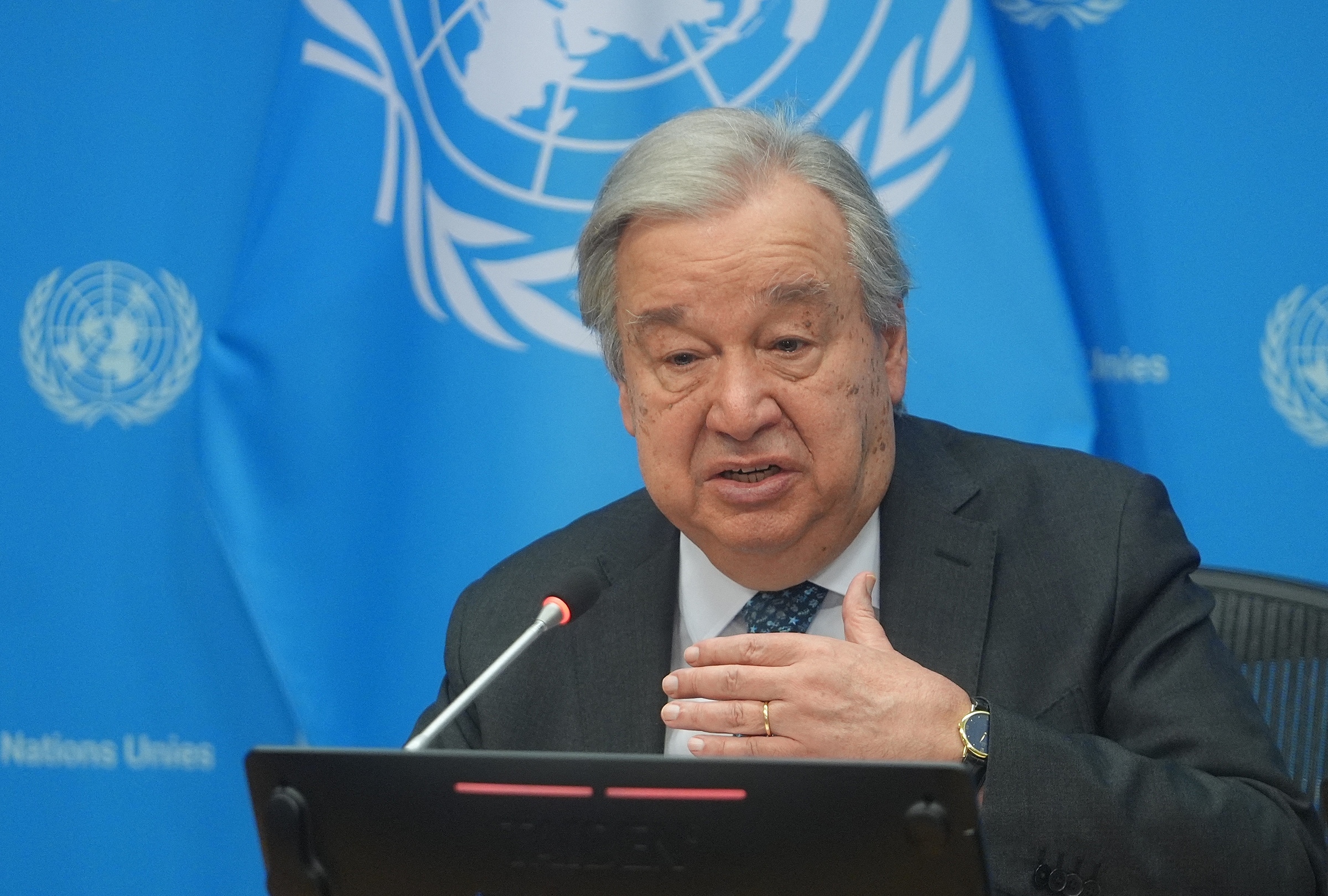 |
Secretary-General Guterres at a press conference at United Nations headquarters in New York, US on 29/1. *Photo: Reuters*.
New START was signed by the US and Russia in 2010, taking effect a year later. The two nations extended the treaty for an additional 5 years in 2021.
The treaty stipulates that each side cannot deploy more than 700 intercontinental ballistic missiles (ICBMs), submarine-launched ballistic missiles (SLBMs), and nuclear-capable bombers. The number of nuclear warheads on these delivery vehicles also cannot exceed 1,550.
Russia and the US could both exceed these limits if New START is not extended or replaced by another agreement. Negotiations to extend the agreement have failed in recent years due to tensions between the two countries, including the issue of Ukraine. New START is set to expire on 5/2.
During a meeting with the Russian Federal Security Council in September 2025, President Vladimir Putin stated that Russia was prepared to comply with New START framework limitations for one more year after the treaty's expiration, but only if the US reciprocated.
However, President Donald Trump signaled on 7/1 that the US would not extend the current treaty, stating, "Let it expire. We'll sign a better deal."
The Kremlin stated on 3/2 that New START's expiration "would be very bad for global security and strategic security."
Huyen Le (According to AFP, Reuters)