Every day, Ravinder Kumar wades through ankle-deep black sludge to leave his home in the Sharma area, northwest New Delhi. Living amidst the mire, the 55-year-old often turns on his tap with faint hope.
"Water comes only once every three days, and even then, we only get it for about one hour," the father of three recounts. "Bathing is very difficult. Sometimes the water is pitch black. We bathe once every four or five days."
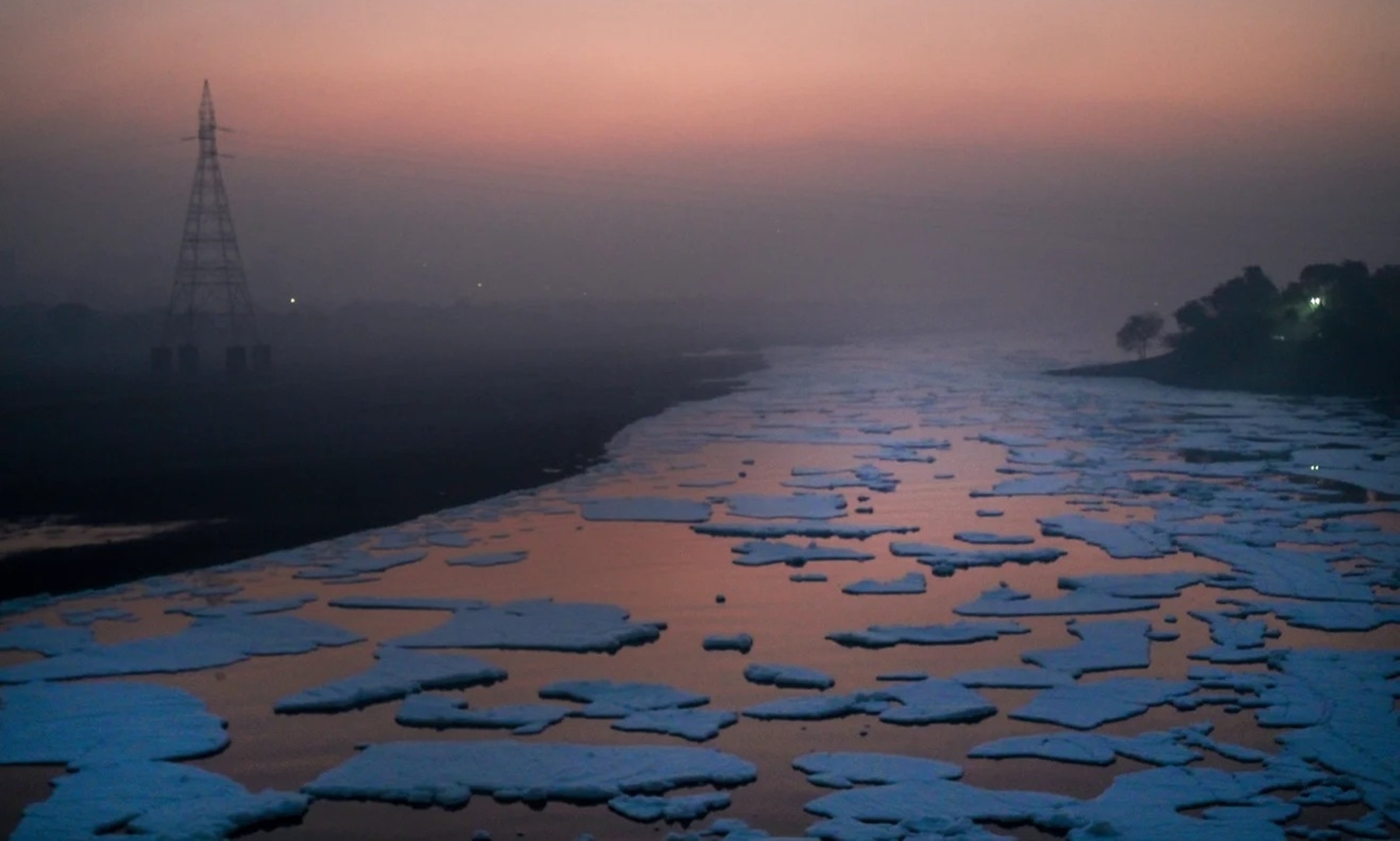 |
Patches of foam on the Yamuna river flowing through New Delhi, India, on the morning of 11/1. Photo: Hindustan Times |
Patches of foam on the Yamuna river flowing through New Delhi, India, on the morning of 11/1. Photo: Hindustan Times
Kumar is among millions of residents in the Indian capital facing water shortages due to high ammonia levels in the Yamuna River. This forced six of the city's nine major water treatment plants to close last week.
The New Delhi Water Board announced last week that 43 residential areas, home to approximately 2 million people, were affected by the water scarcity.
Resident associations in 10 areas, representing over 600,000 people, reported being without water for several days. Some areas indicated that while water was available, its flow had significantly reduced.
According to the Water Board, water supply was restored on 24/1. However, by early this week, some residents stated they still lacked a stable water source.
On 30/1, some residents in the Sharma area reported using stored water from a brief supply period the day before. The water was yellow and smelled like rotten eggs. Despite this, they had no choice but to use it, expecting no new water until 1/2.
"Everyone's health is deteriorating seriously," complained Shashi Bala, a resident of the Sharma neighborhood. "Everything here is filthy."
The Yamuna River flows south from a Himalayan glacier, stretching 1,376 km through several Indian states. New Delhi was planned along its banks in the 17th century, when the Yamuna supplied water to canals that cooled royal palaces.
Today, the Yamuna serves as the backbone of New Delhi's water infrastructure, providing about 40% of the capital's water. Yet, for decades, many sections of the river have been poisoned by chemical waste and untreated sewage.
Although only 2% of the Yamuna's length flows through the capital, a government oversight committee notes that New Delhi is where the river suffers its most severe pollution. Dissolved oxygen levels frequently drop to zero, transforming the historic river into a foul-smelling drain that suffocates all aquatic life.
The most visible signs are thick white foam covering the river's surface, along with dense layers of sludge and industrial waste clinging to many sections.
On 25/1, activists gathered on the riverbanks for a cleanup campaign. For hours, they pulled old clothes, plastic waste, and even religious statues from the murky riverbed.
"Delhi was built thanks to the Yamuna River," volunteer Pankaj Kumar said. He also understands that clearing surface trash cannot save the river from its most severe source of contamination: industrial toxins.
"We ourselves have killed this river," Kumar stated.
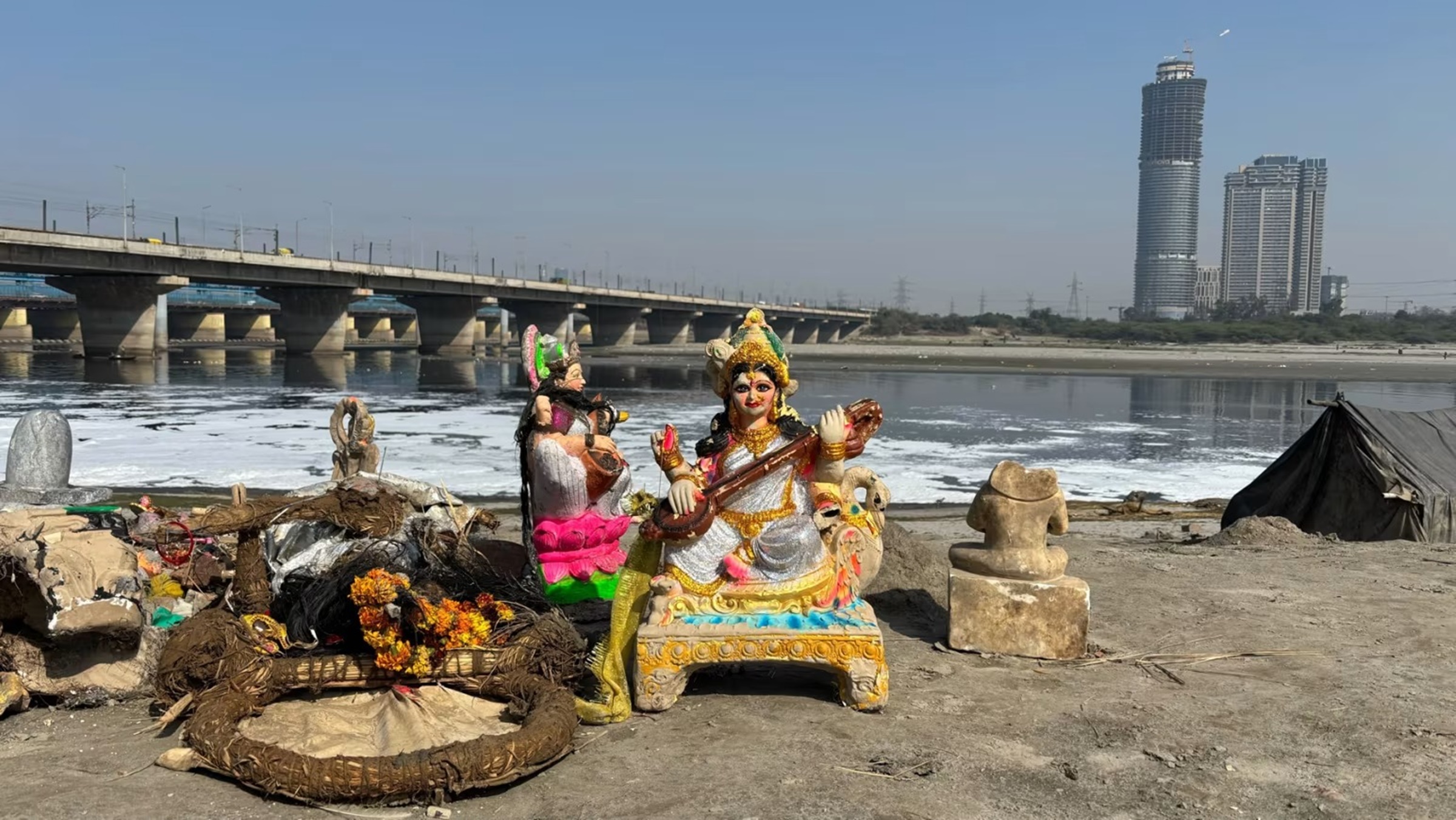 |
Objects retrieved from the Yamuna river on 25/1. Photo: CNN |
Objects retrieved from the Yamuna river on 25/1. Photo: CNN
New Delhi's water crisis is exacerbated by spontaneous urban development.
Unplanned urbanization forces millions to live in temporary settlements disconnected from essential infrastructure, lacking vital water supply and drainage systems. Meanwhile, inadequate wastewater management has allowed waste to seep into the ground, contaminating the city's groundwater reserves, according to a 2022 study.
Poor management at a construction site near Ravinder Kumar's home, combined with clogged drainage systems, has flooded the Sharma area. In this impoverished neighborhood, narrow alleys are now awash with stagnant sewage.
Consequently, Bala's home has been submerged in dirty water for six months, making her entire family ill. The 70-year-old woman once tried wading through the polluted water to leave her house but gave up after twisting her ankle on solid waste hidden beneath the muddy surface.
"One of my sons is disabled," she said. "He cannot walk. We are all under great stress."
Adding to her worries, the tap in her small house had been dry for three consecutive days.
When water returned early last week, though dirty, she had no choice but to use it for laundry because clothes had piled up for a week. The dirty water irritated her skin.
Bala cannot go out to buy clean water because the water bottles are too heavy. Her son also cannot do it due to his disability.
"Our neighbors help us a lot. Without them, we would not even have water to drink," she recounted.
Explaining the dirty water situation, the Delhi Water Board stated last weekend that less than 1% of the city's areas reported water quality issues. These issues are mainly due to unauthorized use of booster pumps and illegal connections affecting pipeline pressure. The agency is working to restore normal supply in the affected areas.
New Delhi's water supply has long been a challenging issue. In 1993, the Indian government launched the Yamuna Action Plan to comprehensively reform the city's wastewater treatment system. However, after more than three decades and millions of USD invested, experts say the river remains a toxic sewage conduit.
Faced with a prolonged severe water shortage, the New Delhi authorities announced last week their goal to nearly double wastewater treatment capacity to almost 5.7 million m3 per day. They also aim to install drainage networks for all informal settlements in the city by 2028.
In the Raghubir Nagar residential area in West Delhi, Raja Kamat reported being without water for five consecutive days. When water finally arrived on 30/1, it was pitch black. Currently, water is only available for about 30 minutes each day.
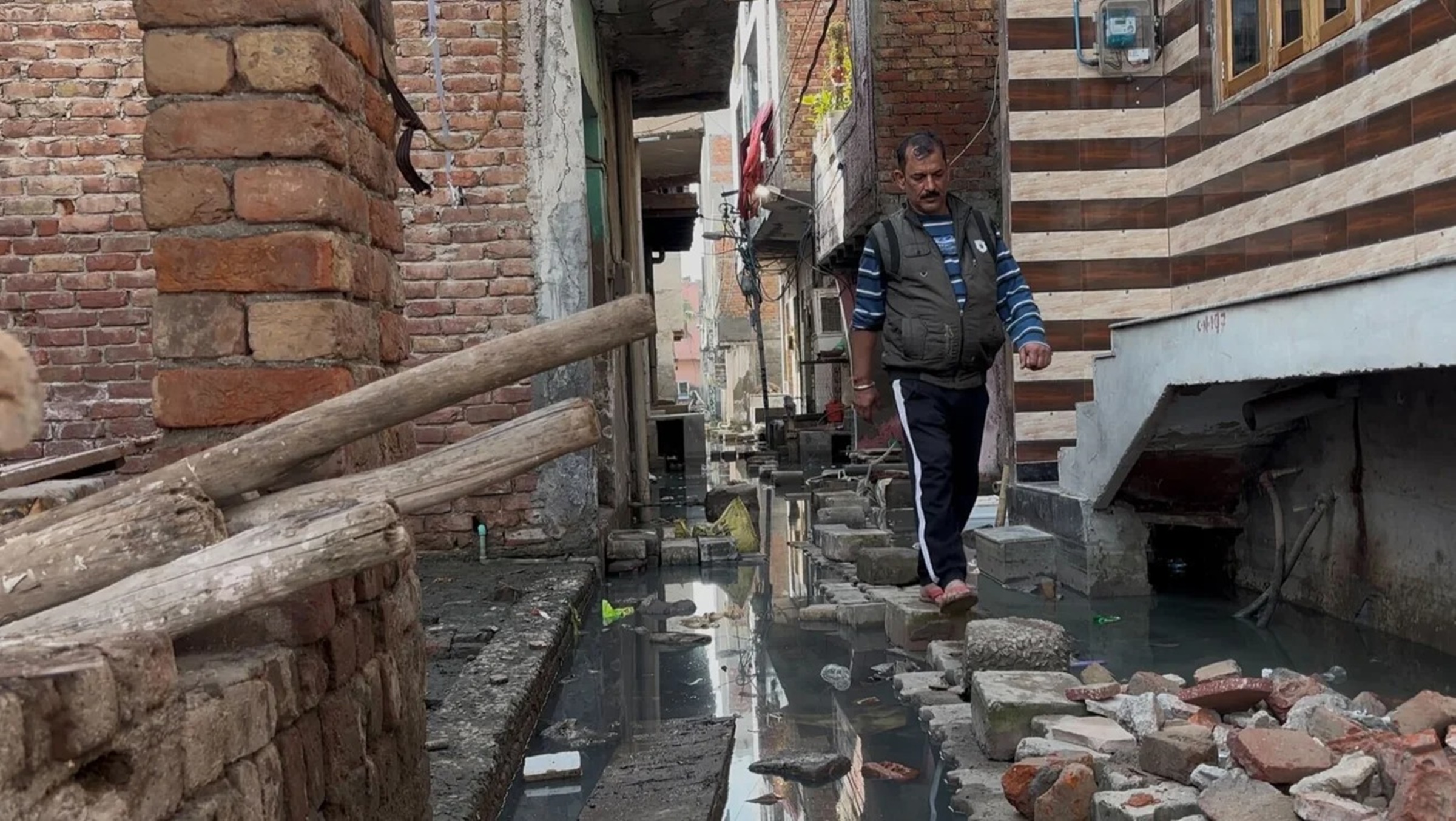 |
Ravinder Kumar steps on temporary rocks to cross the thick black water outside his home in the Sharma area of New Delhi. Photo: CNN |
Ravinder Kumar steps on temporary rocks to cross the thick black water outside his home in the Sharma area of New Delhi. Photo: CNN
Kamat can barely afford drinking water. She relies on a government pension of about 13 USD per month and must budget carefully if she wants to buy clean water.
Bhagwanti, Kamat's neighbor, said things are deteriorating before their eyes, but they do not know what to do.
"The water is thick and foul-smelling, but we still have to drink it," the 70-year-old woman said. "There are no means to clean it. There is no water to use. They do not care if we live or die."
Vu Hoang (According to CNN, AFP, Reuters)