The devastating flash flood in Nepal last week, caused by an ice avalanche and resulting in over 1,000 deaths, has sounded the alarm about glacier-related disasters in the Himalayan region. Senior United Nations officials are now warning the area faces a severe risk from future glacier lake outburst floods.
In 2020, researchers identified 47 unstable glacier lakes in Nepal, China, and India. The actual number is now estimated to be significantly higher, posing a threat not only to hydroelectric power sources but also to the lives of riverside communities.
"Technology cannot develop fast enough to prevent damage along major river systems that bear the brunt of water surges from glacier lakes", Kanni Wignaraja, Assistant Secretary-General of the United Nations, told Reuters on 1/9.
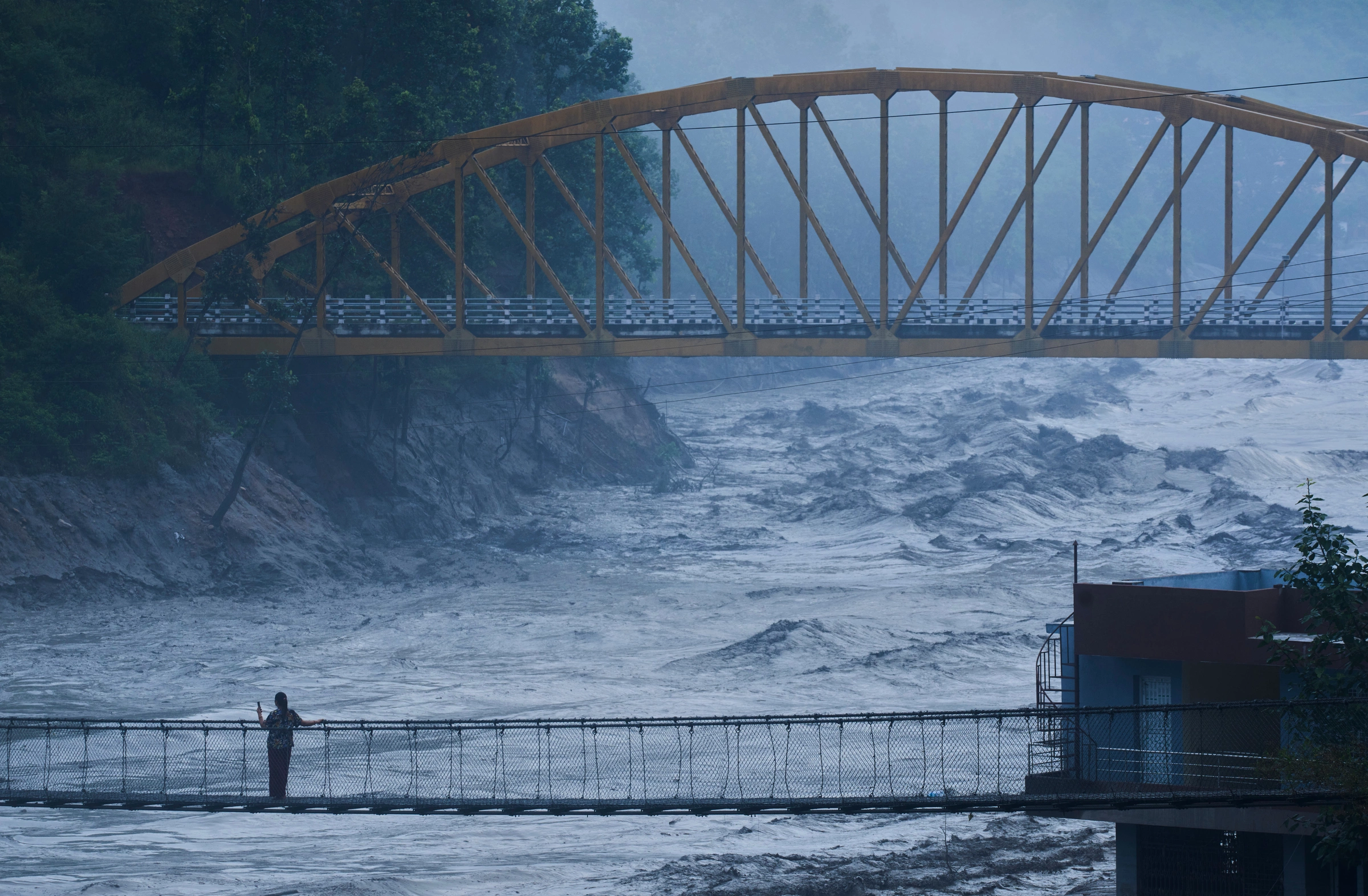 |
A resident looks at the rising Trishuli River in Galchhi, Dhading district, Nepal on 30/8. *Photo: AP* |
Wignaraja, who also serves as the Regional Director for Asia and the Pacific at the United Nations Development Programme (UNDP), stated that the number of people in harm's way totals "millions".
Last week's devastating flood in Nepal occurred after a portion of a glacier near Langtang Lirung peak collapsed, falling into the valley, triggering landslides and creating flood waves that surged into the Trishuli River.
Glacier lake outburst floods are a somewhat different phenomenon. They occur when meltwater accumulates behind a natural dam. The increasing pressure can eventually cause the dam to breach or water to overtop it, unleashing a massive flood downstream.
United Nations officials stated that both these threats are escalating as climate change accelerates glacier melt in the region, loosening rock and soil structures and increasing pressure on glacier lake dams.
According to Wignaraja, the mountain ranges in this region are also relatively young and thus susceptible to tectonic shifts. This can trigger glacier collapses or glacier lake outbursts.
Researchers have identified numerous potentially dangerous glacier lakes across vast areas of the Hindu Kush range. However, Wignaraja noted that no country in the region relies on glaciers more than Nepal, both for water sources and income.
"That leaves the country facing extremely difficult choices right now", Wignaraja said.
For many living along these rivers, relocating to higher ground may be beyond their financial means.
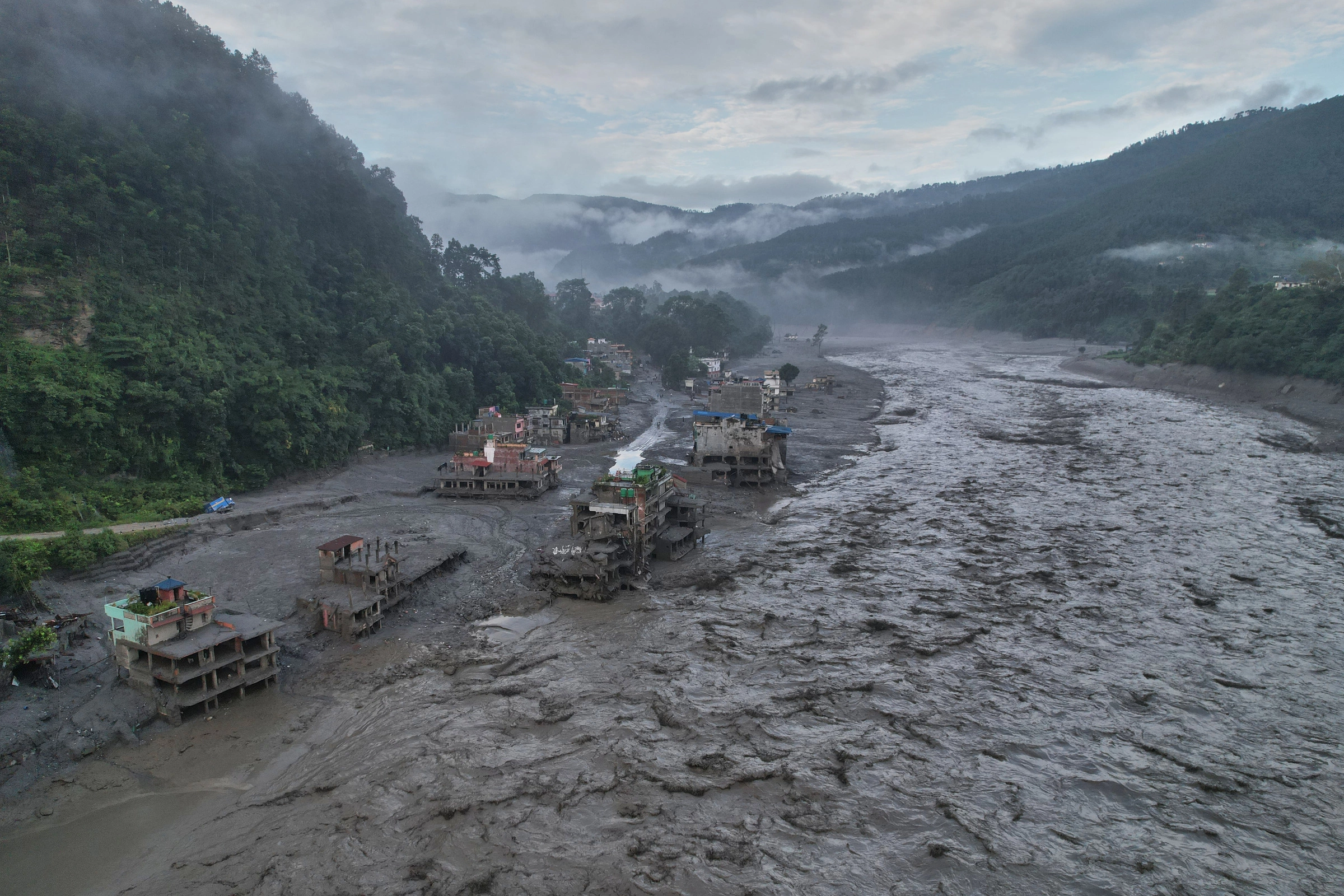 |
The Trishuli Bazaar area along the Trishuli River, Nuwakot, Nepal, after the flash flood on 30/8. *Photo: AP* |
Critical infrastructure will also face significant risks. Damage to Nepal's power generation could be more severe than some previous assessments.
Mohan Kumar Dangi, president of the Independent Power Producers' Association, Nepal, stated that the flash flood damaged at least 12 hydropower projects in Rasuwa and Nuwakot districts, with a total capacity of 670 MW. Of these: four projects were under construction, seven were operational, and one was in the testing phase.
Wignaraja suggested that the power grid and hydropower plants could enhance their flood resilience by applying new technology. However, last week's disaster exceeded the capacity of existing protective measures.
"No structure could withstand this disaster", she concluded.
By Thanh Tam (According to Reuters, AP)