


The historic winter storm brought freezing rain and heavy snowfall to many parts of the country. On 26/1, over 5,200 US domestic flights were canceled and over 6,500 flights were delayed, according to data from FlightAware. By late afternoon on 26/1, nearly 19% of flights had to be canceled, as reported by aviation analytics firm Cirium.
The storm's impact on 25/1 led to 11,000 flight cancellations, marking the highest number of affected flights in a single day since the Covid-19 pandemic, Cirium stated. The US Federal Aviation Administration (FAA) reported on 26/1 that heavy snowfall and limited visibility disrupted operations at major airports in the Boston and New York areas. Logan International Airport in Boston experienced the highest cancellation rate for the day, with up to 71% of flights affected.
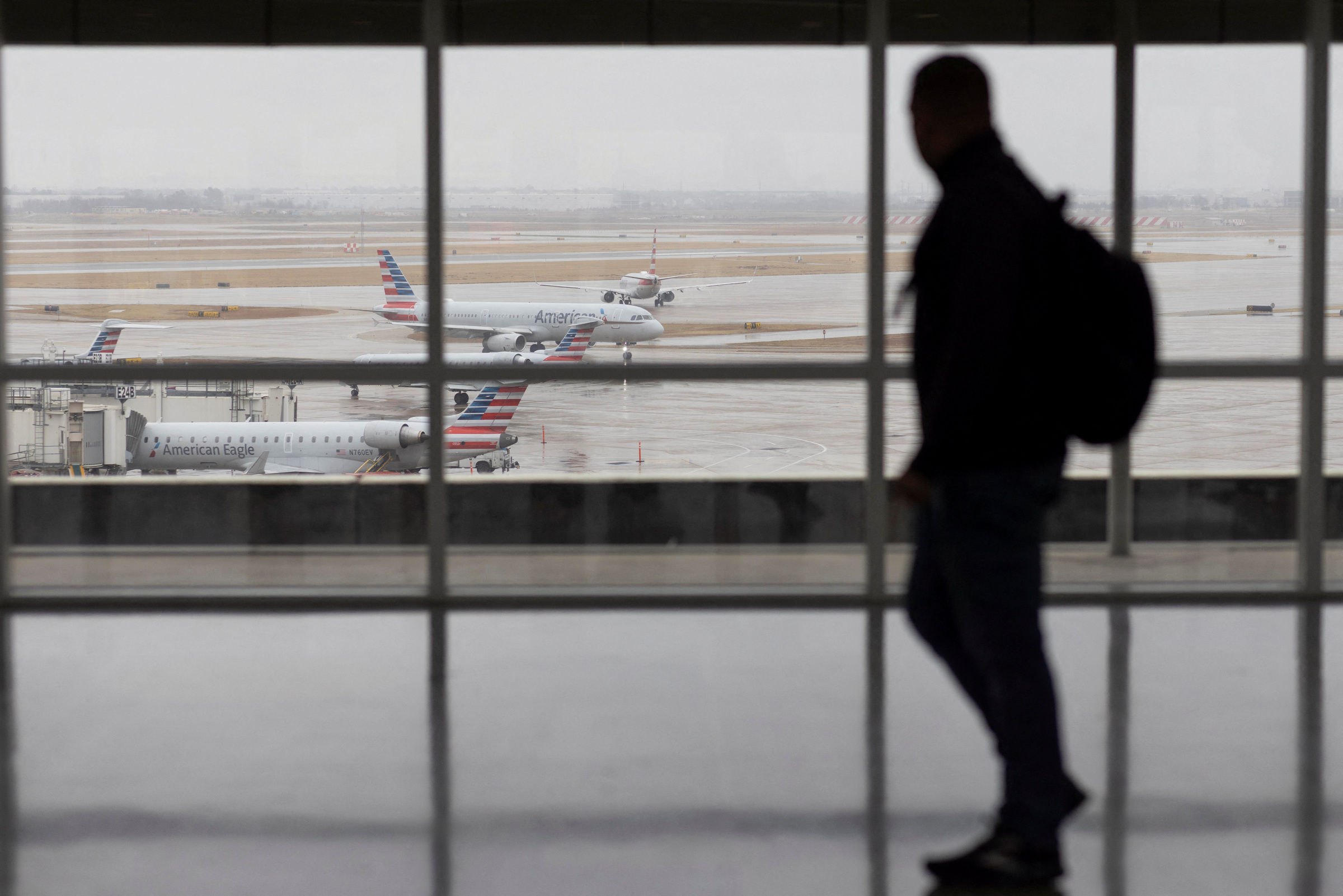 |
Dallas Fort Worth Airport in Texas on 23/1. *Photo: Reuters* |
American Airlines was the most severely affected carrier, with five of its nine key hubs experiencing operational disruptions. The airline requested the FAA issue a ground stop for all its flights at Dallas-Fort Worth and Ronald Reagan Washington airports, adding that efforts were underway to restore operations as soon as possible. Other airlines, including Republic Airways, JetBlue Airways, Delta Air Lines, and United Airlines, were also significantly impacted by this severe cold snap.
The winter storm began hitting the US last weekend. On 24/1, President Donald Trump called it a "historic" storm and declared a federal disaster emergency in South Carolina, Virginia, Tennessee, Georgia, North Carolina, Maryland, Arkansas, Kentucky, Louisiana, Mississippi, Indiana, and West Virginia. USA Today reported on 26/1 that at least 34 people died across 14 states due to the cold snap. AccuWeather estimated the storm caused economic damages and losses of approximately 105-115 billion USD. Severe weather conditions are expected to persist in some areas this week.
This dangerous winter storm resulted from a stretched polar vortex. This low-pressure mass of cold air in the Arctic, typically relatively round and compact, sometimes deforms into an oval shape, allowing cold air to spill across North America. Scientists suggest climate change may contribute to the increased occurrence of this phenomenon, though debates continue.
By Ngoc Anh (Reuters, USA Today)


