Colonel Tim Hawkins, spokesperson for US Central Command, announced on 16/4 that the United States had fully handed over a major base in Syria. This move is part of a "calculated and condition-based" transition roadmap.
However, the US military will continue supporting local partners in counter-terrorism operations. The goal is to maintain regional security and prevent the Islamic State (IS) from resurging.
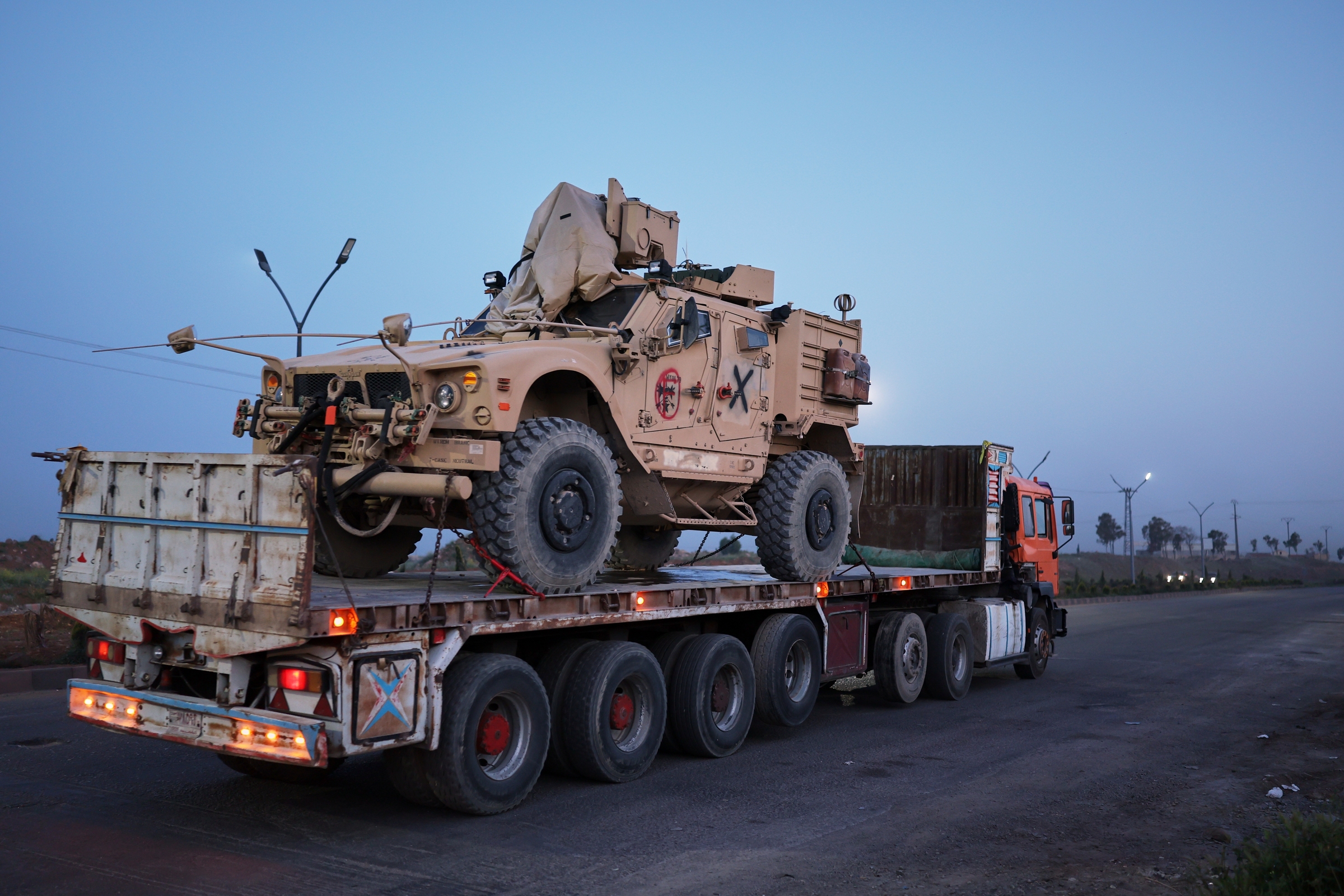 |
US armored vehicles transported by trucks from Qasrak base in Hasakah province on 16/4. AP
Local media reported that the US organized three convoys, totaling 200 vehicles, to transport heavy equipment and air defense systems towards the Iraqi border.
Syria's Ministry of Defense confirmed that the handover of military facilities was conducted in "full coordination" between the Syrian government and the US. While withdrawing from several key bases, US forces maintain a limited presence in Qamishli and Hasakah through security offices, as well as at the Istirahat al-Wazir base.
Syria's Ministry of Foreign Affairs stated, "Restoring Syria's state sovereignty over previously uncontrolled areas, including the northeast and border regions, is the result of continuous efforts to unify the country under a single state".
Damascus indicated that the withdrawal followed the successful implementation of an agreement between the Syrian government and the Kurdish-led Syrian Democratic Forces (SDF), alongside progress in the fight against ISIS remnants.
The Qasrak base, once the largest facility for the international anti-ISIS coalition in northeast Syria, is now managed by units of the Syrian army's 60th Division.
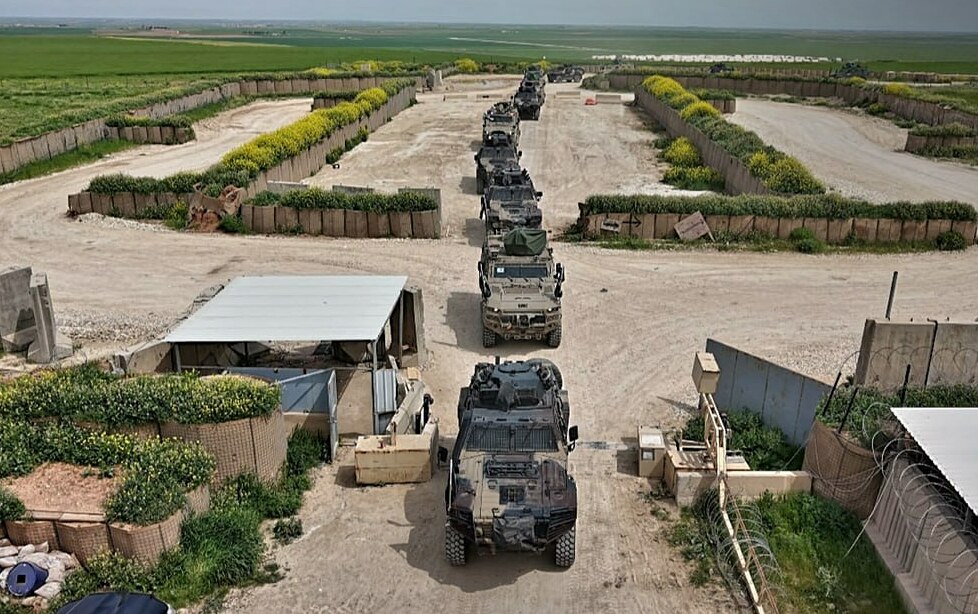 |
Syrian army takes over Qasrak base after US withdrawal on 17/4. SANA
The US military withdrawal from Syria commenced in late February, understood as part of Washington's broader plan to scale back its military presence in the country.
The US also withdrew forces from the al-Tanf base in eastern Syria, near the Jordanian border. Concurrently, US forces and their SDF allies completed the transfer of approximately 5,700 suspected ISIS members from detention camps in northeast Syria to Iraq for trial.
In recent years, the US deployed troops in Syria primarily to prevent ISIS's resurgence. Although the organization lost control of its last territorial stronghold in Syria in 2019, underground groups continue to carry out scattered attacks across Syria, Iraq, and neighboring areas.