Prime Minister-elect Peter Magyar has committed to reversing Hungary's withdrawal from the International Criminal Court (ICC), a move that could have significant implications for Israeli Prime Minister Benjamin Netanyahu's upcoming visit. Last year, Hungarian Prime Minister Viktor Orban announced the country's withdrawal, slated to take effect on 2/6. However, Magyar, speaking on 20/4, clarified his intention to halt this process, even after extending an invitation to Netanyahu to visit Budapest in October.
Magyar emphasized that his commitment to ICC membership means adhering to its mandates. "If a nation is an ICC member and a wanted individual enters our territory, that person must be arrested. I do not need to spell out everything over the phone. I believe every head of state and government leader understands this regulation," he stated.
According to Magyar, his incoming government possesses the authority to halt the ICC withdrawal process before Hungary officially departs the organization.
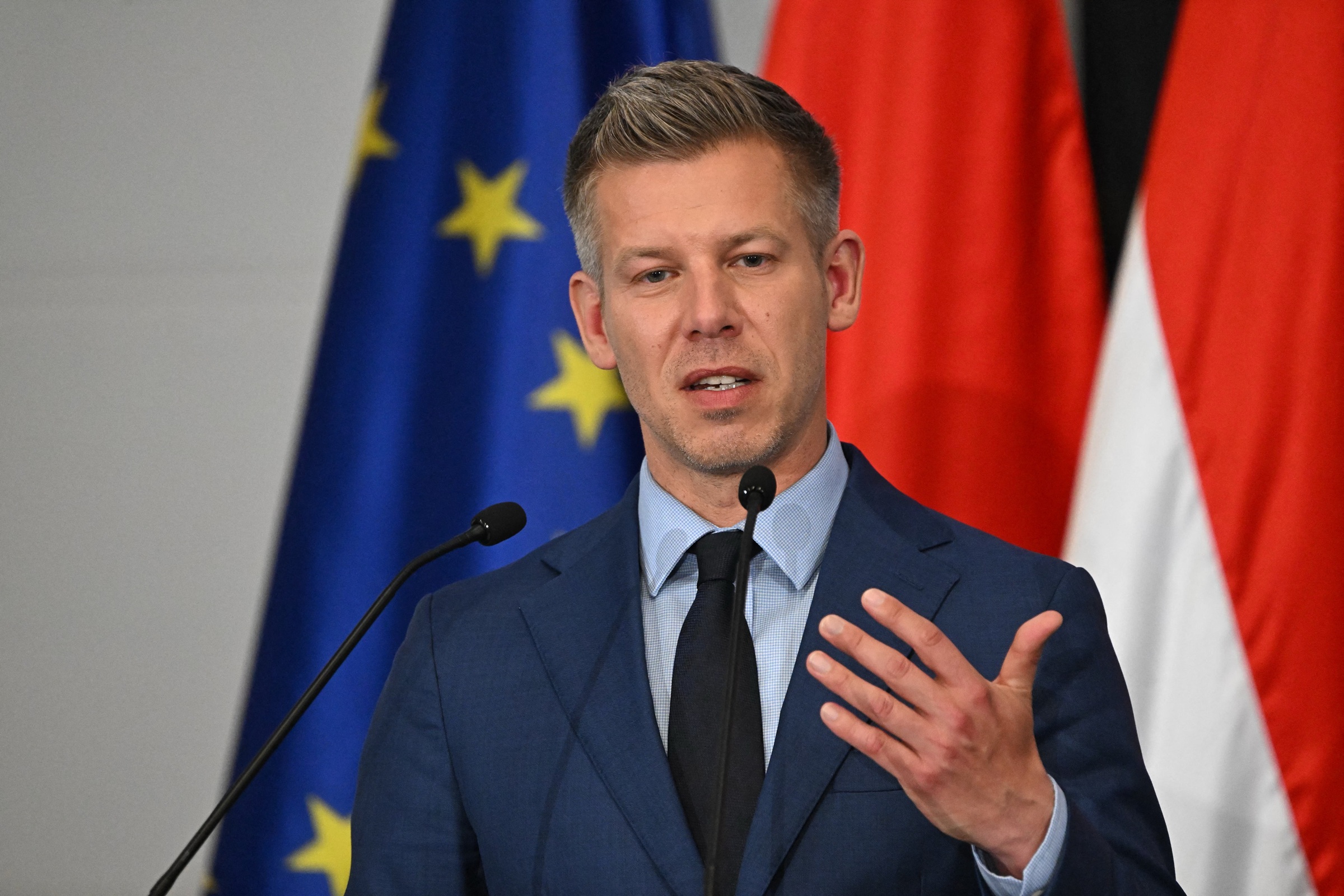 |
Hungary's Prime Minister-elect Peter Magyar at a press conference in Budapest on 20/4. Photo: AFP. |
The ICC, established in 2002 and headquartered in The Hague, Netherlands, serves as a permanent court to prosecute individuals for genocide, crimes against humanity, and war crimes. It currently has 125 member states. In 11/2024, the court issued an arrest warrant for Prime Minister Netanyahu, accusing him of crimes against humanity and war crimes related to the conflict in the Gaza Strip.
As an ICC member, Hungary is theoretically obligated to arrest and surrender Netanyahu to the court. This contrasts with Prime Minister Orban's previous actions, as he did not enforce the warrant when Netanyahu visited Hungary in 4/2025. Orban has consistently supported his counterpart Netanyahu over the years, readily refuting European statements or actions critical of Israel. Prime Minister Netanyahu applauded Hungary's non-enforcement of the ICC arrest warrant as "bold and principled".
The enforcement of ICC warrants, however, is not uniformly applied across all member states. Some nations argue they can remain ICC members without enforcing arrest warrants. France, for instance, believes that arresting Netanyahu would violate agreements it has signed with Israel. Article 98 of the ICC Statute supports France's argument, stating that a nation cannot "act contrary to its obligations under international law regarding the diplomatic immunity of a person". Similarly, in 4/2025, then-German Chancellor Olaf Scholz stated it was difficult to imagine his country arresting Netanyahu. Italy has also granted immunity to the Israeli leader.
By Huyen Le (AFP, Politico)