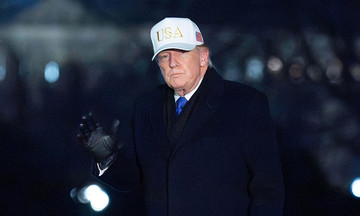
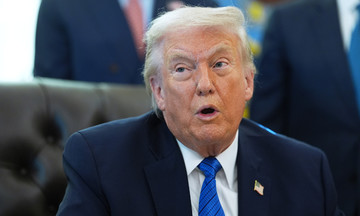
The US government reopened after a four-day partial shutdown following President Donald Trump's signing of a new budget package. The legislation, passed by the US House of Representatives on the afternoon of 3/2, allowed federal agencies to resume operations.
The House vote was a narrow 217 in favor and 214 against, revealing divisions within both major parties. Notably, 21 Republican lawmakers voted against the bill, while 21 Democratic lawmakers voted in favor.
This spending package will fund several departments until the end of September, including the Department of Energy, Defense, Treasury, State, Labor, Transportation, Health and Human Services, and Education, along with the judiciary and a number of independent agencies.
However, funding for the US Department of Homeland Security (DHS) was separated and only extended until 13/2. This shorter extension provides lawmakers additional time to negotiate changes to the agency's operations.
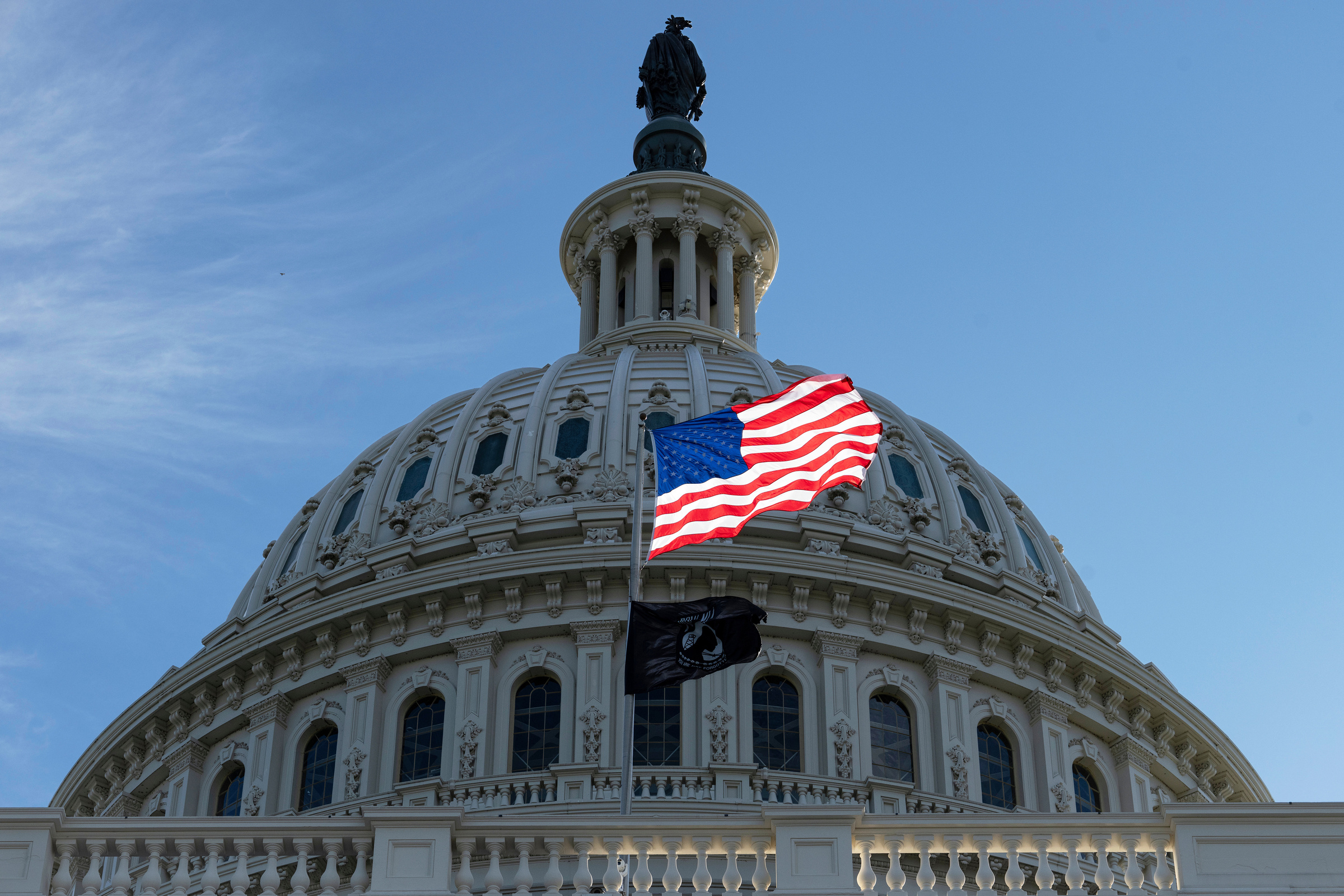 |
The US Capitol building in 10/2025. *Photo: AP*
This latest shutdown was significantly shorter than the record 43-day closure that nearly paralyzed the US administration late last year. Despite its brevity, the process of negotiating the government budget in the US Congress remained challenging.
The budget impasse stemmed from Democratic objections to the Trump administration's strict immigration enforcement measures. Tensions escalated, particularly following two shootings of white American citizens in Minneapolis this month, intensifying opposition to approving new funding for DHS.
After days of debate, President Trump announced a compromise with the Democratic party, paving the way for the federal spending bill to be put to a vote.
The US Senate had previously approved the government spending package on 30/1, with 71 votes in favor and 29 against. However, the bill did not pass the US House of Representatives before the body adjourned for the weekend, leading to the government shutdown starting on 31/1.
Initially, US lawmakers were optimistic that the House could quickly pass the bill, allowing the government to reopen as early as 2/2. This confidence diminished when a group of Republican representatives advocating for fiscal discipline warned they would block the spending package if their specific policy priorities were not met.
On 2/2, President Trump sent a message to members of his party, emphasizing his desire to resolve the budget impasse swiftly. "I am working closely with House Speaker Mike Johnson to get the spending deal through the House and to my desk, where I will sign it into law, immediately! No further adjustments can be made at this time," he wrote on social media.
Pressure from Republican leaders and President Trump ultimately led some lawmakers to switch their votes and support the spending bill.
House Minority Leader Hakeem Jeffries continues to call for drastic changes in how DHS operates, particularly concerning Immigration and Customs Enforcement (ICE). He plans to meet with Senate Minority Leader Chuck Schumer to discuss the path forward.
Negotiations over DHS funding before the 13/2 deadline are expected to remain tense, with Democrats presenting a range of demands: These include tighter regulations on search warrants, prohibiting ICE agents from concealing their faces while on duty, independent investigations into incidents, and clear guidelines on the use of force.
House Speaker Johnson has countered many of these proposals, stating that the Democratic additions to DHS are "unfeasible." He advocates for reforms to "sanctuary cities," which are often managed by Democratic politicians and host undocumented immigrants, and calls for increased cooperation with federal immigration enforcement to reduce conflicts.
Thanh Danh (According to CBS, Hill, AP)