On 23/7, the US House of Representatives passed a Democrat-led proposal to end the conflict with Iran, urging President Donald Trump to withdraw troops from combat operations. However, this "joint resolution" was merely a statement of opinion and non-binding.
The resolution passed with a 214-208 vote, with four Republican representatives joining all Democratic members in the House to vote in favor.
Later that day, the US Senate rejected a "joint resolution" to end the Iran airstrike campaign by a 47-49 vote. Unlike the House version, a joint resolution is legally binding and requires identical passage by both the House and Senate, though it can still be vetoed by the President.
 |
House Speaker Mike Johnson at Capitol Hill on 22/7. Photo: AP
One Republican senator, along with all Democratic members except lawmaker John Fetterman, voted in favor of the proposal. Four Republican senators did not participate in the vote.
According to AFP, the House vote results indicate growing concern within the US Congress regarding the Middle East conflict. The war, which began in late February, has become a political burden for the Republican Party ahead of the midterm elections in November.
US Secretary of Defense Pete Hegseth stated on 21/7 that the campaign against Iran has cost approximately 37.5 billion USD, an increase of about 8 billion USD from figures released in mid-May. The conflict has also resulted in US military equipment and personnel losses, with a total of 18 service members killed.
Democratic Representative Pramila Jayapal, who championed the resolution in the House, called the vote a "major victory for the majority of Americans who want President Trump to end this illegal war."
"When will Republican senators stand up and say enough is enough?" asked Chuck Schumer, the Democratic leader in the Senate. "Americans are watching. Every time Republican senators vote against ending Trump's war, they lose credibility with the American people."
Democrats have repeatedly used war powers votes to compel Republican members to publicly state their stance on the largely unpopular conflict with Iran.
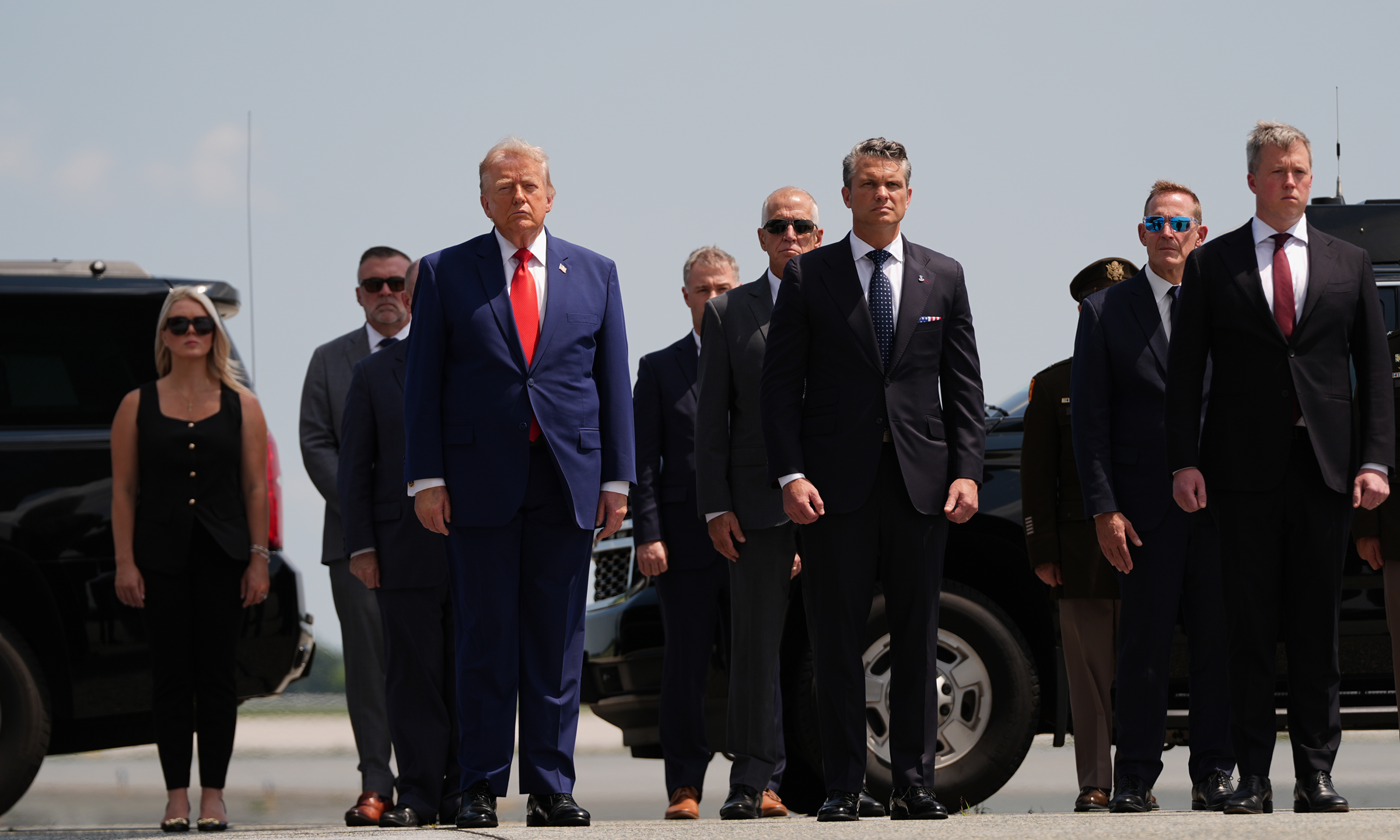 |
Trump (red tie) at the ceremony receiving the remains of four US service members killed by Iranian fire in Delaware, US on 23/7. Photo: AP
They argue that President Trump violated the Constitution by initiating and sustaining military operations without congressional approval. However, most Republican members have sided with President Trump.
Republican Representative Brian Mast, chairman of the House Foreign Affairs Committee, accused critics of failing to acknowledge the sacrifices of US soldiers killed in the conflict, adding that the US campaign was a response to Iranian attacks.
War powers votes often have close results and depend on the number of lawmakers present. The US Congress passed a non-binding resolution in June, but President Trump criticized that vote as "ill-timed and meaningless."
The White House argues that efforts to limit President Trump's authority would undermine the ability to exert pressure on Iran.
By Pham Giang (NBC News, AFP)