Russia recently unveiled a new generation of tactical air-launched cruise missiles at the El Alamein International Air Show in Egypt, held from 8-10/9. The display included the S-71K Kovyor, S-71M Monokhrom, and S8000 Banderol, marking their first public appearance. Among these, the S-71M stands out with its compact design and turbojet engine, representing a distinct departure from existing Russian cruise missile technology.
The S-71M is reportedly equipped with a warhead derived from the Soviet-era OFAB-250-270 high-explosive fragmentation bomb, containing approximately 92 kg of TNT. The OFAB bomb casing, thicker than conventional FAB bombs, features internal grooves designed to maximize fragmentation upon detonation. This design allows each missile to cause damage to unarmored personnel and vehicles within a 150 m radius and inflict harm on lightly armored equipment from 40 m.
Its angular body reduces radar cross-section, enhancing stealth capabilities. The missile's nose incorporates at least one glass window, protecting an optical-electronic or thermal seeker.
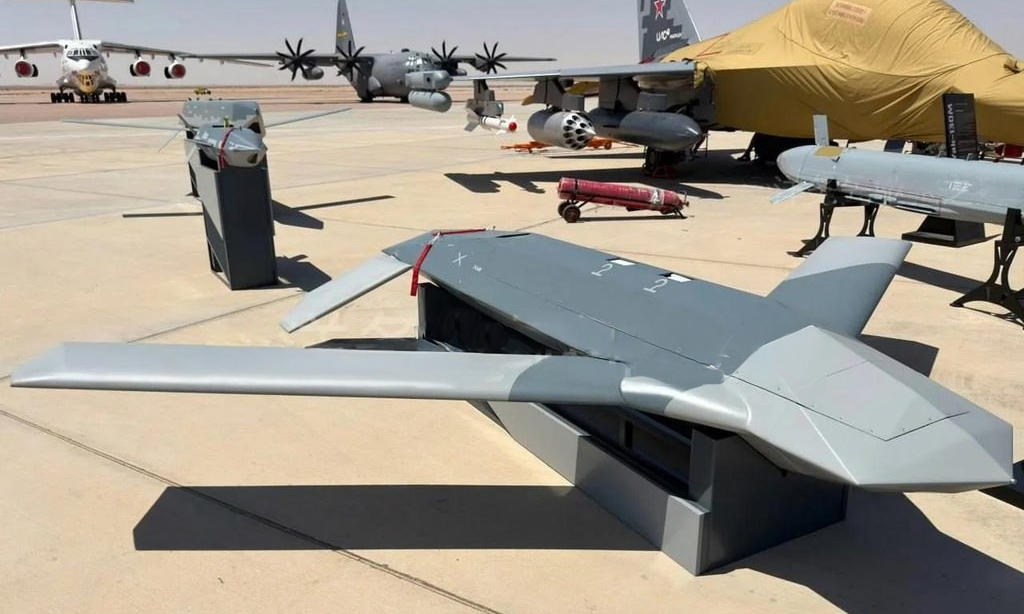 |
Russian cruise missiles displayed at the air show in Egypt in a photo taken on 6/9. Photo: X/krakek1 |
The main lifting wings are foldable, allowing for compact storage under aircraft, while the tail features an inverted V-shape.
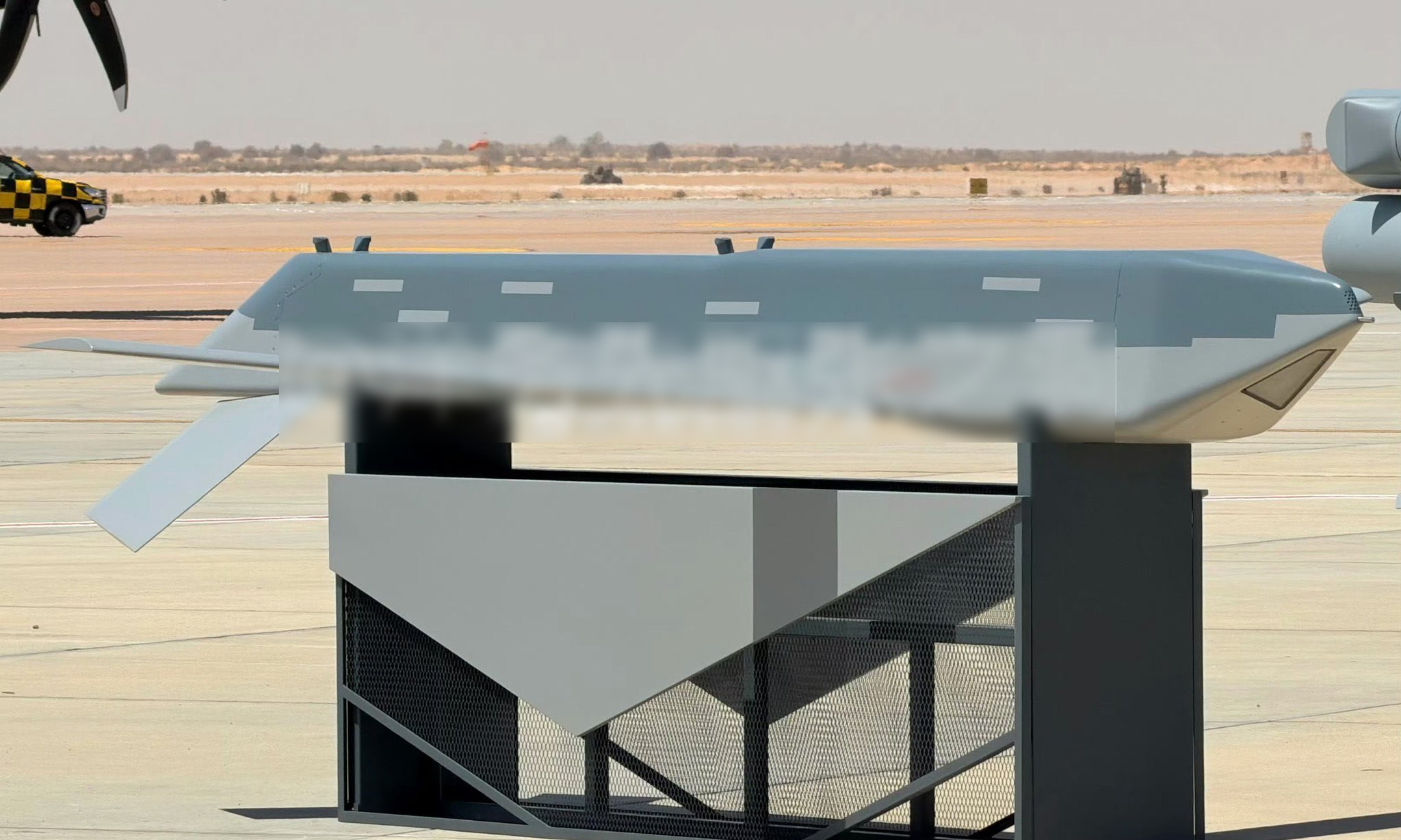 |
The S-71M missile at the air show in Egypt in a photo taken on 6/9. Photo: X/krakek1 |
Thomas Newdick, editor for the US military news site War Zone, described the S-71M as an intermediate weapon, bridging the gap between glide bombs and cruise missiles. He noted its relatively large warhead, limited stealth, low cost, and simpler design compared to larger cruise missiles.
An upgraded variant, the S-71K, shares the S-71M's angular design for improved radar stealth but features distinct differences. Its body is notably wider, with thicker wings and a refined inverted V-tail, making it resemble a small unmanned aerial vehicle (UAV) more than a traditional air-to-ground missile.
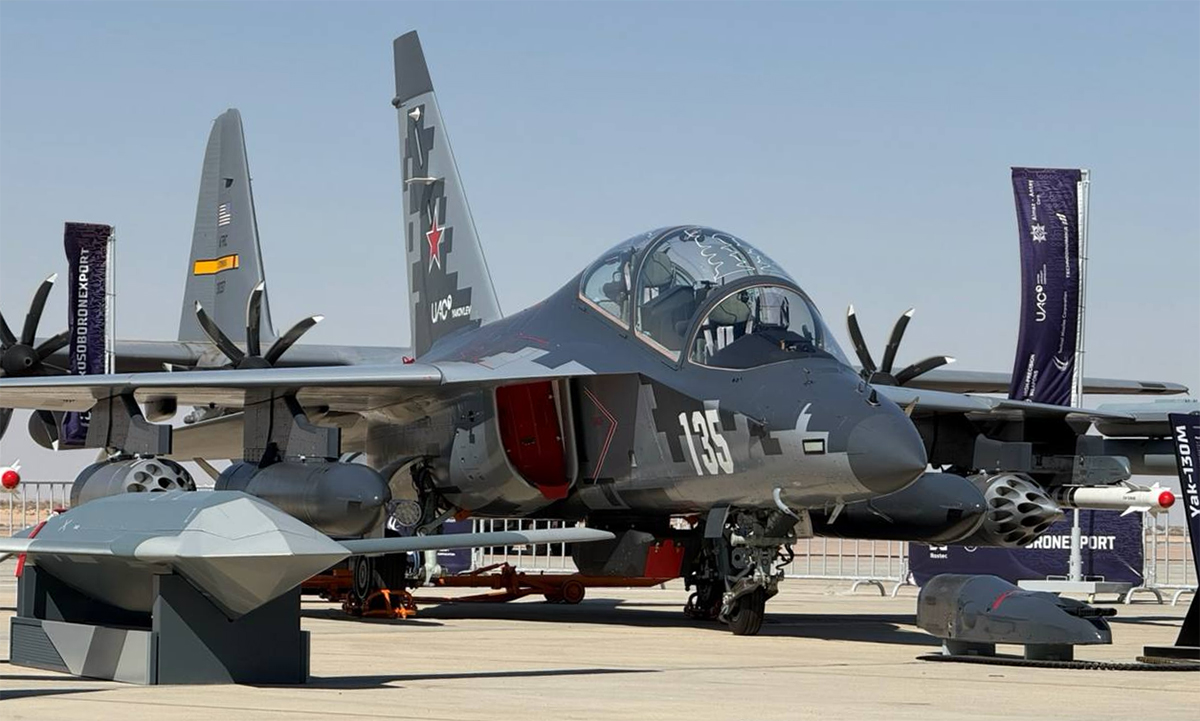 |
The S-71K missile (left) placed near a Yak-130M fighter jet at the air show in Egypt on 7/9. Photo: OAK |
The S8000 Banderol, with an estimated range of 500 km, represents another innovative approach by Russia, often characterized as a "missile-UAV hybrid." Newdick highlighted its position between fast, long-range tactical missiles and cheaper, mass-producible UAVs.
Visually, the S8000 Banderol maintains a traditional missile profile: a slightly rounded body, a pointed nose, and foldable wings tucked beneath its belly. Its smaller size, compared to Russia's primary cruise missiles, allows for deployment from armed UAVs or helicopters.
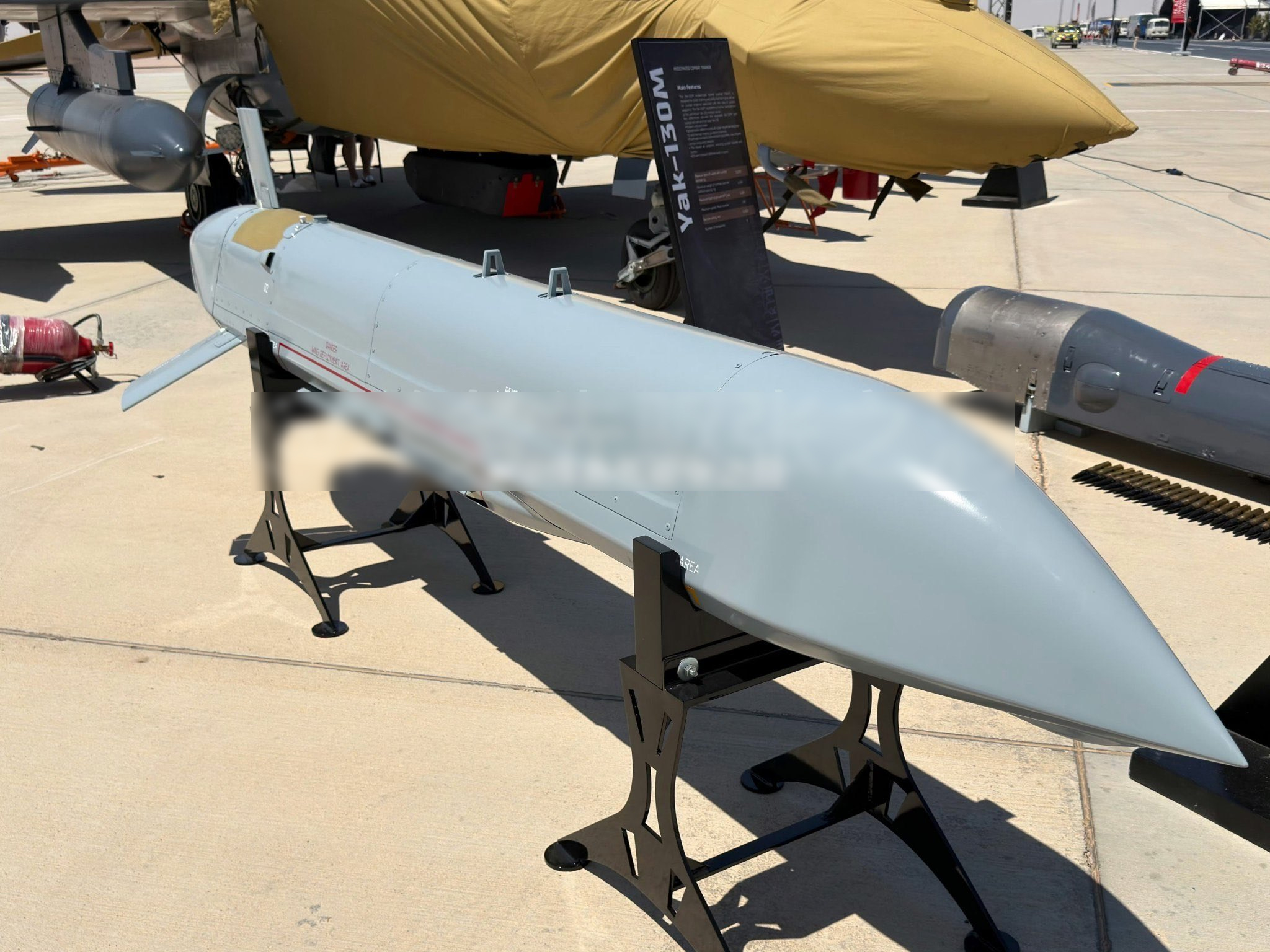 |
The S8000 Banderol missile at the air show in Egypt in a photo taken on 6/9. Photo: X/krakek1 |
A US expert observed that the S8000 Banderol's development blurs the distinction between cruise missiles and large suicide UAVs. While possessing a traditional missile body and a jet engine, its operational context aligns with UAV combat, leveraging readily available components.
The exhibition also featured a previously unseen missile model, smaller than the S-71M, with an X-tail. This design appears specifically tailored for armed UAVs, featuring foldable mid-body wings, a rounder shape than the S-71K, a tapered nose, and a glass-covered seeker compartment.
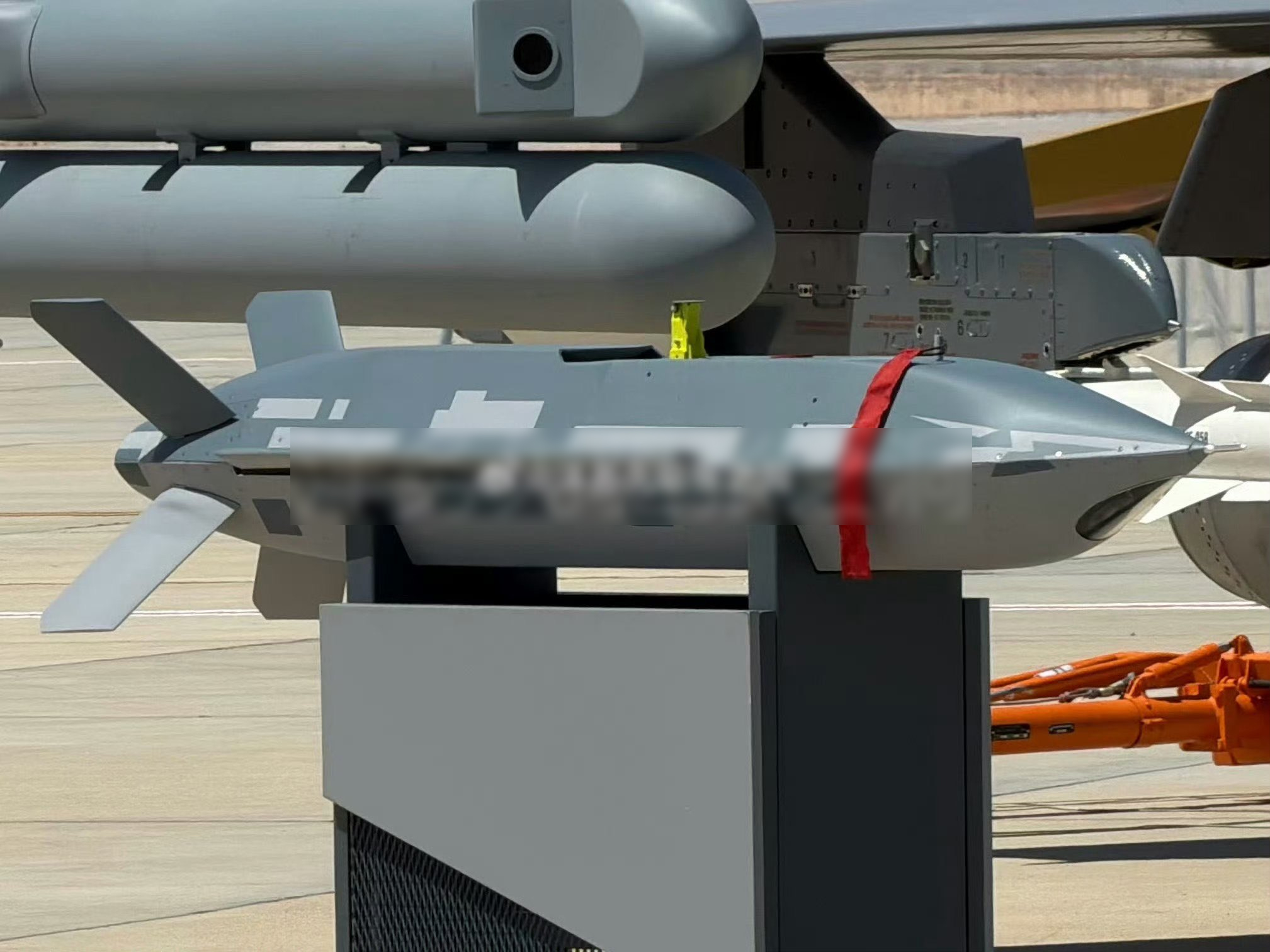 |
An unnamed Russian missile model at the air show in Egypt in a photo taken on 6/9. Photo: X/krakek1 |
Newdick emphasized that Russia is not alone in seeking to produce and deploy sufficient quantities of affordable precision weapons. He noted growing global military interest in cost-effective cruise missiles, loitering munitions, and other precision armaments. Russia has incorporated improvements to enhance the survivability of these weapons, particularly the S-71K's reduced radar signature. This suggests that the ability to penetrate air defense systems was a primary design consideration from the outset.
Nguyen Tien (According to War Zone, AP, RIA Novosti)