The US Treasury Department announced on December 4 its decision to extend a general license until 29/4/2026. This action aims to "minimize harm to consumers and suppliers seeking to conduct normal transactions" with retail gas stations associated with the Russian oil group Lukoil.
This move effectively allows Lukoil-branded gas stations in various countries, including the US, to continue serving customers while preventing revenue from flowing back to Russia.
The Treasury Department's decision partially suspends the sanctions against Lukoil that President Donald Trump previously announced.
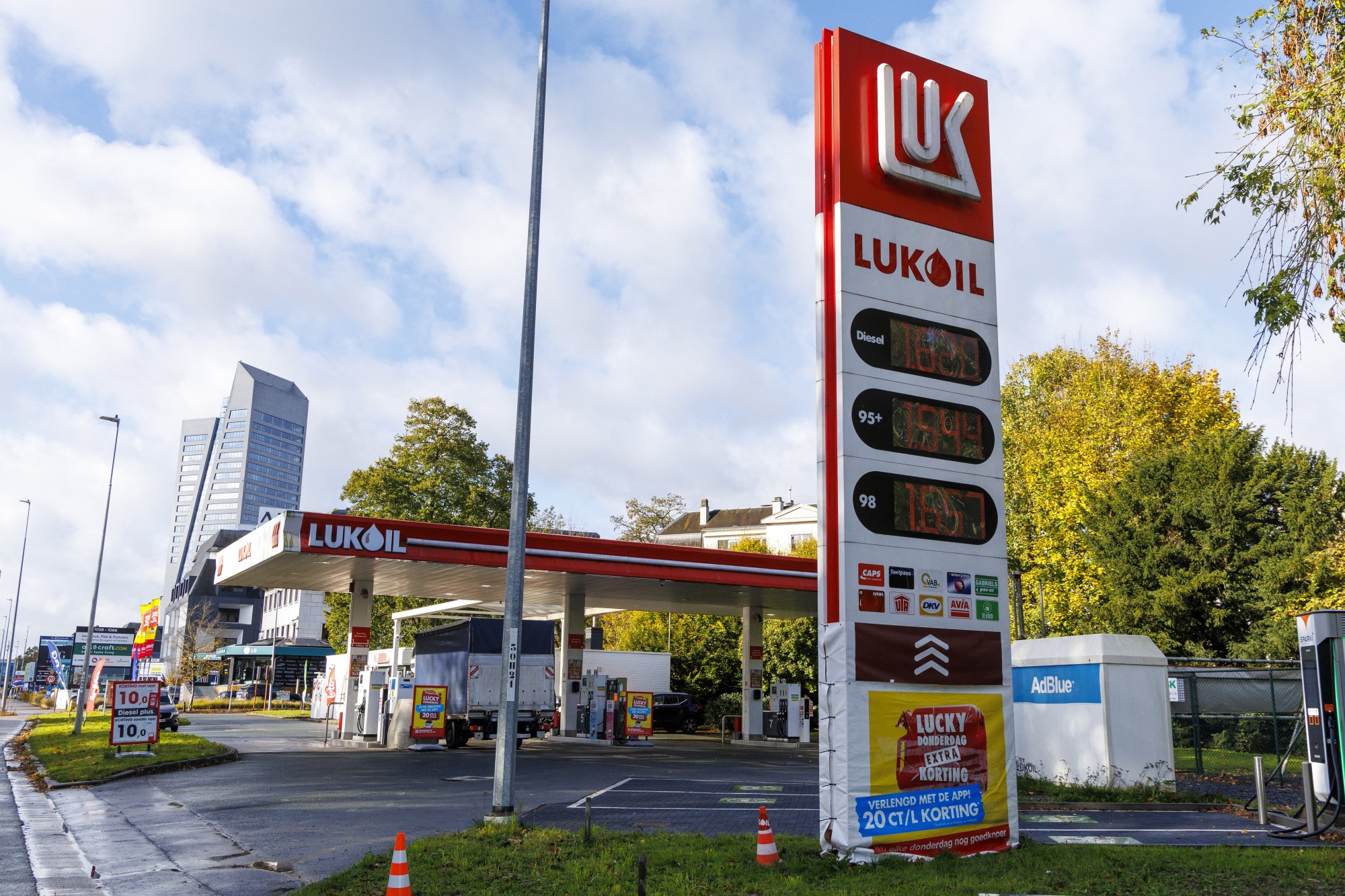 |
A Lukoil gas station in Ghent, Belgium on 28/10. Photo: AFP |
In October, President Trump imposed sanctions on Russia's two largest oil groups, Rosneft and Lukoil. These measures included freezing all assets of both companies in the US and prohibiting all American firms from transacting with them. The sanctions took effect on November 21, prompting major buyers of Russian oil to urgently seek alternative suppliers.
This marked the first time the US had sanctioned Russia since President Trump took office in January. The move signaled a significant shift in Trump's strategy, as he had not yet persuaded his Russian counterpart, Vladimir Putin, to end the Ukraine conflict.
Washington had given companies doing business with Rosneft and Lukoil one month to sever ties or face secondary sanctions, which would deny them access to US banks, traders, carriers, and insurance companies.
The announcement to ease sanctions on Lukoil came in the same week that a White House negotiating team met with Russian President Putin in Moscow to advance a deal aimed at ending the Ukraine conflict.
Kaja Kallas, the European Union's (EU) high representative for foreign policy, expressed concern last month that Russia was attempting to "exploit" US proposals for a ceasefire to delay sanctions.
Lukoil, Russia's second largest oil group, supplies oil to Hungary and Slovakia, as well as to Turkey's STAR refinery. It also holds stakes in oil terminals and retail fuel chains across Europe, with numerous upstream and downstream projects in Central Asia, Africa, and Latin America.
Lukoil announced on 27/10 that it would sell its overseas assets due to the US sanctions, though it did not specify which assets.
By Huyen Le (AFP, Reuters)