Foreign Minister Le Hoai Trung affirmed China as one of ASEAN's most dynamic and comprehensive partners at the ASEAN - China Foreign Ministers' Meeting in Manila, Philippines today, according to the Ministry of Foreign Affairs.
To elevate the quality and strategic value of the Comprehensive Strategic Partnership between the two sides, Minister Le Hoai Trung proposed three priorities: promoting high-quality economic integration and strengthening infrastructure connectivity; leveraging innovation and AI as new growth drivers; and enhancing strategic trust while coordinating responses to non-traditional security challenges.
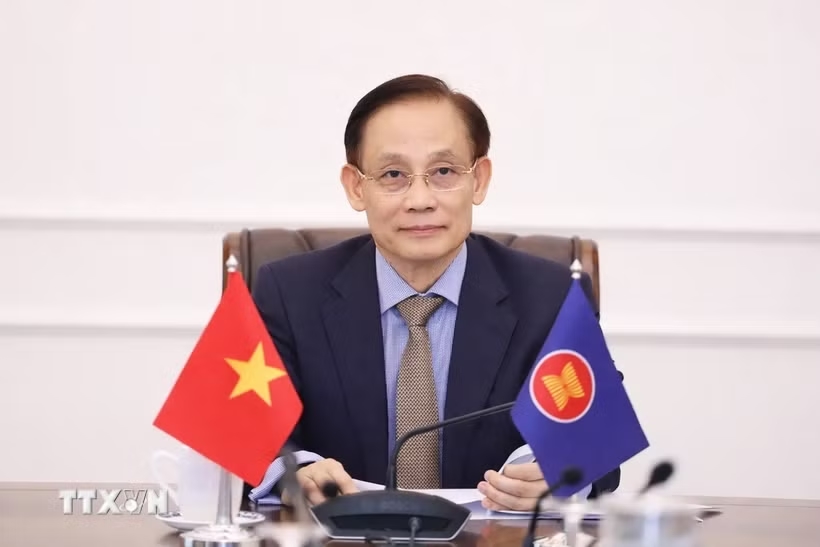 |
Foreign Minister Le Hoai Trung. Photo: TTXVN
Regarding the South China Sea, the Minister emphasized the importance of maintaining peace, stability, security, safety, and freedom of navigation and overflight. He welcomed progress in negotiations for the Code of Conduct in the South China Sea (COC) and called on all parties to promptly finalize an effective and substantive COC, consistent with international law, particularly the United Nations Convention on the Law of the Sea of 1982 (UNCLOS 1982).
Chinese Foreign Minister Wang Yi affirmed ASEAN remains a priority in China's neighborhood diplomacy policy and reaffirmed support for ASEAN's centrality in the regional architecture.
According to him, ASEAN - China cooperation is a crucial driving force for promoting regional and global peace, stability, and development. China will strengthen coordination to advance regional integration, sustainable development, and inclusive growth, with focuses including maintaining peace and stability; ensuring economic and energy security; promoting technological innovation, artificial intelligence (AI), and green growth; and people-centered development.
ASEAN member states lauded China's continued support for ASEAN's centrality and active participation in ASEAN-led mechanisms. Both sides agreed to enhance coordination in responding to non-traditional security challenges such as transnational crime, cybercrime, online fraud, terrorism, and drug trafficking.
The meeting also welcomed the adoption of the ASEAN - China Action Plan on Building a Sustainable and Inclusive Digital Ecosystem for the 2026-2030 period; the establishment of the ASEAN - China AI Industrial Innovation Center; the move towards establishing an ASEAN - China Digital Academy; and noted the proposal to designate 2027 as the "ASEAN - China AI Cooperation Year".
ASEAN countries appreciated China's support in promoting the ASEAN Power Grid, energy transition, and clean energy development. The meeting also adopted the ASEAN - China Foreign Ministers' Joint Statement on the Regional Impact of the Middle East Situation and Enhancing Regional Energy Cooperation.
These discussions were part of the 59th ASEAN Foreign Ministers' Meeting (AMM 59) and related meetings. At the ASEAN - US Foreign Ministers' Meeting held on the same day, Minister Le Hoai Trung highly valued the United States' commitment to regional peace, stability, and development.
For economic cooperation, Minister Le Hoai Trung proposed that both sides promote open, transparent, and mutually beneficial trade and investment. He suggested enhancing cooperation in areas such as digital economy, artificial intelligence (AI), semiconductors, science and technology, innovation, energy transition, and regional energy connectivity.
ASEAN Ministers appreciated the United States' commitment to supporting ASEAN's centrality and active participation in ASEAN-led mechanisms. They also noted the proposal to draft an ASEAN - US Leaders' Statement on "10 public-private principles in combating online fraud".
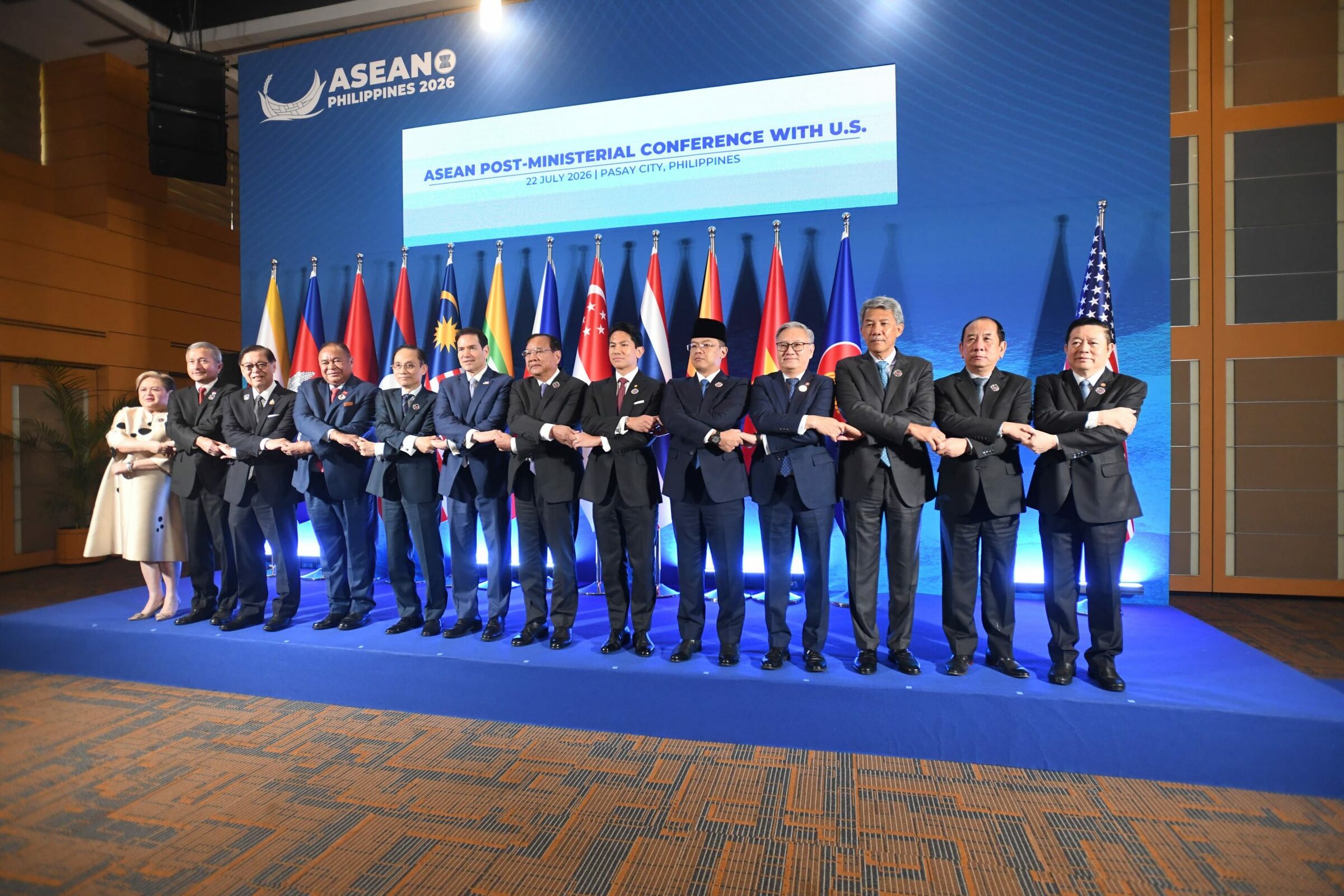 |
Leaders attend the ASEAN - US Foreign Ministers' Meeting. Photo: ASEAN.org
Speaking at the ASEAN - Russia Foreign Ministers' Meeting, Minister Le Hoai Trung urged both sides to achieve a breakthrough in economic cooperation, aiming for a trade target of USD 45 billion by 2035.
The Minister also proposed the early concretization of the ASEAN - Russia Joint Statement on Energy Cooperation. This includes prioritizing the development of strategic fuel storage and reserve facilities, expanding LNG trade, and strengthening cooperation in renewable energy, civilian nuclear power, and energy-saving technologies.
Ngoc Anh