Watanabe Noboru, 53, an environmental sector employee for the Tokyo metropolitan government, recently started wearing a t-shirt and khaki shorts to work. For over 30 years, Watanabe had adhered to traditional Japanese business attire, consisting of trousers, an ironed shirt, a vest, and a tie.
"Everyone says I look younger," he said. "I think I appear a bit more approachable. It also seems to help make the atmosphere in the office more relaxed."
Initially, he felt "embarrassed" revealing his legs at the office but admitted, "once you wear shorts, you realize how comfortable they are."
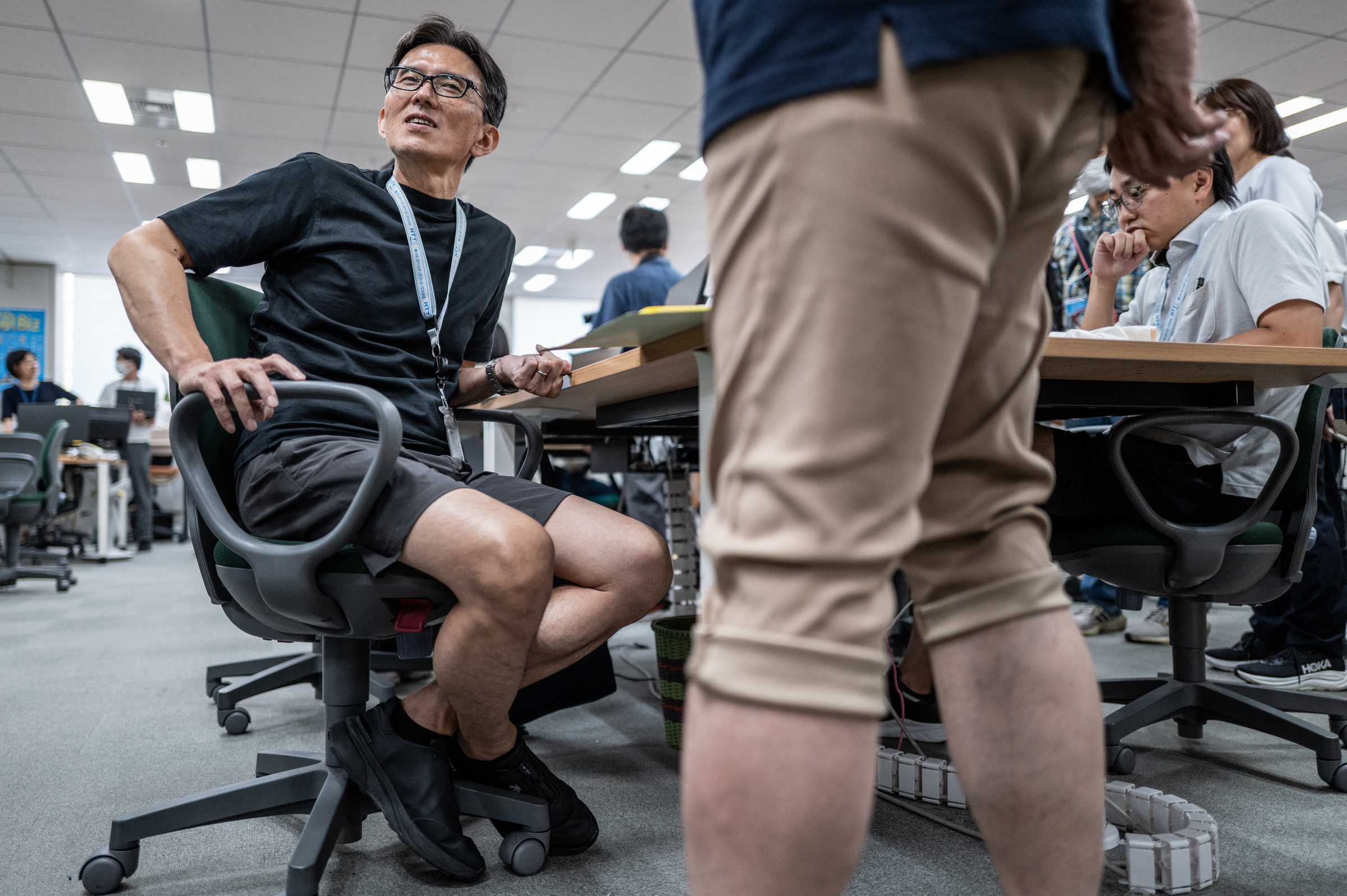 |
Male employees at Tokyo City Hall wear shorts to work on 14/7. Photo: AFP |
Four months have passed since Tokyo Governor Yuriko Koike launched the "Tokyo Cool Biz" campaign, encouraging office workers to adopt comfortable attire. The campaign has received mixed reactions. Some welcome the comfort the new rules provide. However, others argue the policy is unfair to women, who are still expected to wear stockings if they expose their legs.
Professor Tamada Atsuko, a lecturer in French literature at Chubu University, noted that women are expected to dedicate significant time and money to hair removal, leg care, and clothing. "If the government now encourages men to wear shorts and sandals, the same standards should apply to women," she stated.
Furthermore, some women reported feeling uncomfortable being exposed to their colleagues' leg hair, calling the experience "leg hair harassment." Ruai Sajiki, 23, an employee at the Tokyo government office, acknowledged that seeing bare legs in a professional setting could be unsettling for women. However, she felt comfortable when Watanabe, her superior, asked if she minded him wearing shorts in the office. "I've seen my father's legs before, so personally, I'm comfortable with it," she said. "It's inevitable that there will be differing opinions, and some women feel uncomfortable."
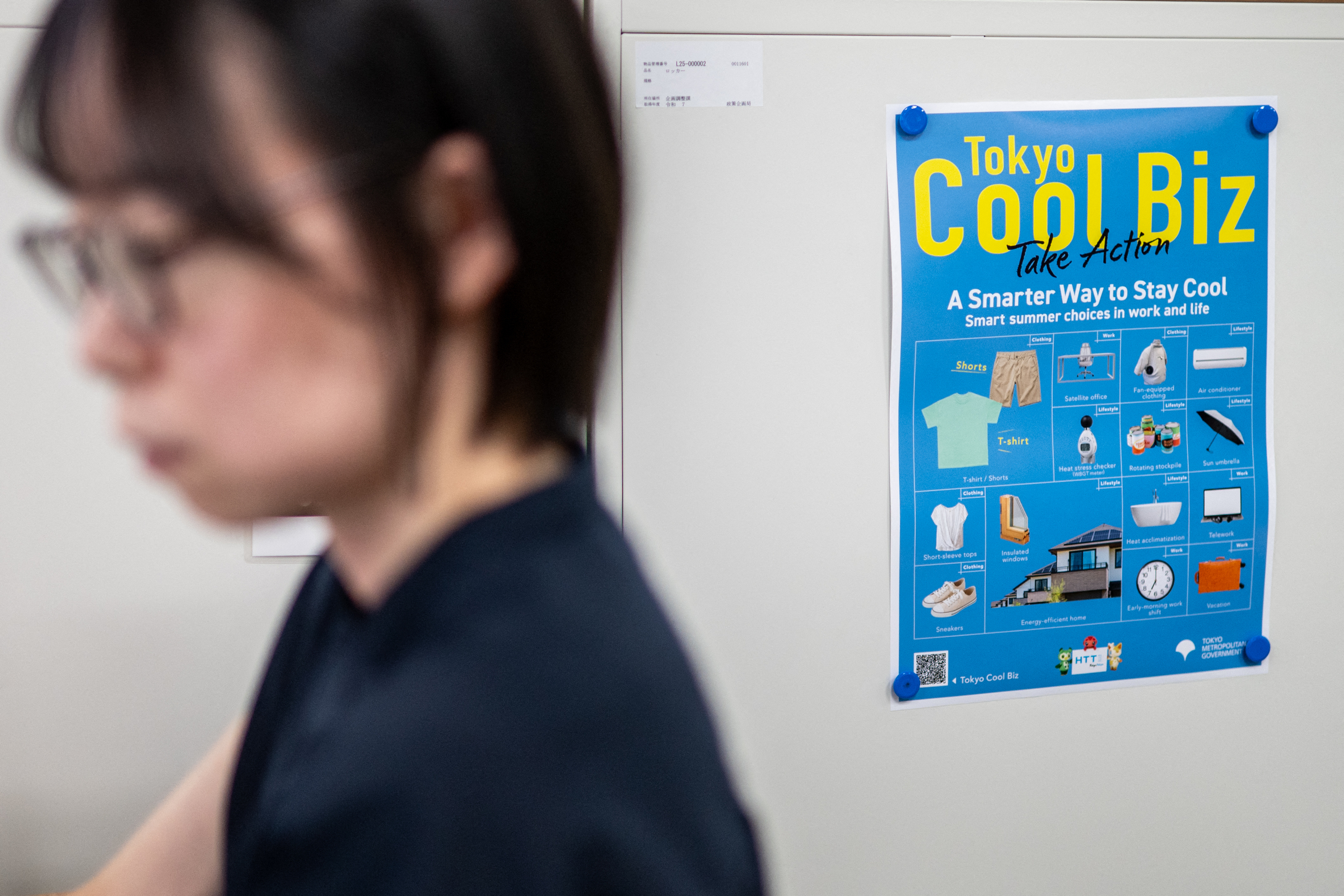 |
Tokyo Cool Biz campaign guidelines for attire and heat countermeasures displayed at Tokyo City Hall on 14/7. Photo: AFP |
Sachie Koike, 52, a real estate agent, did not object to men foregoing ties or vests in summer but found wearing shorts to be too inappropriate. "Shorts make me think they're out having fun rather than working," she said. "I believe hairy legs don't look tidy in the workplace."
A survey conducted in June by Gorilla Clinic, a leading chain of dermatology and wellness clinics for men in Japan, revealed that 53,5% of respondents opposed wearing shorts to work in summer, while 46,5% supported the new recommendation. For those who opposed wearing shorts in the office, the main reason across both genders was concern over body shape and body hair. Gorilla Clinic noted that women respondents outnumbered men, indicating greater hesitation among women to see bare legs of male colleagues.
In recent years, more Japanese workers, particularly those in startups and technology companies, have adopted casual attire. This year, the Tokyo government's recommendation has broadened social acceptance of this trend. Nevertheless, some men remain conscious about their leg hair. Akifumi Funatsu, director of Gorilla Clinic, observed that many clients seek hair removal not just for aesthetic reasons but also as a "social courtesy when wearing shorts." He stated that women's perception that "men should have less leg hair" has driven men to laser hair removal services to avoid inconveniencing others.
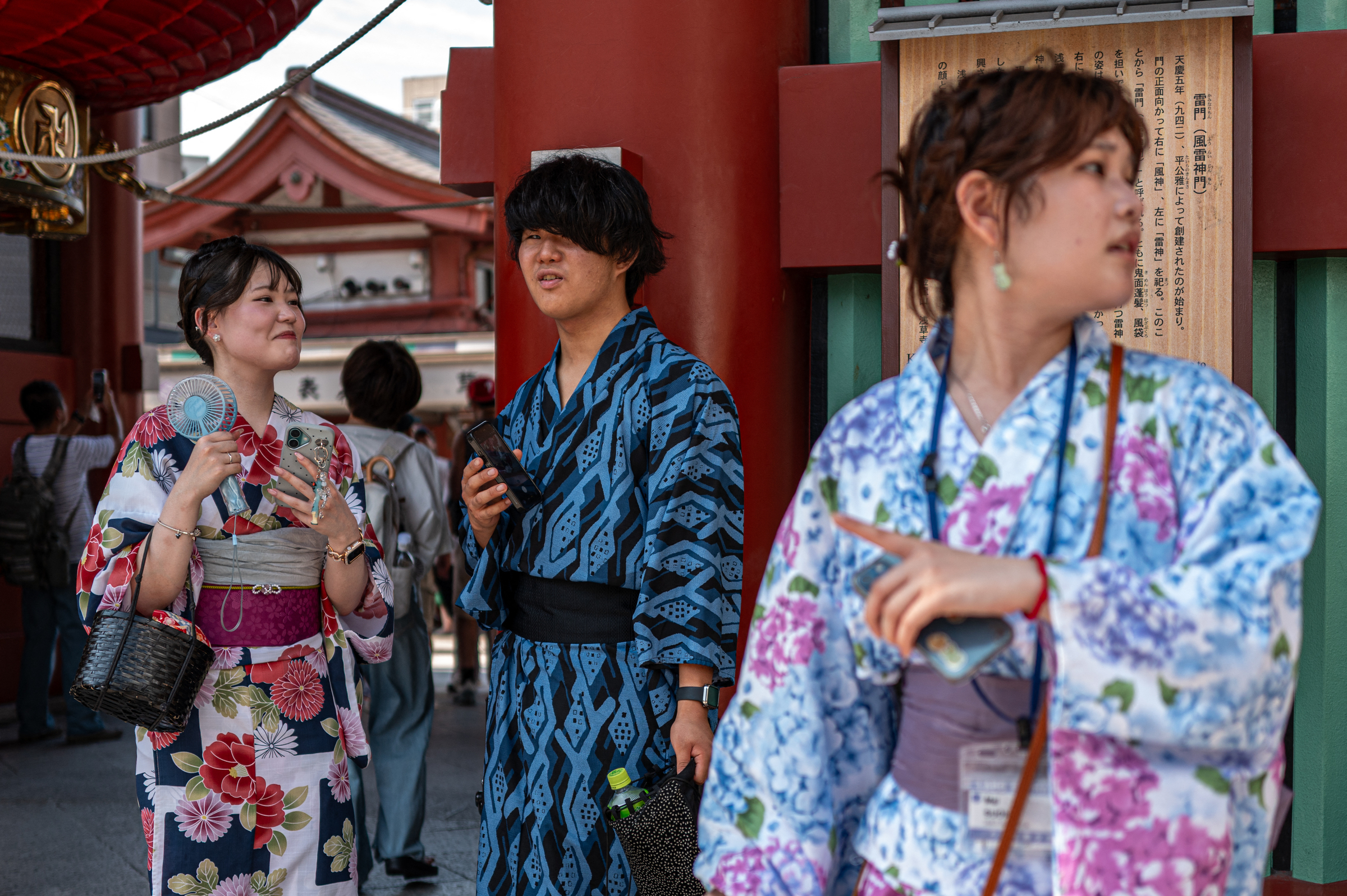 |
Young men and women in kimonos use fans to cool themselves on a hot day while visiting Sensoji Temple in Tokyo on 15/7. Photo: AFP |
Toshio Suzuki, 57, a public relations officer for the Tokyo government, recently wore sports trousers to work. He shaved the visible hair around his ankles to demonstrate his attention to hygiene and appearance. He has not yet dared to wear shorts, wishing to avoid offending colleagues. His wife advises him on choosing attire, recommending proper skin care and appropriate dressing. "In Japan, people don't view hairy legs positively," he said. "I don't have a lot of hair. But I am very careful. I don't want to be seen as sloppy."
By Hong Hanh (Sources: BBC, AFP, NYT)