Prime Minister Pham Minh Chinh met with European Council President Antonio Costa on 29/1 during his official visit to Vietnam. The Prime Minister highlighted the visit's significance as Vietnam and the EU elevated their relationship to a Comprehensive Strategic Partnership. This marks a new phase in bilateral ties and sends a message promoting regional and global cooperation, according to the Ministry of Foreign Affairs.
During the meeting, Prime Minister Pham Minh Chinh emphasized Vietnam's high regard for the EU's global role. Vietnam seeks to strengthen relations with the EU, a leading partner in economics, trade, and investment, and a proponent of sustainable development, green growth, circular economy, digital transformation, clean energy, and free trade.
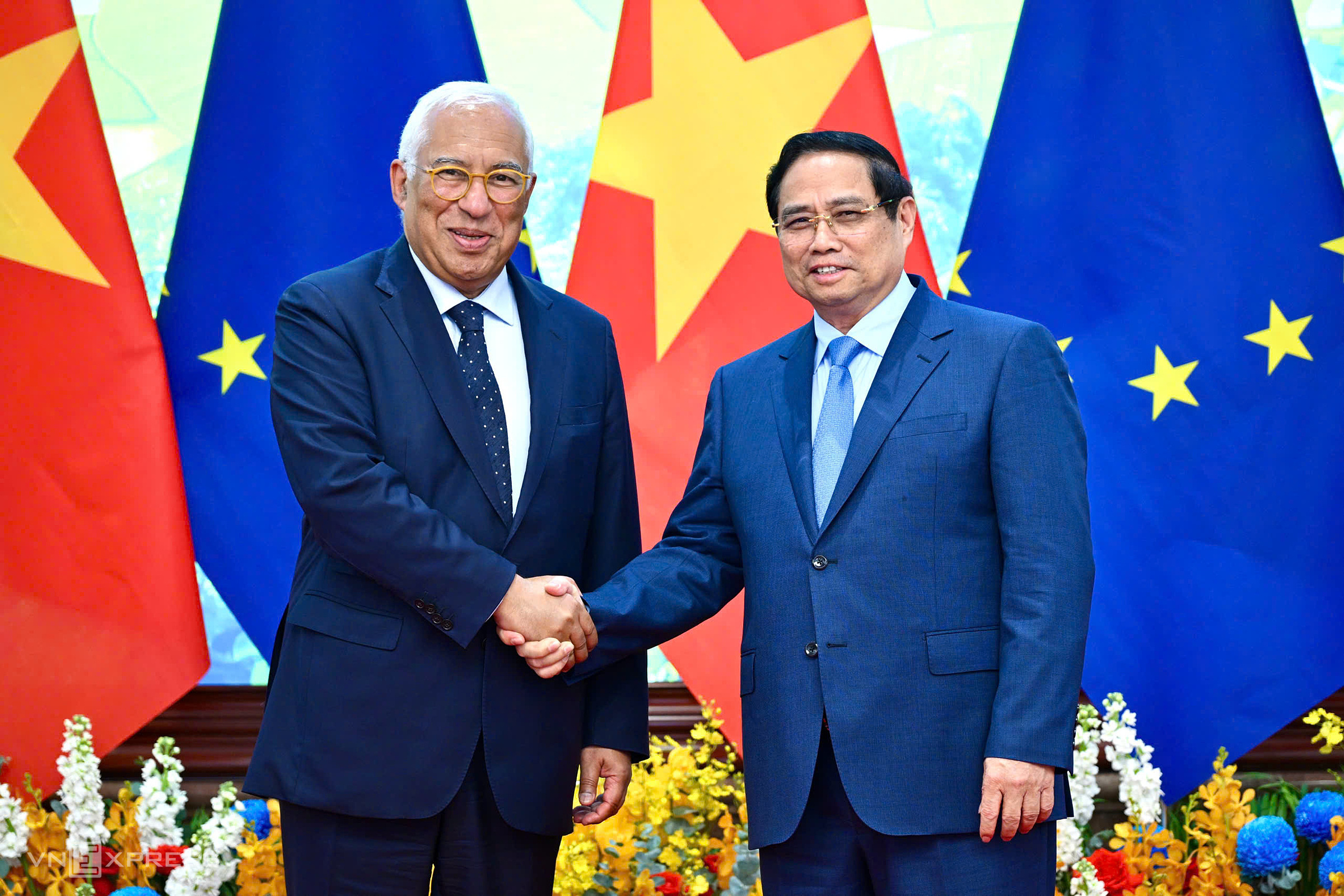 |
Prime Minister Pham Minh Chinh shakes hands with European Council President Antonio Costa on 29/1. *Photo: Giang Huy* |
The Prime Minister requested the EU to promptly dispatch an inspection team to Vietnam for specific assessments. These assessments should consider Vietnam's serious efforts in combating illegal, unreported, and unregulated (IUU) fishing, as well as the newly established Comprehensive Strategic Partnership. The goal is to swiftly remove the IUU "yellow card" on Vietnamese seafood. The Prime Minister also urged the EU to continue supporting Vietnam in transforming its fisheries development model towards modernity and sustainability.
President Costa affirmed Vietnam as an important EU partner in the Indo-Pacific region and within ASEAN. He expressed the EU's desire to deepen cooperation with Vietnam across all sectors. The two leaders agreed to closely coordinate the effective implementation of the Vietnam-EU Free Trade Agreement (EVFTA) and to expedite the ratification of the Investment Protection Agreement (EVIPA).
They also committed to encouraging and supporting Vietnamese and European research institutes, universities, and businesses to foster cooperation. This includes developing an innovation ecosystem and enhancing the capacity of Vietnamese businesses to participate deeper into EU technology value chains. Both sides pledged to promote multilateralism, respect international law, and resolve disputes peacefully based on the United Nations Charter. They also underscored the importance of maintaining peace, stability, freedom of navigation, freedom of overflight, and the rule of law in the South China Sea and the Indo-Pacific.
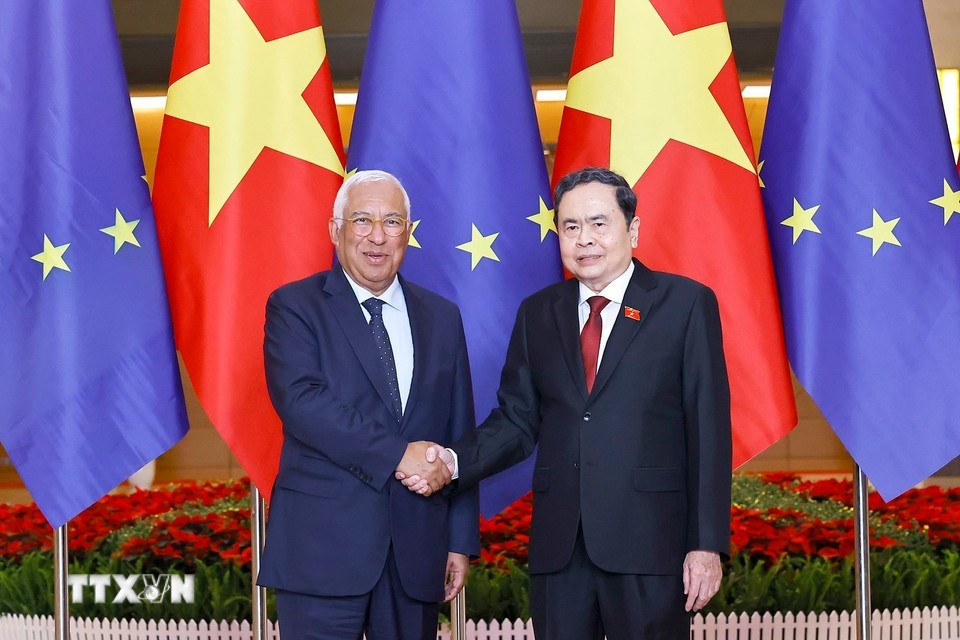 |
European Council President Antonio Costa and National Assembly Chairman Tran Thanh Man on 29/1. *Photo: TTXVN* |
On the same day, National Assembly Chairman Tran Thanh Man met President Costa at the National Assembly House. The National Assembly Chairman noted that the visit marked a promising start to Vietnam-EU cooperation. He affirmed that the National Assembly plays an active role in perfecting the legal framework and supervising the implementation of international commitments, including EVFTA and other agreements with the EU. Vietnam will continue to create favorable conditions for EU businesses to invest and operate in the country, and seeks to promote parliamentary cooperation between the Vietnamese National Assembly and the European Parliament, as well as with EU member states.
The National Assembly Chairman reiterated Vietnam's consistent pursuit of an independent, self-reliant, multilateral, and diversified foreign policy. Vietnam stands ready to be a friend and a reliable, responsible partner of the EU and the international community. The two leaders agreed on the need to strengthen legislative experience exchange between the Vietnamese National Assembly and the European Parliament, as well as member states. They committed to mutual support in parliamentary forums to contribute to peace, cooperation, and development regionally and globally, including ensuring peace, stability, security, and freedom of navigation and overflight in the South China Sea.
The European Commission (EC) mandates that all seafood imported into the EU market must declare and confirm its origin, ensuring compliance with regulations against illegal, unreported, and unregulated (IUU) fishing. The EC issues color cards: green, yellow, red, with a trade ban being the most severe. When a country receives a "yellow card" from the EC, its seafood products entering the EU are subject to 100% pre-inspection. This increases export costs and reduces quantities due to extended delivery times.