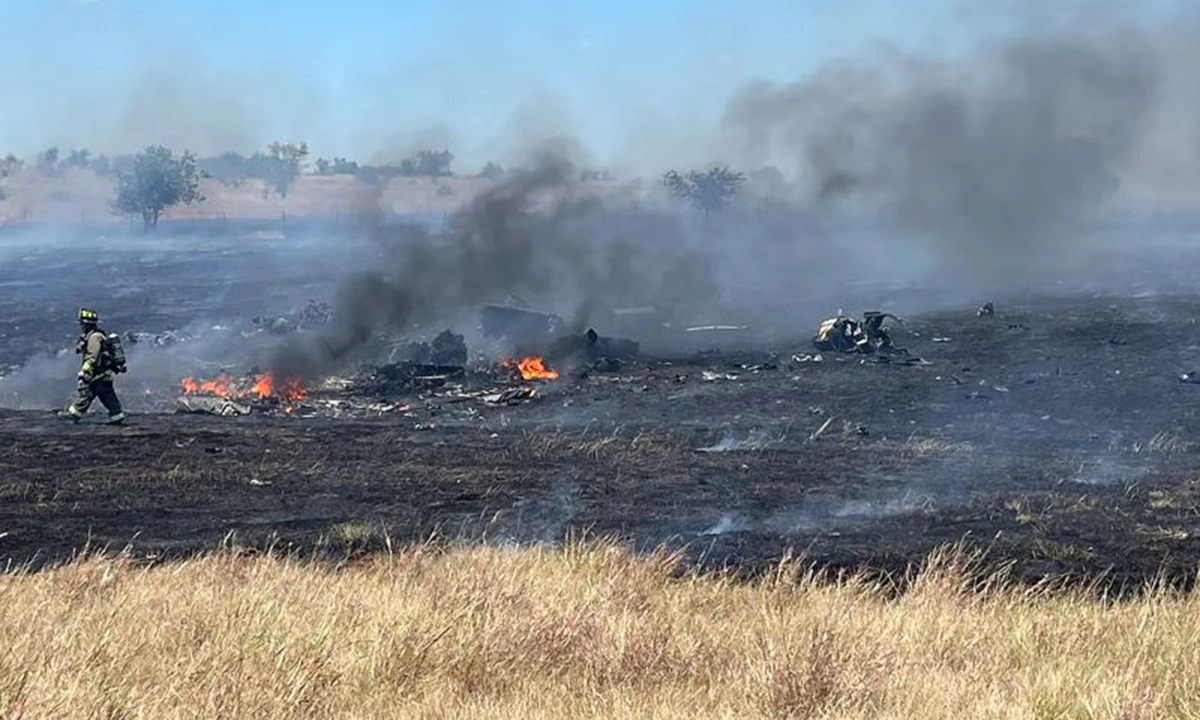
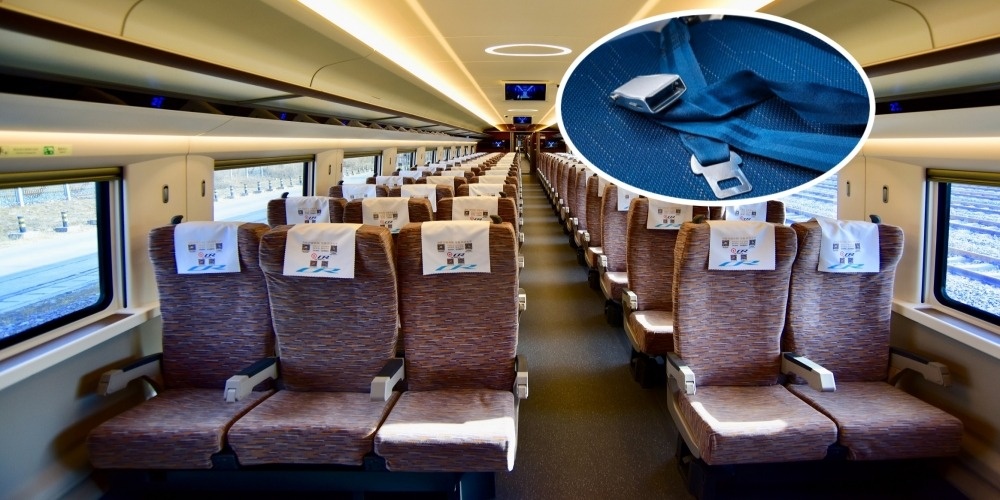
High-speed trains in China, Japan, South Korea, and Europe do not use seatbelts. The primary reason is that they are unnecessary.
In 1999, Finland conducted a trial on a commercial high-speed rail line, installing 271 seatbelts in three carriages. Initially, they surveyed passengers in carriages without seatbelts, and only 26% stated they would use them if available. Those who declined to use seatbelts cited discomfort and a desire for freedom of movement. Ultimately, Finnish Railways discontinued the implementation of seatbelts on its trains.
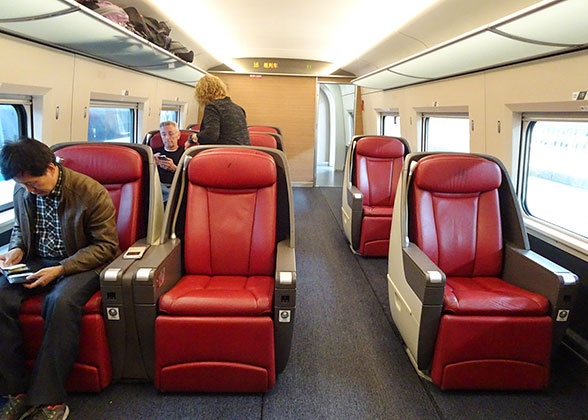 |
A second-class carriage on a Chinese high-speed train. Photo: VCG
China possesses approximately 48,000 km of high-speed rail, accounting for two-thirds of the global high-speed rail length by the end of 2025. Chinese high-speed trains operate faster than those in many other countries, with several lines reaching speeds of 350 km/h. However, these trains run on high-standard tracks, ensuring a smooth ride free from jolting, lane changes, or sharp turns.
Chinese high-speed trains rarely encounter sudden braking or abrupt acceleration due to strict management procedures and a low likelihood of experiencing air turbulence, unlike airplanes.
Consequently, passengers can move freely within the carriage without the restrictions found on airplanes, eliminating the need for seatbelts.
A coin remains upright even as a Chinese high-speed train travels at 334 km/h. Video: Facebook/People's Daily
A pertinent question is whether seatbelts could save lives in an emergency. The answer is no, as seatbelts can be counterproductive in such situations.
High-speed trains travel at extremely high speeds, typically from 200 to 350 km/h. In an emergency, if a train brakes suddenly to reduce speed to zero, the inertial force would propel passengers forcefully forward.
If seatbelts were worn, the instantaneous compressive force from the belt could cause severe internal organ injuries or cervical spine fractures. Furthermore, being fixed to a seat would hinder passenger escape if the carriage structure collapsed, significantly impeding rescue efforts after an accident.
Instead of seatbelts, modern high-speed trains utilize "impact-absorbing safety seat" systems. Train seats are designed with specialized materials. In the event of a collision, if the head or knees of a passenger behind strike the seatback in front, the seatback rapidly compresses and deforms like a cushion. This mechanism helps absorb maximum impact force, minimizing the risk of direct injury.
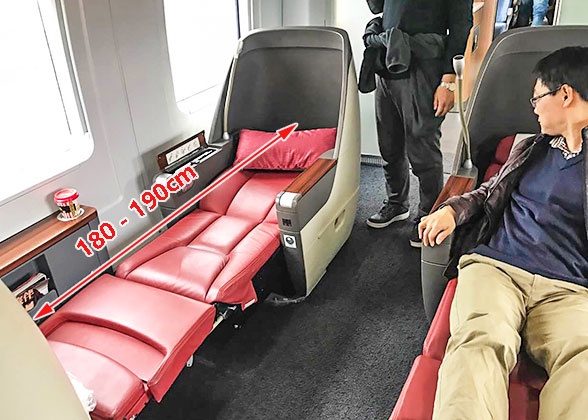 |
Seats in a business class carriage of a Chinese high-speed train. Photo: Travel China
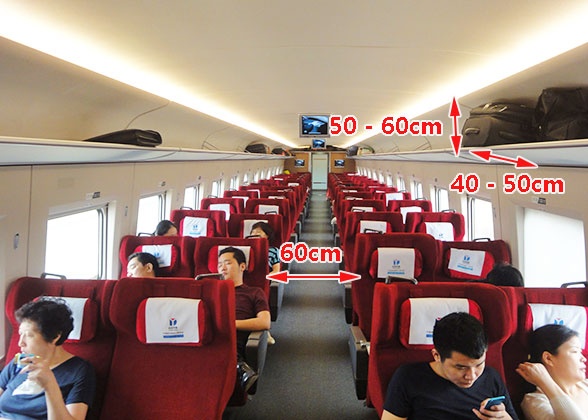 |
Business class features three seats per row, with seats extending up to 190 cm when reclined, allowing passengers to lie comfortably. Photo: Travel China
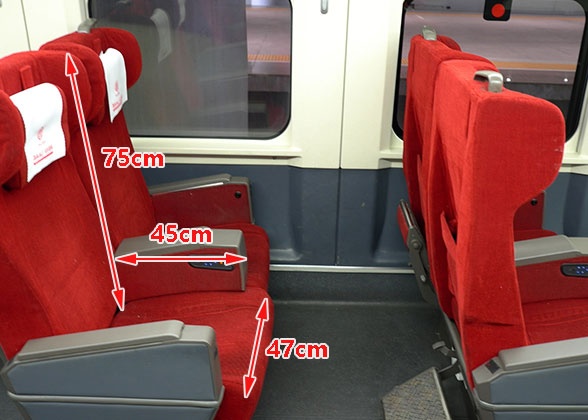 |
First class features 4 seats per row with a central aisle 60 cm wide. Photo: Travel China
 |
The seatback height is 75 cm, and the width is 47 cm. Photo: Travel China
 |
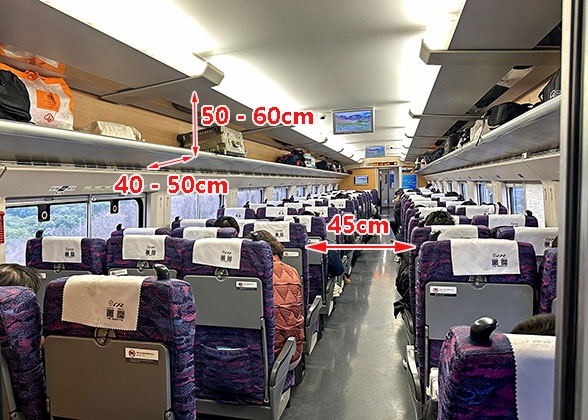
Second class features 5 seats per row, with a central aisle 45 cm wide. Photo: Travel China
 |
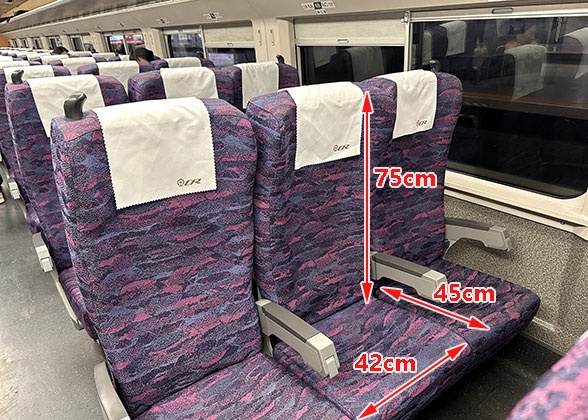
The width of a second-class seat is 42 cm. Photo: Travel China
By Hong Hanh (Source: Xinhua, Our China Story)