According to the Traffic Police Department (CSGT), at approximately 2:40 PM on 22/8, a tractor-trailer broke down on the Hai Phong - Mong Cai Expressway, partially stopping in a traffic lane. The driver placed only a fire extinguisher approximately 18 m behind the vehicle, without the required warning lights or signs.
Traffic police later arrived to inspect the scene at Km13+600, near the Ha An junction in Quang Ninh. During the investigation, the driver admitted to not placing a warning light or sign at the minimum 150 m distance behind the vehicle when forced to stop in an emergency. The driver received a citation, a 13 million VND fine, and 6 points deducted from their driver's license.
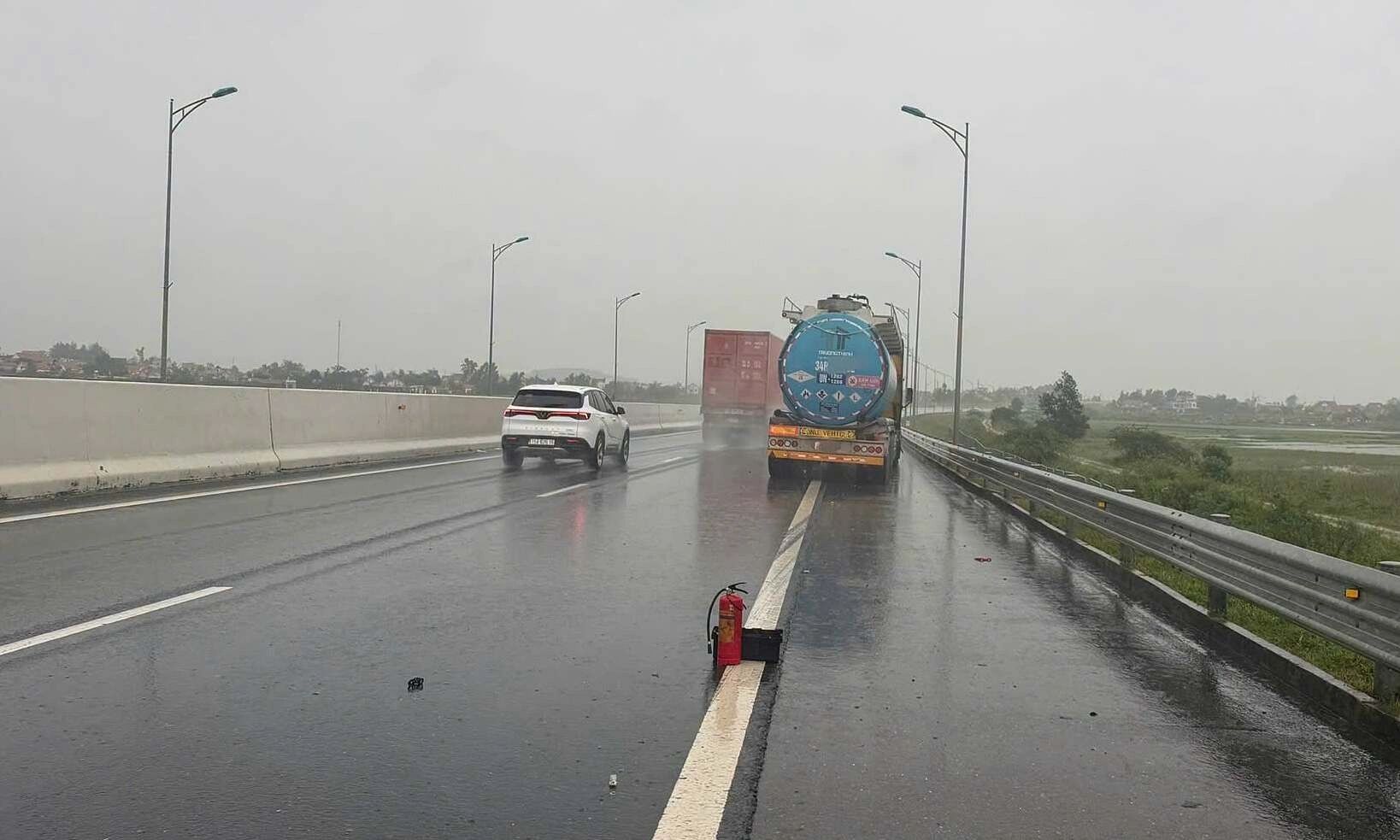 |
The fire extinguisher used by the driver as a warning, placed only 18 m from the vehicle. Photo: Traffic Police Department |
Regulations stipulate that if a vehicle breaks down on an expressway and must stop partially in a traffic lane, the driver must activate hazard lights. Additionally, a warning light or sign must be placed at least 150 m behind the vehicle. Placing a warning too close, as in this incident, makes it difficult for following vehicles to react in time, especially at high speeds.
In the event of a breakdown, drivers should quickly move their vehicle to the emergency lane or as close to the road shoulder as possible if an emergency lane is unavailable. After ensuring safety, drivers should place a reflective warning sign or object at least 150 m behind the vehicle. On curved roads, in areas with obstructed visibility, or during adverse weather, the warning distance should be increased to allow following vehicles sufficient time to react.
Drivers can estimate 150 m by counting their steps; an adult's stride is approximately 0,7-0,8 m, which equates to about 180-220 steps. When placing the warning, drivers must avoid entering the traffic lane, instead prioritizing the road shoulder or the area behind the guardrail if conditions allow.
At night or in conditions of limited visibility, reflective warning objects, reflective vests, and light sources can enhance visibility. However, these measures are supplementary and do not replace the requirement to place warning lights or signs at the correct distance.
Pham Hai