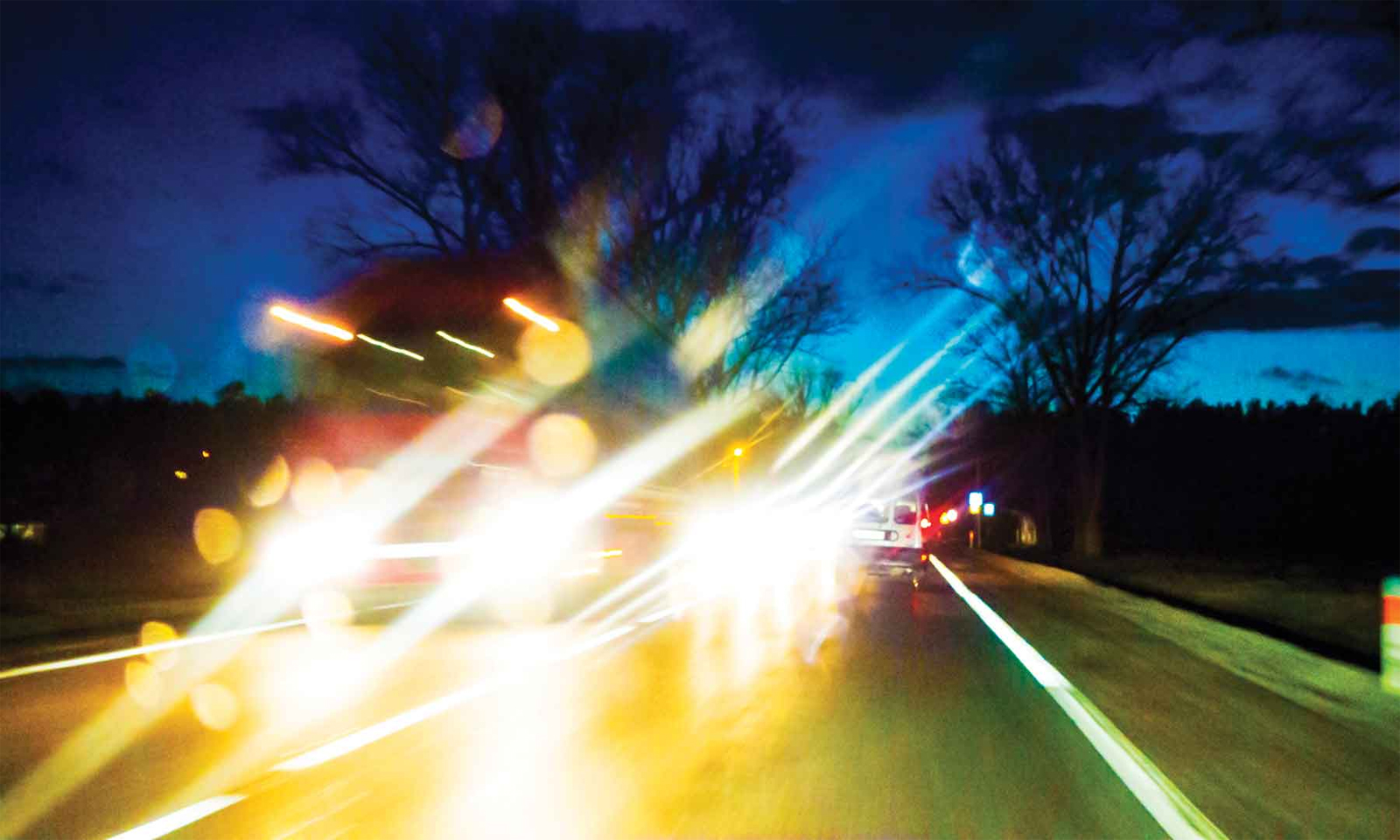
Lawyer Ramesh Mishra, 59, has stopped driving at night. He reported that high-intensity headlights temporarily blind him for several seconds. "That alone can cause an accident," he said, adding that uncontrolled high beam use and unauthorized modifications have made roads unsafe.
Gyanendra Tiwari, a 54-year-old businessman, rarely drives at night, even in the city, due to the uncomfortable glare from headlights.
This issue affects younger drivers too. Suryansh Gupta, 26, drives at night but with constant anxiety. He noted that many luxury car drivers use their headlights carelessly, blinding oncoming traffic.
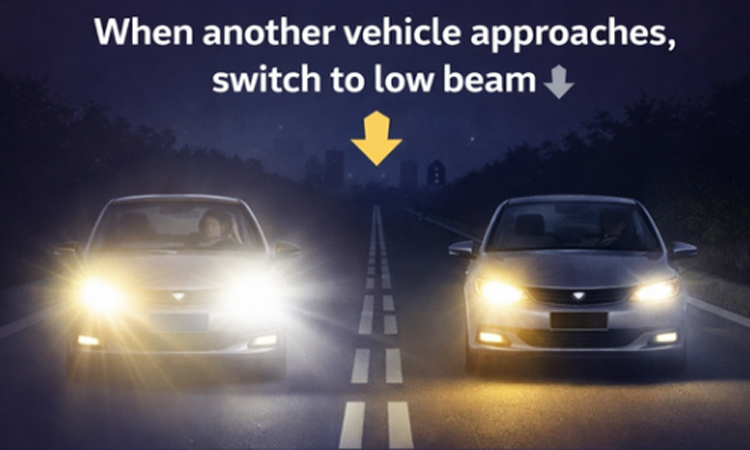 |
Cyberabad Traffic Police's recommendation on using high and low beams. Photo: Cyberabad Traffic Police |
Gupta's experience at a car modification shop highlighted the regulatory void. When he inquired about permitted standards and wattage, the shop owner stated no standards existed, even offering to install 300 W lights.
Dr. Rohit Baluja, a member of the United Nations Road Safety Collaboration (UNRSC) and president of the Institute of Road Traffic Education (IRTE), explained that while the law is clear, enforcement is weak.
Sections 105 and 106 of the Central Motor Vehicle Rules explicitly define the height, direction, and standards for headlights. The law also mandates that no vehicle should blind oncoming individuals.
Baluja noted that while manufacturers submit their headlights for inspection and approval by the Automotive Research Association of India (ARAI), Pune, the real issue stems from post-purchase modifications. Vehicle owners install various headlights—yellow, blue, white, and high-power fog lights—without knowing if they meet standards. An ordinary traffic police officer cannot verify this on the road.
Baluja asserts that transport departments bear full responsibility. They must create a system or at least a guide to help identify standard and non-standard lights.
Currently, no system utilizes lux meters to measure headlight brightness. "There is no enforcement and hardly any awareness," Baluja stated.
A lux meter is a handheld device used to measure light intensity on a surface, expressed in lux. For car headlights, it can objectively assess brightness at a fixed distance and angle, helping authorities determine if the light is within permissible limits or poses a danger to oncoming traffic.
Transport authorities themselves acknowledge their limitations. Sanjay Tiwari, an officer with the Transport Department, said that headlights manufactured and approved by ARAI, including white lights, are permissible. However, enforcement is confined to awareness campaigns. Officials merely advise drivers to use low beams, but in practice, they cannot take punitive action or enforce regulations in such cases.
Tiwari conceded that stopping and penalizing those using high beams is "not practically feasible," suggesting that this issue can only be resolved through increased awareness and civic responsibility.
When specifically asked about lux meters or any devices to measure if LED headlights exceed permissible brightness, Tiwari confirmed his department does not possess them.
Regulations stipulate that headlights must not blind a person standing 8 m away, must adhere to an asymmetrical beam pattern, should not be installed higher than 1,5 m, and are restricted in number. However, with uncontrolled sales and the absence of practical equipment or systems, these standards largely remain unenforced.
According to Hindustan Times