Currently, after a vehicle passes inspection, owners receive a paper inspection certificate. Printing these documents increases costs for inspection facilities. During use, these certificates are easily lost or damaged, requiring reissuance and causing inconvenience for vehicle owners.
To address these shortcomings, Vietnam Register has invested in developing software and upgrading its information technology infrastructure and database to facilitate the issuance of electronic inspection certificates.
If a vehicle owner requests a paper copy, the inspection facility will print it directly from the management software, without using pre-printed forms, and affix a verification stamp before issuing it to the owner.
The inspection certificate will display comprehensive information about the vehicle, its inspection validity period, and achieved emission levels (such as level 3, level 4). Additionally, each certificate includes a QR code linking to the electronic version stored on the Vietnam Register website.
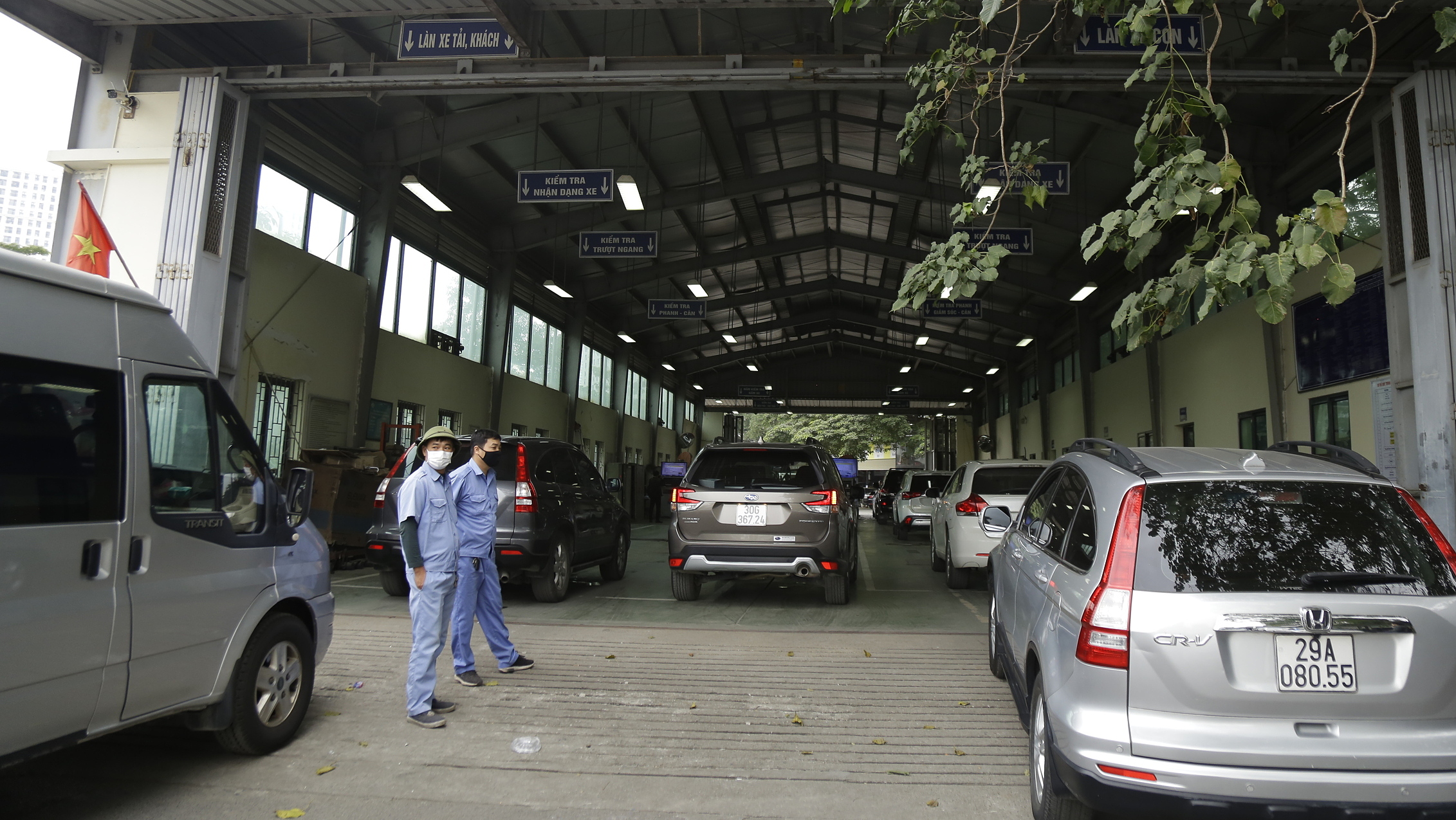 |
A vehicle undergoing inspection at a center in Hanoi. *Giang Huy* |
Vehicle owners can proactively access their electronic inspection certificates on the Vietnam Register website, downloading or printing them as needed.
Regarding inspection oversight, Vietnam Register stated that inspection data has been synchronized from its management system to the Ministry of Construction's database. This information will then connect with the Ministry of Public Security for integration into the VNeID and VNeTraffic applications.
However, the current data does not yet fully meet real-time update and digital verification requirements. Therefore, Vietnam Register has proposed that the Ministry of Construction coordinate with the Ministry of Public Security to integrate inspection certificate data into the VNeID and VNeTraffic applications.
Removing inspection stickers on car windshields from 2027
Vietnam Register leadership also advised the Ministry of Construction to submit a draft decree to the Government concerning conditions for motor vehicle inspection business services, inspection center operations, and vehicle lifespan.
According to the draft, from January 1, 2027, automobiles will no longer require inspection stickers on their windshields. Vehicle management will be conducted using electronic data, combined with AI camera systems and digital platforms.
Eliminating physical stickers will reduce printing costs for inspection centers and mitigate issues like stickers peeling off, getting damaged, or being counterfeited. Furthermore, inspection and oversight will become more efficient as authorities directly utilize digital data, without relying on physical stickers on vehicle windshields.
Doan Loan