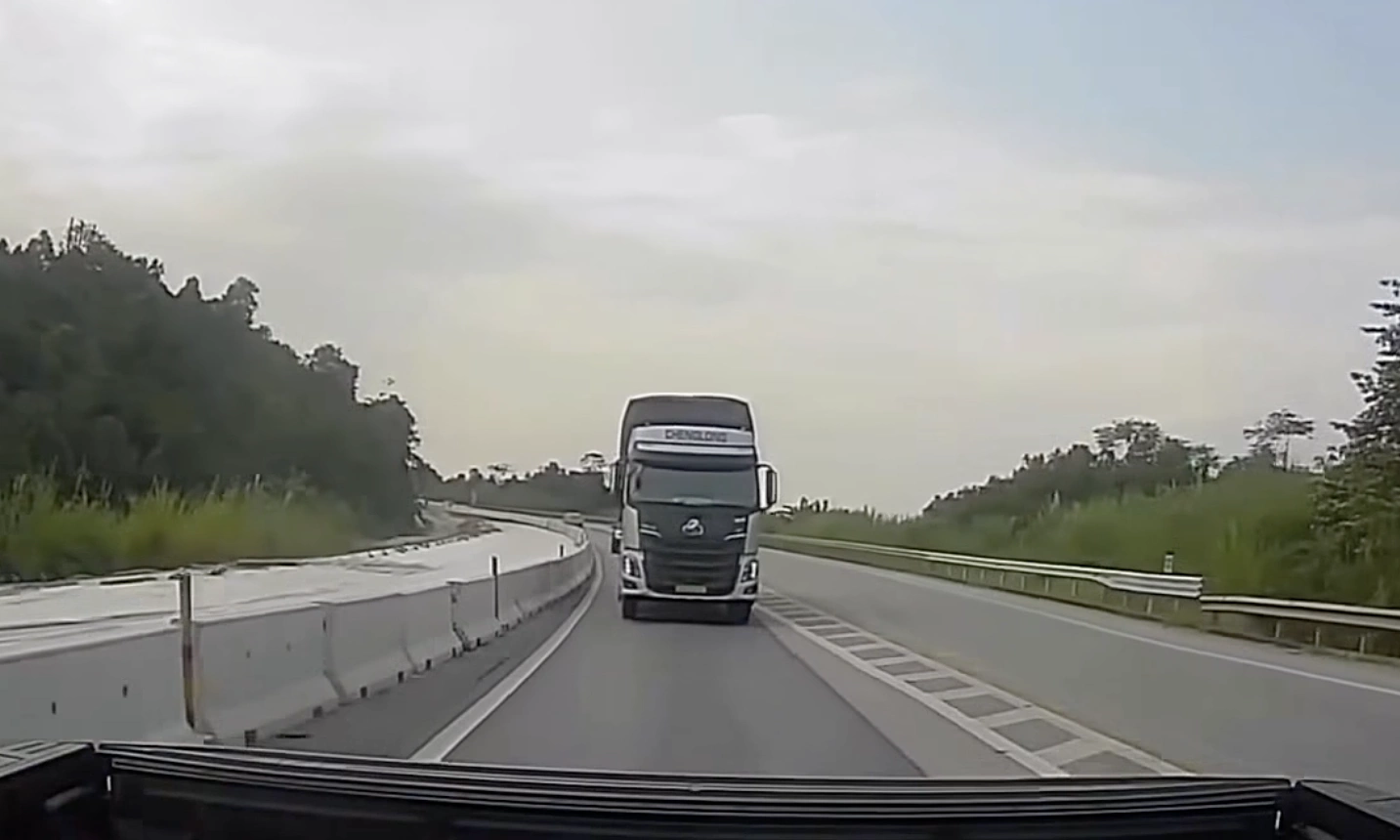
The Lai Chau Provincial Police Traffic Police Department recently advised residents to be wary of fraudulent traffic violation notifications sent via text message.
On 23/8, Vang A Chung from Bac Ninh received a text message concerning an administrative violation in road traffic. Suspicious, he asked a relative to verify the message with the Lai Chau Provincial Police Traffic Police Department.
An officer from Road Traffic Police Team No. 1 explained that this was a scam impersonating authorities. Residents are advised not to click on unfamiliar links, provide personal information, bank account details, one-time passwords (OTPs), or transfer money based on instructions from unknown text messages.
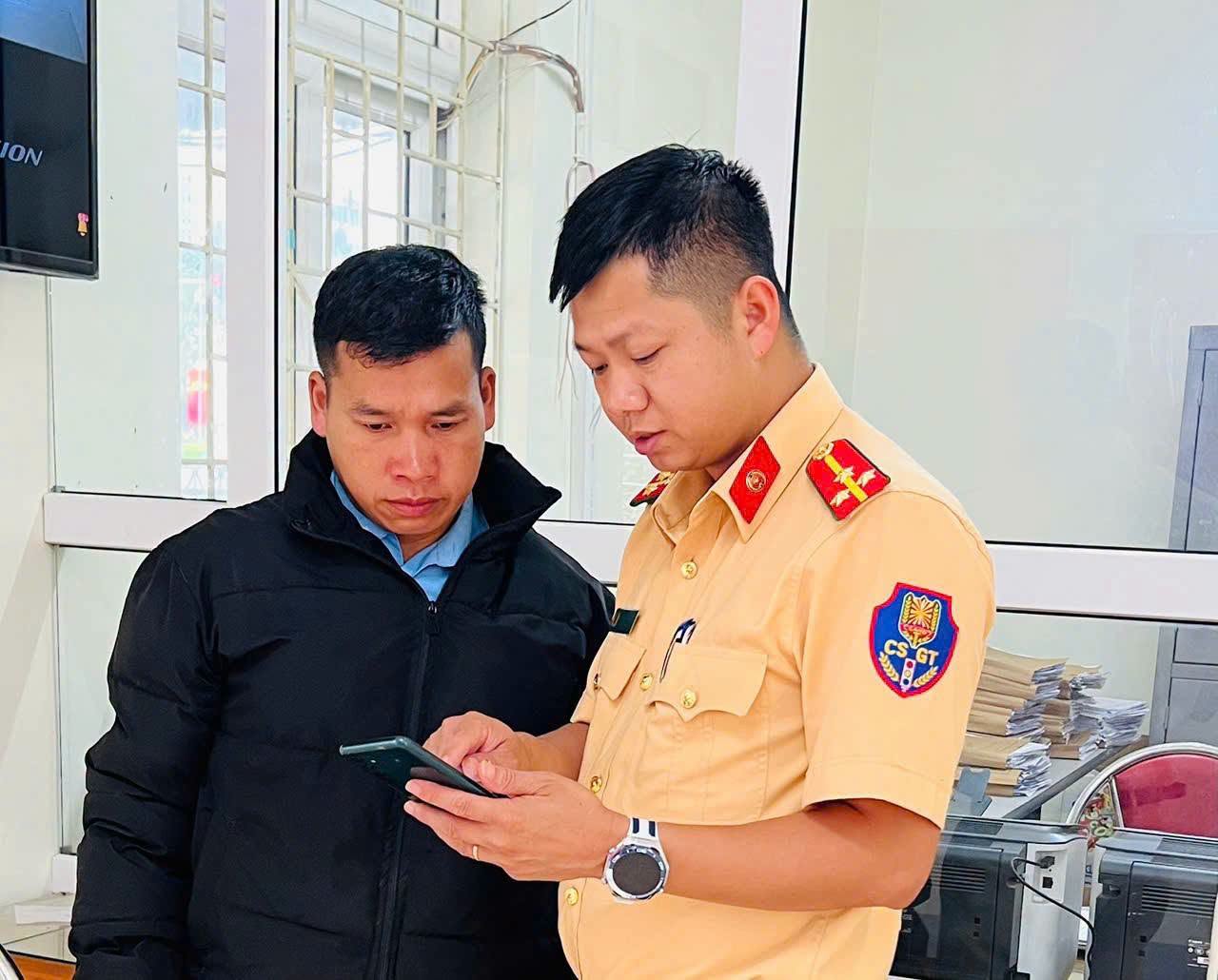 |
Traffic police explain the scam to Vang A Chung. Photo: Traffic Police Department
"Cold fine" threats to extort money
The scam begins with fraudsters sending text messages to vehicle owners, notifying them of a detected traffic violation and instructing recipients to access a link to check and process the "cold fine" (a fine issued for violations caught by cameras, not on the spot). Bui Linh from Hanoi reported receiving a text from an unknown number, purportedly from the Ministry of Public Security, announcing a cold fine. However, the link provided for fine payment was "dichvycong" instead of the legitimate "dichvucong" (public service).
In some cases, scammers create a sense of urgency by threatening that if the fine is not paid within 48 hours, the amount will increase or additional penalties will be incurred. Conversely, immediate payment is offered at a discount, for example, "a fine of 400,000 VND requires payment of 200,000 VND".
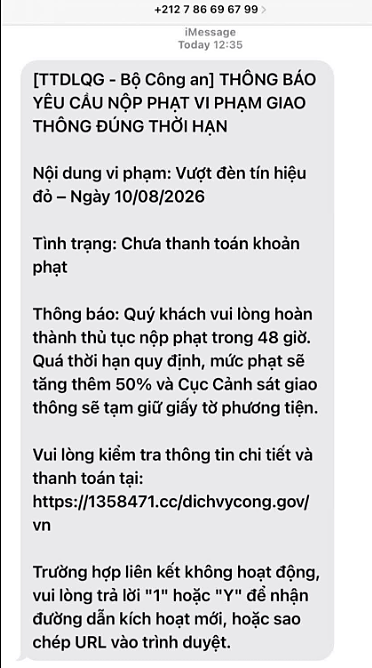 |
Fraudulent cold fine notification. Photo: Bui Linh
When recipients click the link, it often leads to a website designed to closely resemble official government portals. This is a phishing tactic, where fraudsters create fake pages to deceive users into believing they are interacting with a legitimate website.
Notably, users may be prompted to enter their license plate number for lookup. However, regardless of whether a correct, incorrect, or random license plate is entered, the fake website can still return a result indicating the vehicle "has been fined".
After creating a sense of anxiety, the website proceeds to instruct users on steps to "pay the fine". At this stage, users may be asked to enter payment information, including credit card numbers and related data.
Providing this information puts vehicle owners at risk of having their data used by scammers for unauthorized transactions or further asset appropriation.
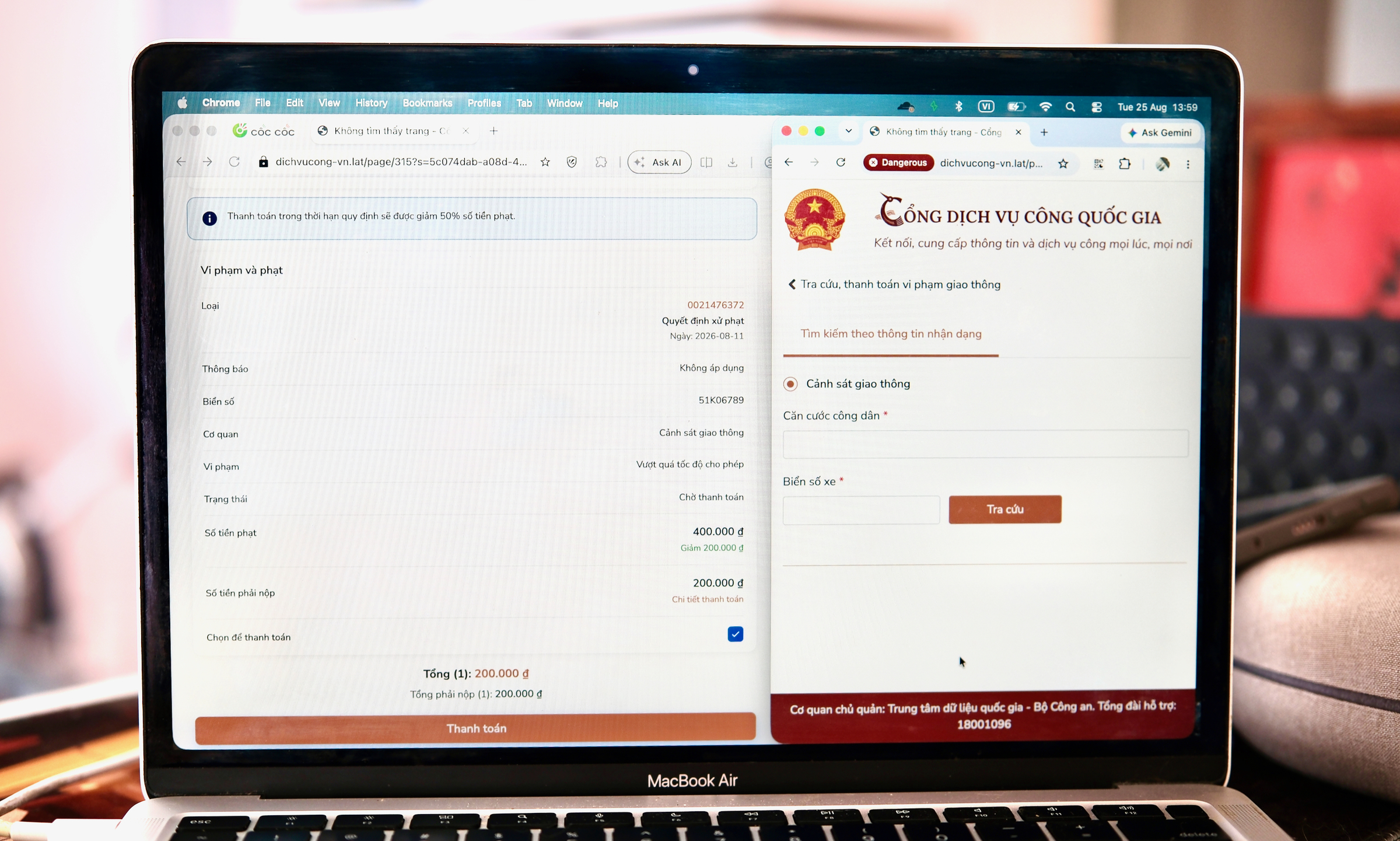 |
Interface of a fake website for cold fine notifications. Photo: Pham Hai
Official channels for cold fine notifications
The Hanoi City Police confirm that there are currently no official methods for notifying traffic safety violations via text message or phone call. According to regulations, when a violation is detected but the vehicle cannot be stopped for immediate processing, authorities verify the information and notify the vehicle owner in writing. The owner, organization, or individual involved is then invited to the police headquarters for further action. Written notices are sent to vehicle owners based on their vehicle registration information.
Additionally, citizens can use the VNeTraffic application, managed by the Traffic Police Department, to look up vehicle information and traffic violations. Details about violating vehicles, including license plate numbers, time, location, violation type, and the handling unit, are updated on the application. Users can log in with a level two VNeID account to monitor vehicles registered under their name and their cold fine history.
Authorities do not request credit card information, OTPs, or money transfers to personal accounts via text message links for cold fine processing. If a suspicious notification is received, vehicle owners should directly contact the police or a competent authority for verification before conducting any transactions.
Pham Hai