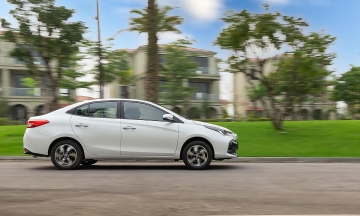
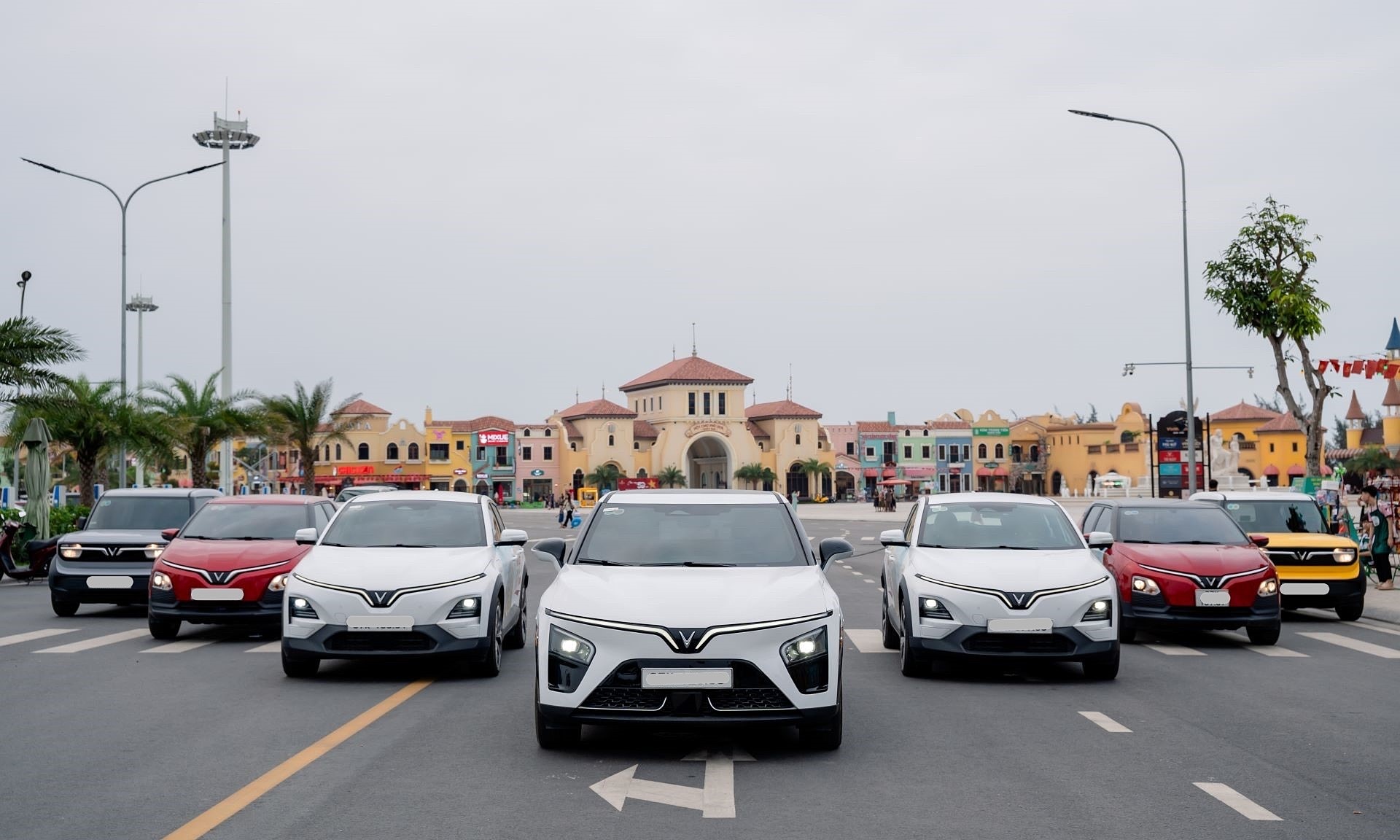
A critical safety concern for drivers worldwide is the tendency of electric vehicles (EVs) to decelerate using regenerative braking without activating their brake lights. This unique operating characteristic, particularly the regenerative braking mechanism, makes EVs unpredictable for many following drivers. A 2023 study by Consumer Reports examined 24 electric vehicle models and found that five models did not illuminate their brake lights during regenerative braking: Hyundai Ioniq 5, Genesis GV60, Genesis Electrified GV70, Kia EV6, and Kia Niro.
Hoang Anh, a long-distance driver, shared his experience of unease while following an electric vehicle on the TP HCM - Trung Luong expressway during rush hour. He noted that vehicles with high regenerative braking settings or adaptive cruise control can slow down quickly, similar to conventional braking, but without the visual cue of brake lights. This absence of a signal makes anticipation and reaction difficult for drivers behind.
How regenerative braking works
In most electric vehicles, when the driver releases the accelerator pedal, the motor switches to generator mode. This recharges the battery while simultaneously creating a braking force that slows the vehicle. This process is known as regenerative braking. The system determines when to activate the brake lights based on the vehicle model and deceleration intensity. International safety standards mandate that if deceleration exceeds a certain threshold, brake lights must illuminate, even if the driver is not pressing the brake pedal. However, during light or moderate deceleration, especially when simply lifting off the accelerator, the lights may not come on, even if the vehicle's speed is decreasing significantly.
This characteristic can surprise surrounding drivers. Unlike internal combustion engine vehicles, where notable deceleration typically includes a brake light signal, electric vehicles can slow down more subtly. If a following driver relies solely on brake lights for reaction, the safe following distance could unexpectedly narrow.
What drivers should be aware of
When following an electric vehicle, drivers must maintain a safe distance appropriate for the actual speed. They should observe changes in the gap rather than solely waiting for brake light signals. This core driving skill applies to all vehicles, creating a safe buffer for sudden incidents ahead.
Drivers should also avoid tailgating in heavy traffic or when the vehicle ahead frequently adjusts its speed. On downhill sections or in high-density traffic areas, drivers need to enhance their overall observation of the traffic flow, rather than focusing on a single brake light signal from each vehicle in front.
Many driving experts recommend observing the electric vehicle ahead in relation to surrounding traffic, not just its rear. Furthermore, using driver assistance systems such as forward collision warning or adaptive cruise control, if equipped, can help maintain a safe distance more proactively.
Ho Tan