The new-generation Toyota Yaris is expected to debut in 2028. This represents a strategic move by the Japanese automaker to maintain its leading position in the small urban car segment, while also adapting to the global electrification trend.
Multi-energy platform similar to Corolla
Unlike rivals such as Volkswagen or Renault, who often separate electric vehicles (EVs) and internal combustion engine (ICE) cars into distinct models, Toyota is opting for a more integrated approach. The new-generation Yaris will adopt a more flexible chassis platform, similar to its sibling, the next-generation Corolla.
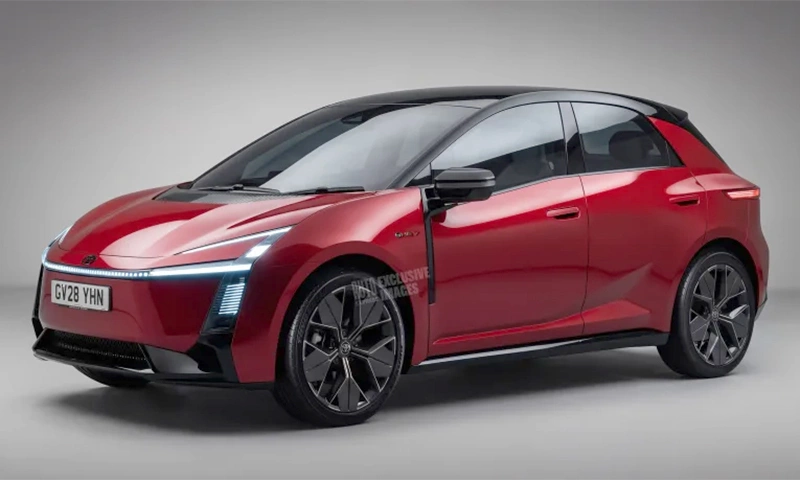 |
The new-generation Toyota Yaris is revealed. Photo: Avarvarii |
The new-generation Toyota Yaris is revealed. Photo: Avarvarii
This new architecture is capable of simultaneously supporting three types of powertrains: internal combustion engine, hybrid, and all-electric. This ensures that Yaris variants share a common design language, interior features, and brand identity, regardless of the engine type chosen by the customer.
For the all-electric version, the Japanese automaker aims for a driving range of 400 km, directly competing with rivals like the Renault 5 or Volkswagen ID. Polo. Meanwhile, with the hybrid variant, Toyota expects to maintain or improve upon its current fuel efficiency, which already achieves 3,5 liters/100 km in combined driving.
Futuristic and practical design
The exterior of the new-generation Yaris will shed its rounded lines for a sharper, bolder, more technical, and futuristic style. Leaked images indicate that the car will retain the characteristic proportions of a small hatchback, featuring a short hood and a compact rear overhang.
New highlights include classic-style headlights, a single grille, and a window line that gradually lowers towards the front. This design not only creates a visual impact but also improves driver visibility and offers a more spacious cabin feel. Toyota aims to position the Yaris as a compact yet premium vehicle, rather than an economy car.
Interior and performance
The Yaris will undergo a comprehensive overhaul of its digital interface. The current complex dashboard will be replaced by a floating screen and minimalist surfaces. Toyota is reintroducing storage solutions, a hallmark feature of earlier Yaris generations.
Regarding performance, there are reports that the Japanese automaker is developing a new 1,3-liter turbocharged three-cylinder engine. This new engine could serve as the foundation for a front-wheel-drive hothatch model, intended for the commercialization of Rally4-standard race cars.
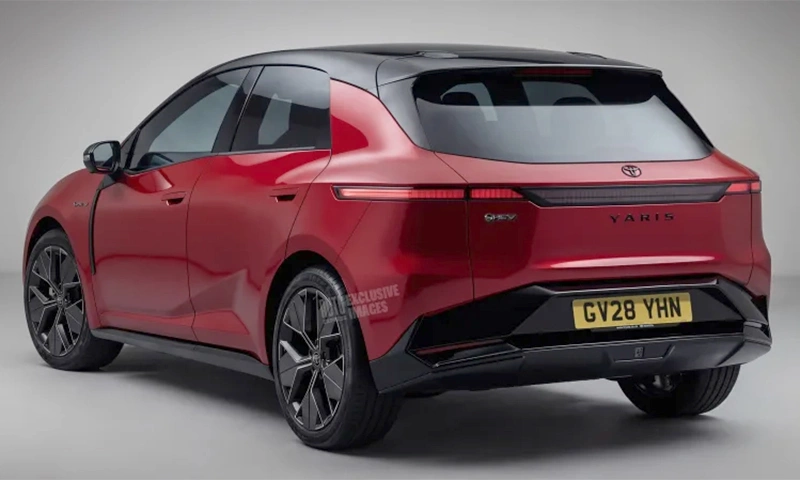 |
The new design of the 2028 Yaris is sharper. Photo: Avarvarii |
The new design of the 2028 Yaris is sharper. Photo: Avarvarii
Launch timeline
According to the plan, Toyota's new model replacement cycle typically occurs after approximately seven years, which would correspond to 2027. However, due to the adoption of an entirely new chassis architecture, the anticipated launch timeframe may extend to 2028.
Maintaining diverse powertrain options is seen as Toyota's practical solution to meet varying demands in markets like the UK, as well as other regions globally that are experiencing different rates of electric vehicle transition.
Minh Vu (according to AutoExpress)