Following news that traffic police will begin fining drivers for not maintaining safe distances on the North-South Expressway from Phap Van to Nghi Son, many drivers believe that maintaining safe distances in reality is difficult because other vehicles constantly cut into the available space. Below are methods to mitigate this situation, as advised by safe driving experts from Car Awards.
Prerequisite: matching speed
First, drivers must match the pace of the traffic flow. When a driver travels significantly slower than surrounding vehicles, cars in adjacent lanes tend to overtake, merge, or cut in to maintain their speed. If a driver cannot maintain a consistent speed due to limited driving ability, they should choose the rightmost lanes. Slower vehicles in the right lane yield the left lane to faster traffic, preventing other vehicles from needing to weave in and out or fill gaps when overtaking.
Once integrated into the general flow, maintain a stable speed. Drivers should avoid constantly accelerating and decelerating, which causes the distance to the vehicle ahead to fluctuate. Maintaining a consistent distance helps drivers control situations more easily and limits adjacent vehicles from opportunistically merging when the gap ahead suddenly widens. Drivers should pay attention to vehicles in adjacent lanes showing signs of wanting to merge, such as activating turn signals, decelerating, deviating from their path, or starting to steer towards a gap. Upon noticing this, drivers can slightly adjust their lane position and speed, both maintaining a safe distance from the vehicle ahead and avoiding creating an excessively large gap.
Do not contest gaps at all costs
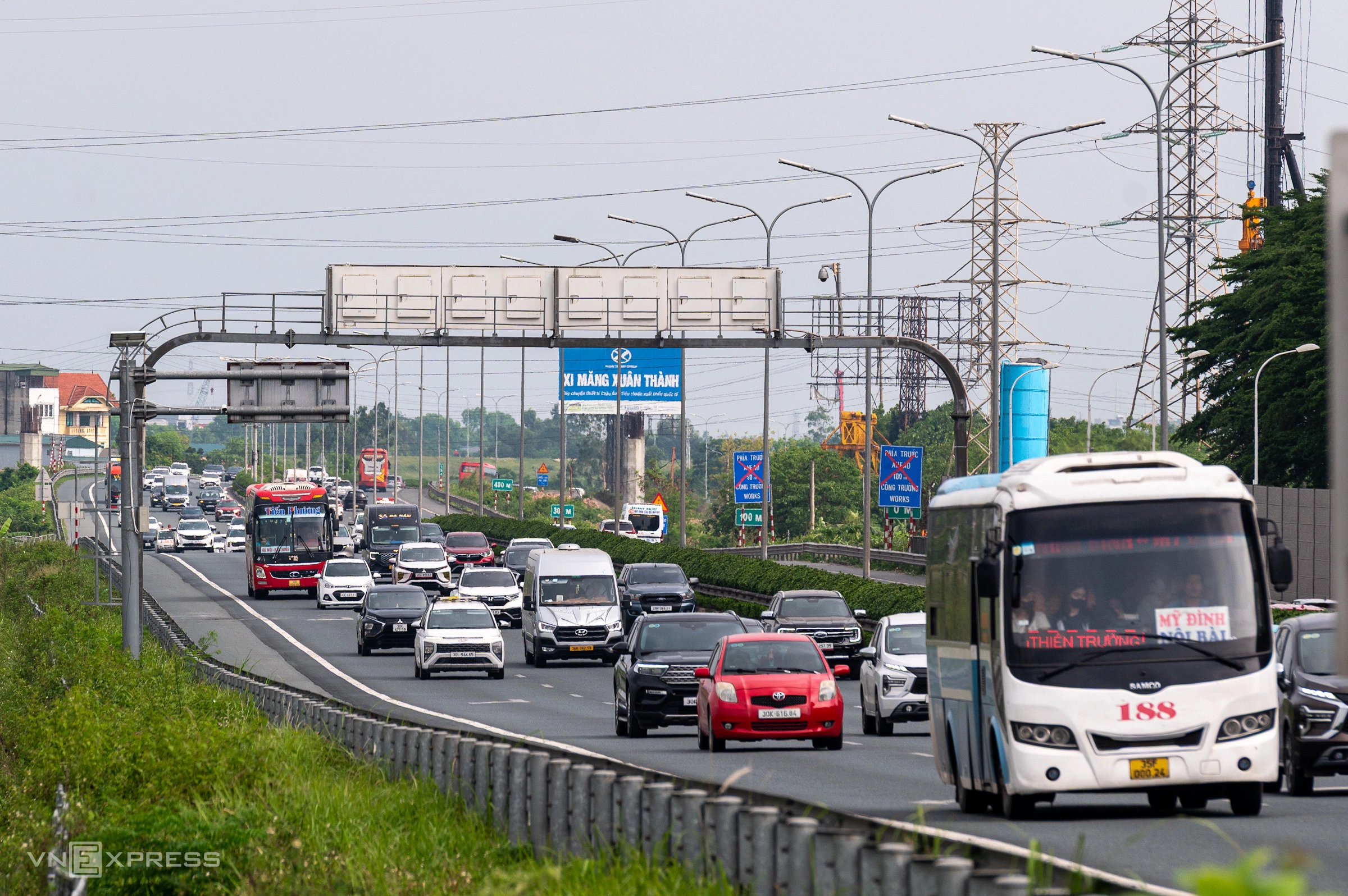 |
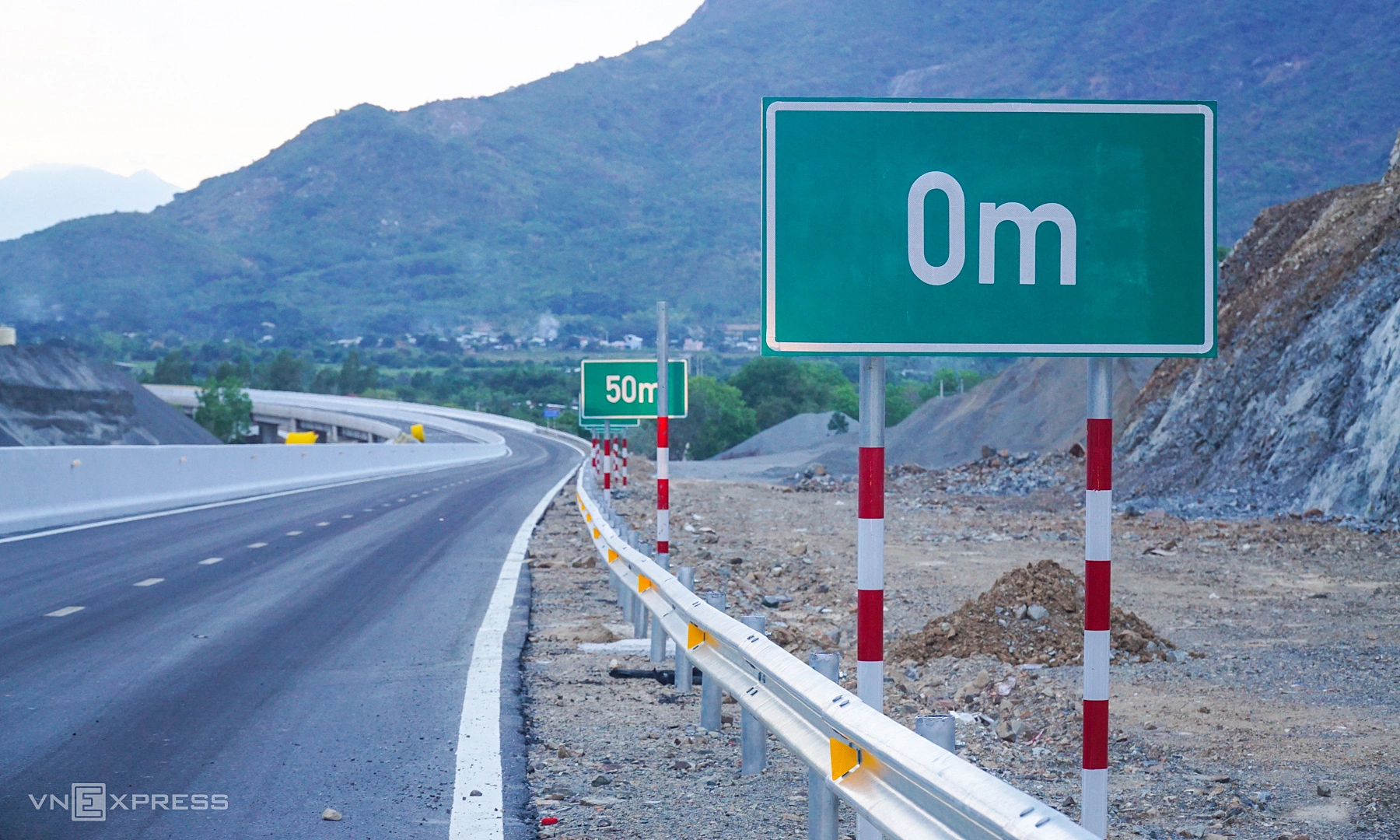
Phap Van - Cau Gie Expressway, 5/2026. Photo: The Bang |
When another vehicle merges into a lane, the priority is not to block the gap at all costs. Drivers should not accelerate to prevent another vehicle from merging or force an adjacent vehicle, as this maneuver can create more dangerous situations. Drivers cannot completely prevent other vehicles from merging and doing so also reduces their safe following distance. Therefore, the necessary action is to mitigate risk if another vehicle unexpectedly cuts in.
If another vehicle still merges, drivers should gradually reduce speed to re-establish a safe distance, rather than braking suddenly or trying to accelerate to hold their position. At that point, the newly merged vehicle becomes the one directly ahead, and the following distance must be recalculated based on the actual speed. Releasing the accelerator or gently decelerating helps create more space without causing sudden disruptions to the traffic flow behind. If the vehicle ahead continues to decelerate, drivers must also proactively slow down to avoid the distance narrowing too much. Conversely, once traffic flow stabilizes, drivers can gradually adjust their speed to maintain an appropriate distance.
How much distance is enough?
According to regulations, on highways, the minimum distance to the vehicle ahead is 35 m at speeds above 60-80 km/h, 55 m at 80-100 km/h, 70 m at 100-120 km/h, and 100 m when exceeding 120 km/h. At speeds below 60 km/h, drivers must proactively maintain a distance appropriate to traffic conditions.
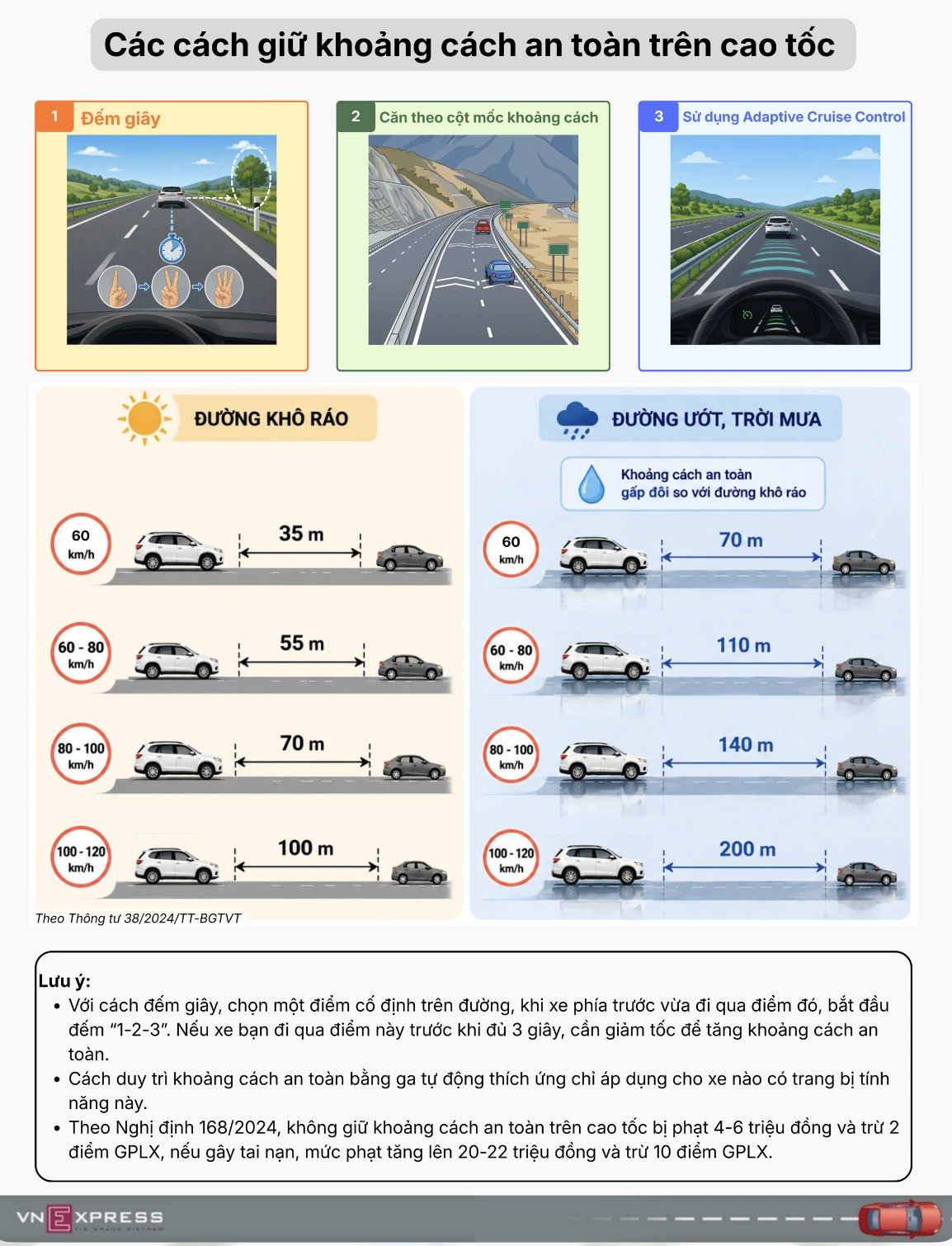 |
Photo: Ho Tan - Graphics assisted by AI tool |
Therefore, in cases of highway congestion where vehicles move at 10-20 km/h, drivers should leave a gap of at least two vehicle lengths to prevent chain collisions. On days with high traffic volume, allowing other vehicles to merge and calmly re-establishing distance is generally safer than constantly tailgating the vehicle ahead to contest space in traffic.
Ho Tan