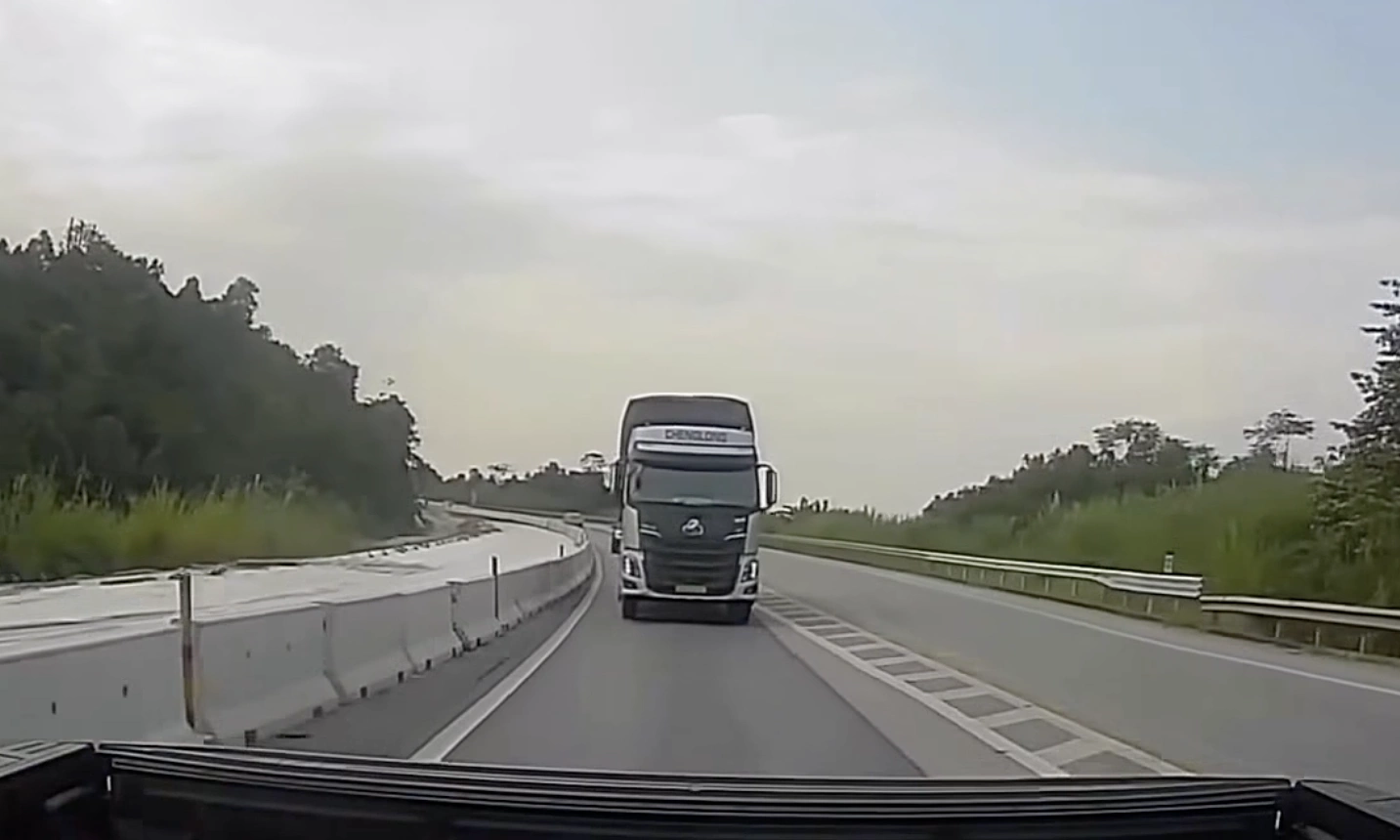
Florida authorities have launched a new campaign targeting drivers who linger in the leftmost lane, following a strict crackdown on those exceeding speed limits. This dual enforcement allows police to fine both slow drivers and speeders. While this approach generates revenue, experts view it as an inconsistency when considering road design and speed regulations.
Under Florida traffic law, on roads with two or more lanes traveling in the same direction, drivers must not continue in the outermost left lane if they know or perceive a faster vehicle behind them wishing to pass. Exceptions exist for overtaking or preparing to turn left; however, violations are categorized as moving offenses. This regulation is central to the campaign recently announced by the Florida Highway Patrol (FHP).
In a short video posted on 16/8, FHP emphasized that the outermost left lane is exclusively for passing. Authorities in Orange county have stopped numerous vehicles traveling continuously in this lane, issuing citations in many cases.
The police's emphasis on the risks of misusing the left lane is well-founded. When unable to pass, drivers behind often resort to more dangerous maneuvers. Additionally, the speed differential between vehicles is a core factor. Studies by the US Federal Highway Administration (FHWA) indicate that accident risk increases when a vehicle's speed deviates from the general traffic flow, regardless of whether it is faster or slower.
While obstructing the left lane is less severe than driving at hundreds of kilometers per hour, it contributes to sudden braking, abrupt lane changes, and risky decisions from frustrated drivers. FHWA data also shows that greater speed differentials correlate with higher collision rates.
Florida is notable for simultaneously enforcing left-lane hogging and targeting "super speeders"—drivers exceeding 160 kilometers per hour or traveling 80 kilometers per hour over the posted limit. Other states, including California, Virginia, Georgia, Indiana, Texas, Arizona, and Tennessee, also strictly enforce both types of violations.
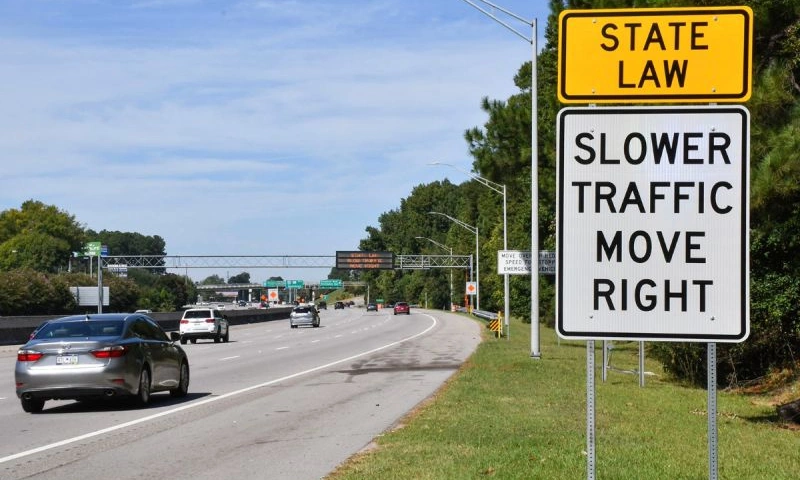 |
"Slower traffic keep right" sign on a US highway. *Photo: SCDOT* |
Strict penalties for serious speed violations are outlined in the HB 351 Act (super speeding act), effective from 7/2025. This law classifies such violations as a criminal offense, carrying a maximum penalty of 30 days in jail and 500 USD for a first offense, increasing to 90 days in jail and 1,000 USD for repeat offenses.
Authorities are essentially asking drivers for voluntary compliance on roads designed for significantly higher speeds than those posted. Major thoroughfares often feature wide, flat surfaces, multiple lanes, generous shoulders, and clear visibility, which can make drivers feel safe to accelerate. According to Carscoops, while drivers are responsible for their actions, an inconsistency arises when infrastructure encourages faster driving while signs and enforcement demand slower speeds. This is a consequence of conflicting signals from infrastructure, leading to penalties when drivers react differently.
My Anh