On the morning of 11/12, the National Assembly approved the revised Investment Law with nearly 90% of deputies in favor.
The law now specifies 196 conditional business sectors, a reduction of 38 from previous regulations. Sectors no longer requiring business licenses include: finance and accounting; agriculture, forestry, and fisheries; construction; and transport. Additionally, 20 other sectors will undergo review by regulatory bodies to modify their management approaches.
Previously, the Economic and Finance Committee urged the government to review and reduce unnecessary business conditions, retaining only those related to national defense, security, public ethics, and community health. The committee also requested a study on criteria for evaluating "good" business conditions and public disclosure of minimum compliance costs.
In its explanatory report, the government stated that ministries and sectors would be tasked with researching management methods based on regulations and standards for the business sectors with reduced or modified licensing requirements. This aims to significantly shift from pre-inspection to post-inspection, and from licensing to registration or notification.
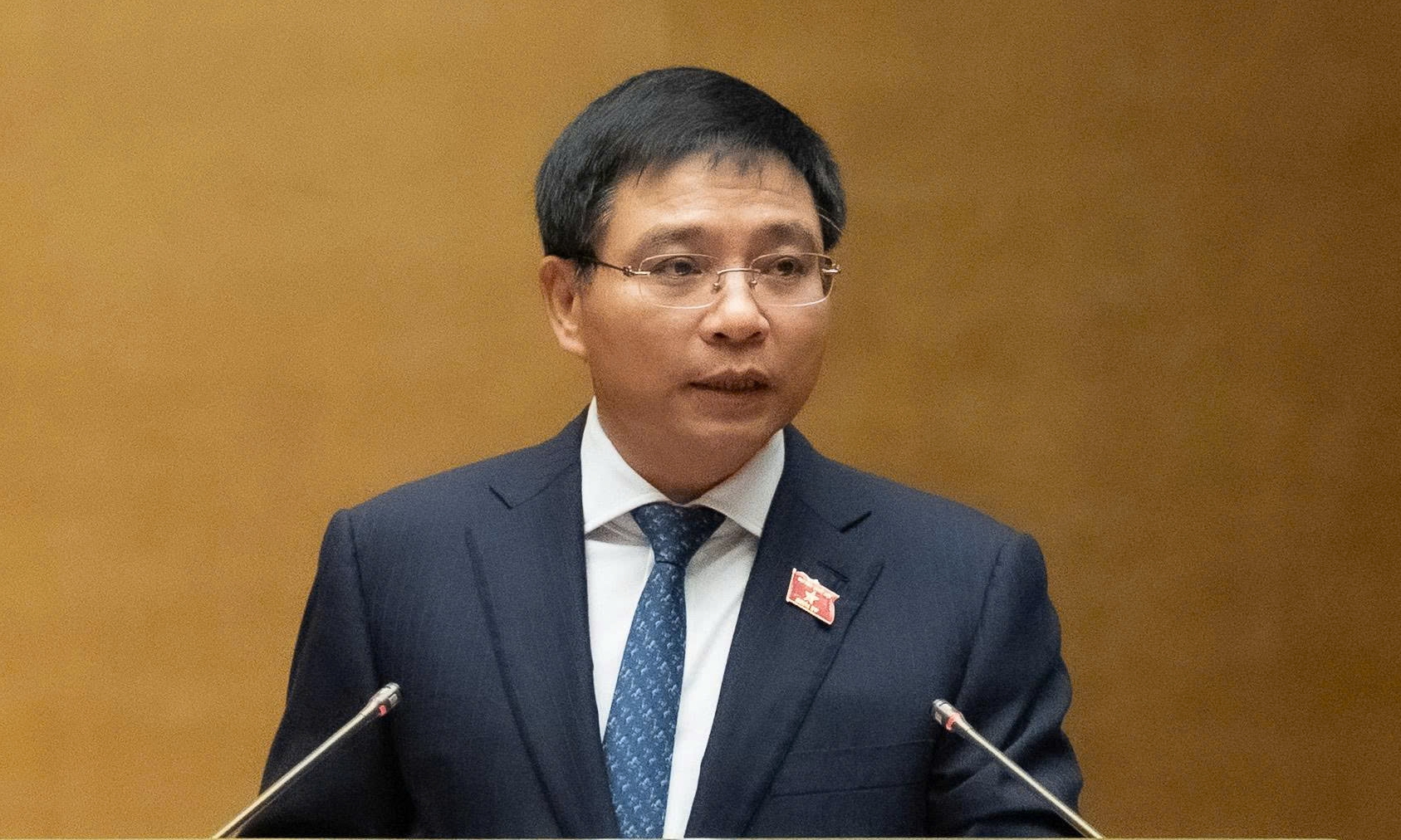 |
Minister of Finance Nguyen Van Thang presented an explanatory report at the session on the morning of 11/12. *Photo: National Assembly Media* |
The revised law also eliminates the policy approval procedure for overseas investment projects with capital below a government-specified threshold (excluding banking, insurance, securities, journalism, and real estate). Previously under the authority of the National Assembly or Prime Minister, these projects will now only need to register foreign exchange transactions with the State Bank of Vietnam to transfer funds abroad.
As of the end of June, Vietnam had 1,916 active overseas investment projects, totaling over 23 billion USD. More than 67% of these projects have capital under 20 billion VND. While projects exceeding 20 billion VND are fewer in number, they account for 98% of the total capital. Consequently, the government will issue regulations on appropriate capital thresholds for overseas investments requiring permits.
Furthermore, the scope of projects requiring investment policy approval has been narrowed to reduce administrative burdens for investors and regulatory agencies. Certain project types are now exempt from this approval, as they are already governed by specialized laws. These include: investment in industrial cluster technical infrastructure, mineral exploitation (via auction) for urgent projects, and the construction of housing (for sale, lease, or lease-purchase) and urban areas if the investor already possesses land use rights.
The revised Investment Law will take effect on 1/3/2026, while the provisions regarding conditional business sectors will come into force on 1/7.
Anh Tu