A VnExpress survey as of 18/11 revealed that 15 banks have adjusted their interest rate schedules. These include VPBank, Techcombank, HDBank, BVBank, NamABank, BacABank, OCB, LPBank, Kienlongbank, BaoVietBank, NCB, PVCombank, CIMB, and Standard Chartered. Over the past month, interest rates at VPBank and BacABank increased by 0,6-1% compared to the previous month. Other banks made smaller adjustments, ranging from 0,1% to 0,5% depending on the term. Many banks also raised interest rates for deposits with terms under six months to the regulated ceiling of 4,75%, including NamABank, Oceanbank (MBV), and CIMB.
BacABank currently offers the highest interest rate in the market for deposits not exceeding 1 ty dong for 12-13 month terms, at 6,4%. Other banks providing over 6% for 12-month terms include Vikki (DongA Bank) and MBV (Ocean Bank). HDBank and OCB also offer rates exceeding 6% for 13-month terms. In contrast, state-owned banks have not participated in this adjustment wave, maintaining unchanged interest rates for the past six months.
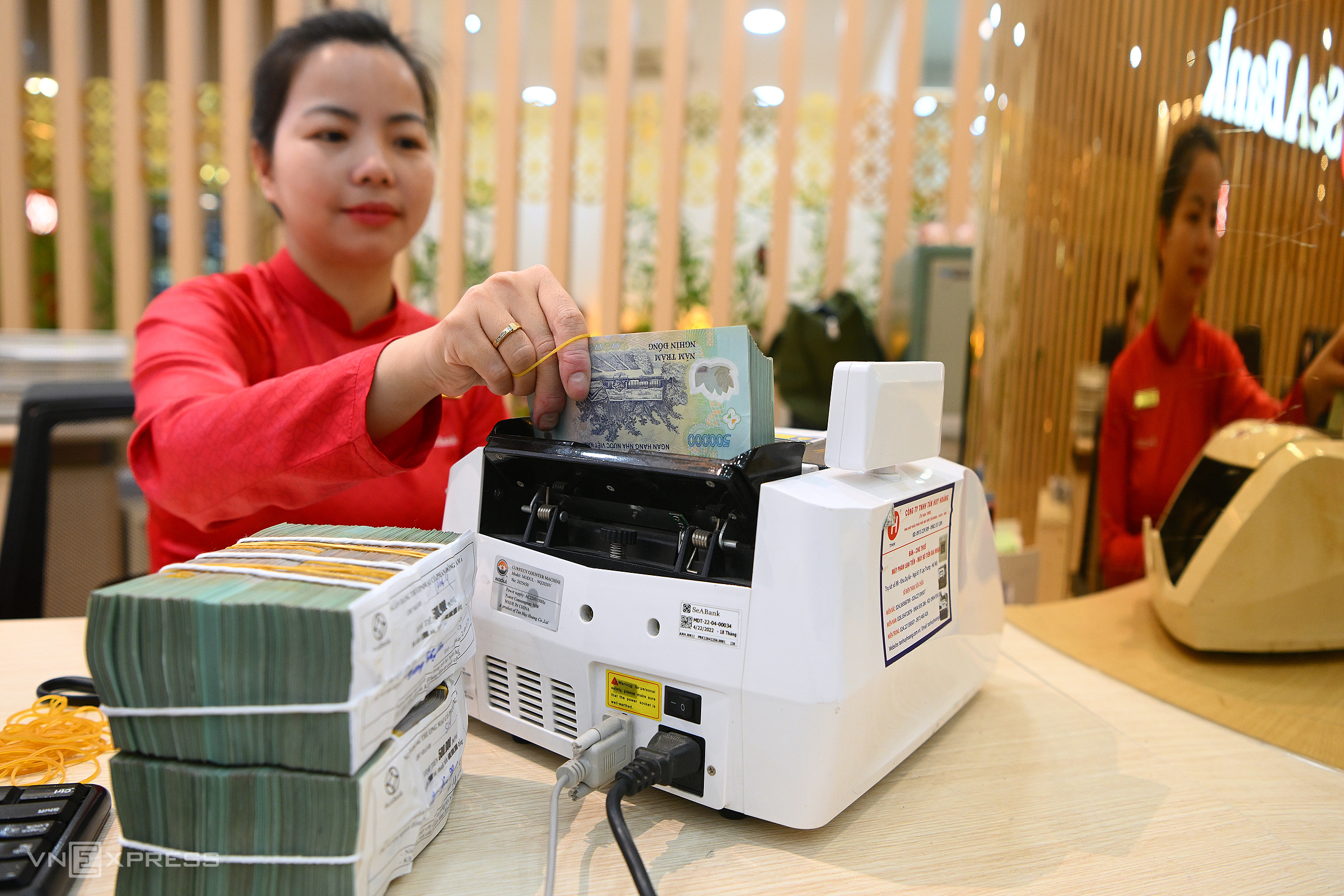 |
A transaction office at a private bank. Photo: Giang Huy |
Pham Nhu Anh, General Director of Military Bank (MB), identified two core reasons for the recent rise in interest rates. He stated that the most direct factor is exchange rate pressure reaching the operator's permissible limit. The full-year exchange rate growth target was set at 3-5%, leaving almost no room to use this tool. "In the context of exchange rate pressure, a slight increase in interest rates is consistent with market developments. This adjustment helps reduce the attractiveness of holding foreign currency, thereby protecting the value of the Vietnamese dong", an MB leader explained.
Beyond exchange rate factors, US monetary policy also significantly impacts interest rates in Vietnam. The US Federal Reserve (Fed) maintains a tightening policy with US dollar interest rates around 3,75-4%. This environment encourages international investment capital to prioritize markets with more attractive yields, reducing capital inflow to emerging economies. According to Pham Nhu Anh, with global capital flows not returning strongly, the room for domestic interest rate reductions will narrow. This demands more flexible monetary policy in Vietnam to balance exchange rate stability and growth support.
Another reason for banks to increase interest rates, according to Vu Minh Truong, Director of Capital Markets and Financial Markets at Vietnam Prosperity Bank (VPBank), is the prolonged situation where credit growth outpaces mobilization. This puts pressure on liquidity and interest rates towards the year-end. Mobilization pressure is also evident in the interbank market, where borrowing rates have remained consistently high since early November, at times exceeding 6% annually.
The officially listed bank savings interest rates below are arranged from highest to lowest (for amounts under 1 ty dong), not including actual agreements between banks and regular customers, VIPs, or large-value depositors.
Quynh Trang