In the process of transitioning to a sustainable growth model, aligned with the government's commitment at COP26 to achieve net zero emissions by 2050, green finance is identified as a crucial capital channel for the economy. According to the State Bank of Vietnam's 2025 green credit report, outstanding green credit across the system is projected to reach approximately 850 trillion VND by the end of 2025, marking a 30% increase compared to 2023 and accounting for nearly 6% of the economy's total outstanding loans. This capital flow is primarily concentrated in renewable energy, clean energy (over 37%), and green agriculture (nearly 27%).
The average annual growth rate for outstanding green credit is approximately 21%. The number of participating credit institutions has increased from 15 units in 2017 to 58 units by 2025, indicating that green finance is becoming a strategic business direction for banks.
In this context, Agribank is regarded as one of the key banks implementing green finance. Aligned with its mission to develop agriculture, farmers, and rural areas, the bank's strategy focuses on three pillars: integrating ESG into governance, developing capital solutions, and applying technology to help people access green finance more easily.
Integrating ESG into governance
One of the foundational steps in Agribank's green finance strategy is the integration of ESG (environmental, social, and governance) standards into its management system. According to the bank, this is an important condition for guiding capital flows and mitigating the risk of greenwashing.
In recent years, Agribank has issued its ESG Standard Set and an action plan for implementation during phase 2024-2030. Concurrently, it established a steering committee and specialized departments to implement ESG across the entire system.
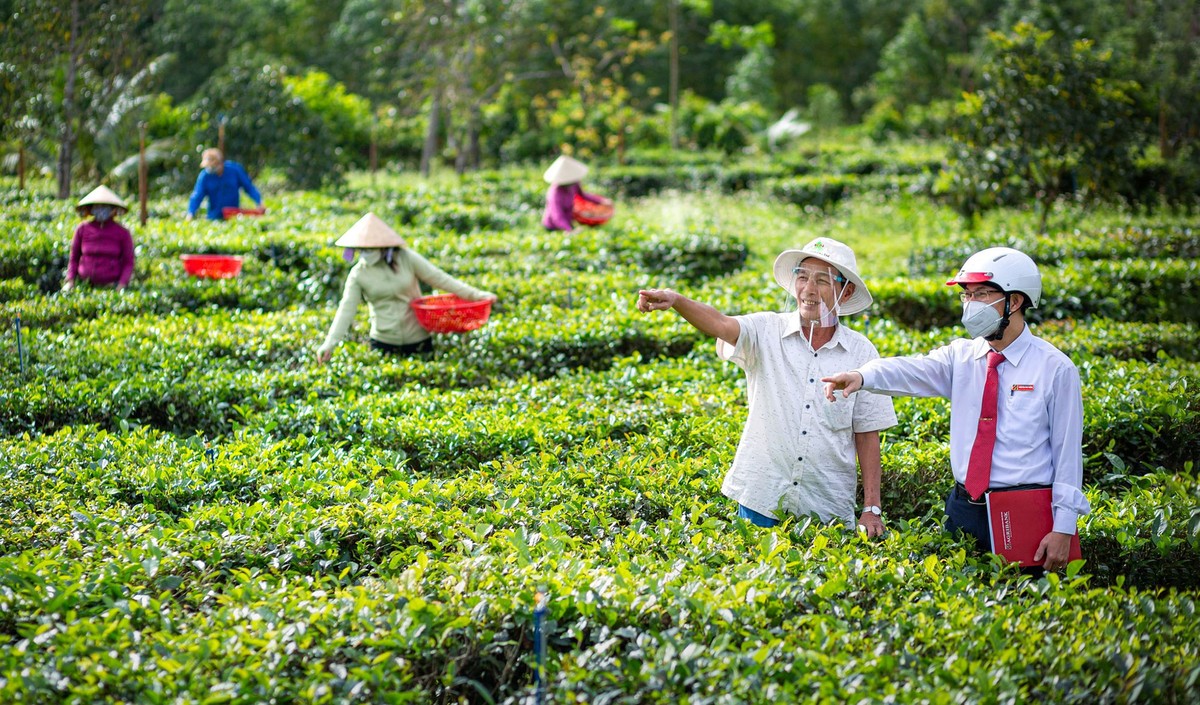 |
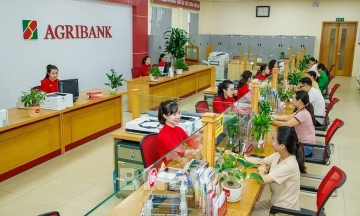
Agribank officers survey and appraise businesses. Photo: Agribank |
After the Prime Minister issued Decision 21/2025 on environmental criteria and green project classification, Agribank proactively developed a list of excluded and restricted industries for credit provision related to environmental and social factors.
Accordingly, activities such as cross-border trade in hazardous waste, destruction of nature reserves, or weapons manufacturing will not receive funding. Some high-risk areas, like ship dismantling or asbestos mining, are subject to strict environmental standard control before credit is granted.
This list serves as an initial screening mechanism to minimize environmental risks in credit activities and direct capital flows towards environmentally friendly sectors.
Alongside refining its mechanisms, Agribank is also enhancing internal training and communication on ESG, aiming to disseminate a sustainable development mindset throughout the system.
According to financial experts, integrating ESG into bank governance helps better control risks and creates a foundation for accessing international capital sources dedicated to sustainable development.
Directing capital to priority green sectors
The second pillar of the green finance strategy involves developing credit policies and financial programs to channel capital into environmentally friendly sectors. Over the past years, Agribank has implemented numerous large-scale credit programs to support green transformation in agriculture and energy.
Among these, a 50 trillion VND credit package for high-tech agriculture development and clean agriculture has helped businesses, cooperatives, and individuals invest in production models that conserve resources and reduce emissions.
Additionally, the bank implemented a 30 trillion VND credit package to fund projects in key industries and green sectors, along with a 10 trillion VND green credit program for individual customers.
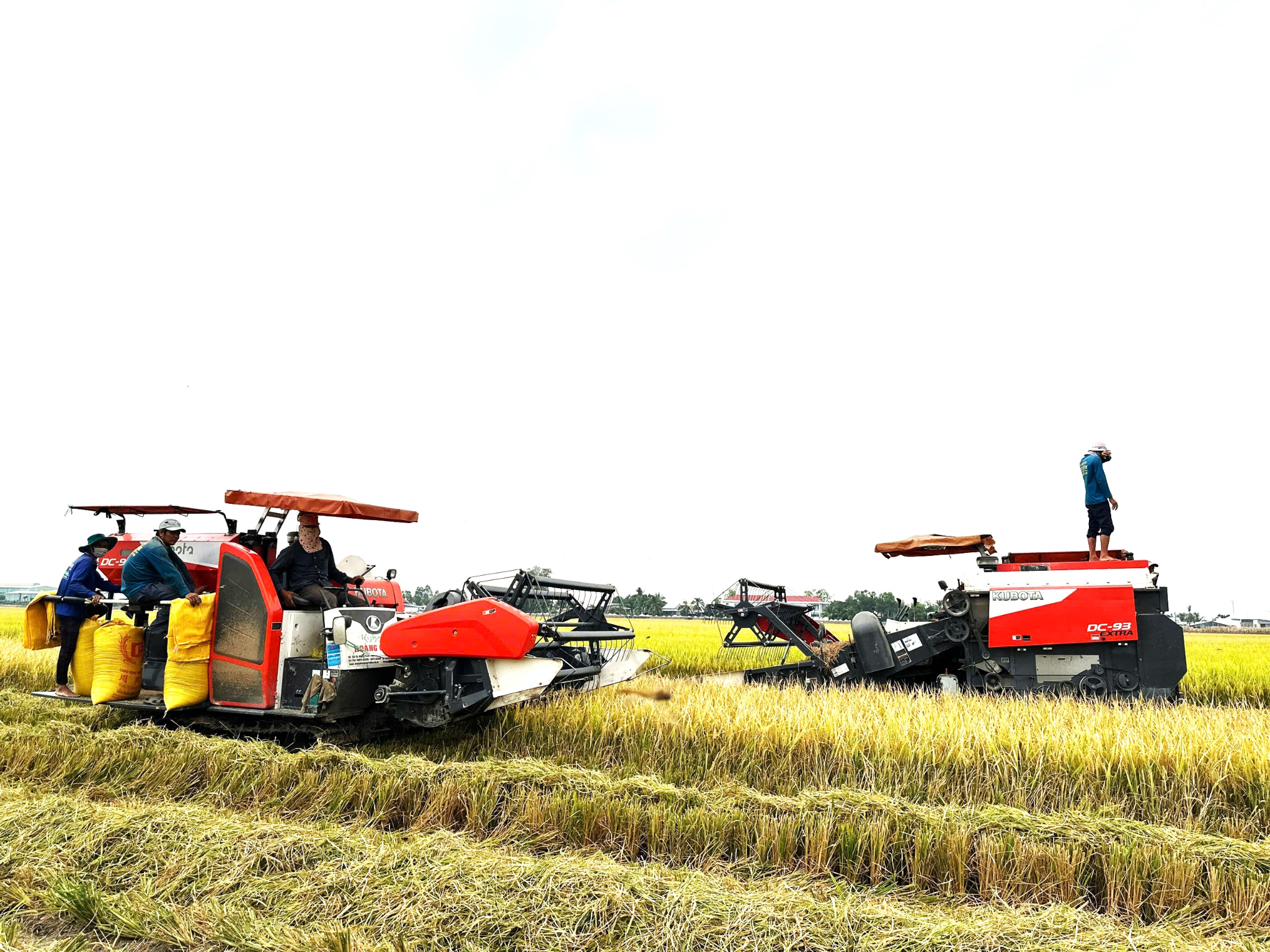 |
Rice fields of Tien Thuan Cooperative (Can Tho), one of the facilities supported by Agribank to transition to a low-emission rice farming model. Photo: Agribank |
Notably, immediately after the approval of the "Project for Sustainable Development of 1 Million Hectares of High-Quality, Low-Emission Rice Cultivation Linked with Green Growth in the Mekong Delta Region by 2030", Agribank signed a Memorandum of Understanding with the Ministry of Agriculture and Environment, committing to provide comprehensive financial products for 12 provinces and cities in the Mekong Delta participating in the Project. The bank also supports short, medium, and long-term loans for every stage in the rice value chain—production, procurement, processing, and consumption—with preferential interest rates at least 1% lower per year than standard rates, applicable to individuals, farming households, cooperative groups, cooperatives, and businesses.
Beyond agriculture, Agribank's green capital is also present in large projects such as TTC Phong Dien Solar Power (Thua Thien Hue) and Central Power Corporation (Khanh Hoa).
Vuong Van Quy, Deputy Head of Agribank's Credit Policy Department, stated that green credit plays a pivotal role in mobilizing social resources and supporting businesses and individuals in transforming their production models.
"Agribank has implemented diverse programs totaling tens of trillions of VND. These programs prioritize renewable energy, clean agriculture, and environmental protection, helping businesses reduce capital costs and promoting green transformation in Vietnam", Quy shared.
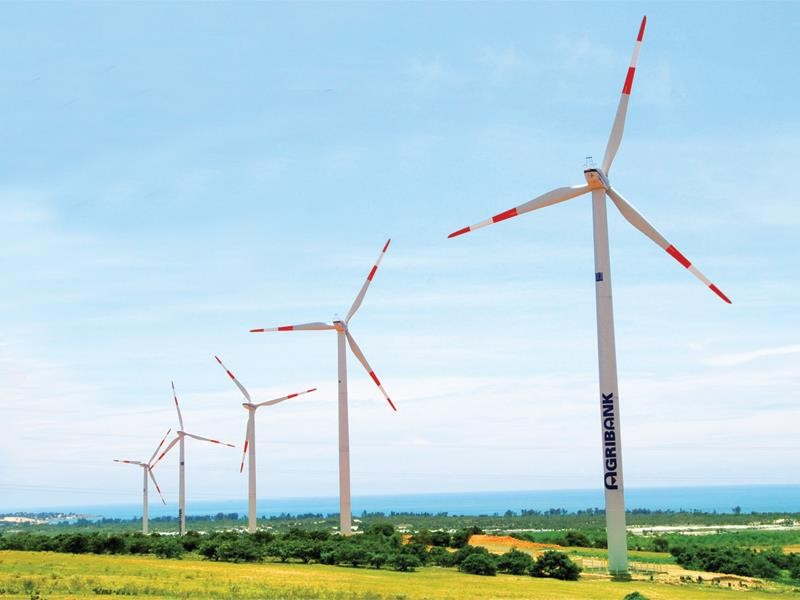 |
A wind power project in Tuy Phong, Lam Dong. Photo: Agribank |
However, expanding green credit also poses a challenge for the bank regarding medium and long-term capital. Most projects in agriculture, forestry, or renewable energy have long investment cycles and slow capital recovery times. If relying solely on short-term mobilized capital, expanding green credit could pressure the bank's liquidity and capital adequacy ratios.
To address this issue, at the end of 12/2025, Agribank completed the issuance of its VBA12505 bond lot, worth 5 trillion VND with a two-year term. This marked the first time the bank "labeled" the purpose of capital use for green credit right from the fundraising stage.
According to a bank representative, clarifying the purpose of capital use from the outset requires the system to upgrade its tracking, accounting, and cash flow control processes more rigorously. This ensures that capital genuinely flows into projects meeting environmental criteria. This is also an important preparatory step for Agribank to gradually align with international standards for green bond issuance and sustainable capital mobilization.
Applying technology to expand green finance access
One of the major barriers to green finance is access to capital, especially for small businesses, cooperatives, and production households in rural areas. Multi-step loan application processes and lengthy processing times make it difficult for many customers to access funding.
In this context, digital transformation is identified as a key solution to address this bottleneck. Through the Agribank Plus digital banking application, customers can apply for loans online. Electronic know-your-customer (eKYC) technology and biometric authentication are applied to shorten information verification times.
The bank has also connected to the National Population Database via the VNeID application. This data linkage allows the system to automatically identify customer information and screen beneficiaries of preferential policies, thereby accelerating the loan appraisal and approval process.
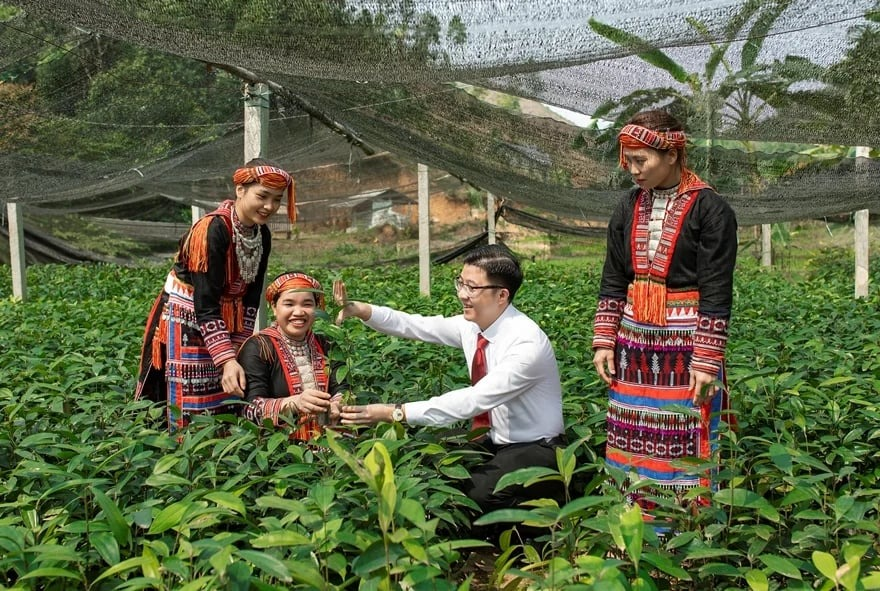 |
Agribank implements policy credit programs and national target programs on new rural development, sustainable poverty reduction, and socio-economic development in ethnic minority and mountainous areas. Photo: Agribank |
In mountainous and remote areas, Agribank combines digital platforms with its network of nearly 2,300 branches and transaction offices, along with mobile transaction points using specialized oto, to bring banking services closer to the people.
According to experts, combining green finance and digital transformation is becoming a trend in the banking sector. Technology not only helps expand access to capital but also supports risk management and monitors the effectiveness of green projects.
In 2025, Agribank was recognized among the Top 100 Green ESG Businesses of Vietnam 2025 and the Top 10 ESG Businesses in the Banking Sector 2025. At the Vietnam ESG Awards 2025, the bank was honored in the category of value chain development linked with social welfare.
These strategic solutions are helping Agribank establish a green finance ecosystem, from risk management and resource mobilization to expanding capital access. This model is expected to contribute to the green transition of the economy and Vietnam's progress towards its Net Zero commitment.
Minh Ngoc