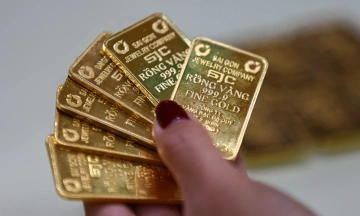
At 7:30 p.m. (Vietnam time), spot gold prices rose by 112 USD to 4,673 USD. Earlier in the session, prices at one point surged by over 150 USD, surpassing the 4,700 USD mark.
 |
Spot gold prices rose above 4,700 USD on the evening of 6/5. _Chart: Kitco_ |
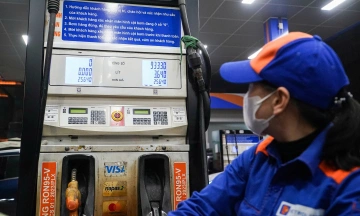
Conversely, crude oil prices experienced a sharp decline. Brent and WTI prices dropped 10-11% at one point this evening, pushing WTI close to 90 USD a barrel. The decline has since narrowed to 8%, with Brent trading at 101 USD per barrel and WTI at 94 USD.
Market volatility followed US media reports suggesting the country was nearing a memorandum of understanding with Iran. This agreement aims to end hostilities and establish a framework for nuclear negotiations.
Citing US official sources, Axios reported that the White House believes it is close to a consensus with Iran on a one-page, 14-point memorandum of understanding (MOU). This MOU was drafted by Middle East envoy Steve Witkoff and Jared Kushner, former President Trump's son-in-law, in collaboration with several Iranian officials. A Pakistani official involved in the peace efforts corroborated this information to Reuters, stating, "We are very close, very close."
Ricardo Evangelista, an analyst at ActivTrades, commented that a timely peace agreement would normalize transportation through the critical Strait of Hormuz. This normalization would reduce inflationary pressure, enabling the US Federal Reserve (Fed) to cut interest rates this year. He projected that if this scenario unfolds, gold prices could regain upward momentum, potentially returning above 5,000 USD and even aiming for 5,500 USD by the year's end.
The Strait of Hormuz, when blockaded, disrupts 20% of global crude oil and liquefied natural gas (LNG) supplies. This disruption caused Brent oil prices to surge by nearly 60% over the past two months, intensifying inflationary pressure.
Consequently, global gold prices faced downward pressure throughout the period of hostilities. This was primarily because accelerating inflation made central banks hesitant to reduce interest rates. While gold serves as a hedging tool during times of inflation and economic-political volatility, the precious metal is disadvantaged in a high-interest-rate environment as it does not yield fixed interest.
Ha Thu (_according to Reuters, Kitco_)