The workshop "Enhancing Robusta value through cultivation data" took place on 4/9 in Dak Lak. The program was designed with a focus on sharing and practical application, using cultivation data and applying technology in farming as two overarching themes.
Starting with an explanation of "why coffee beans need data?", farmers then learned how technology supports cultivation and practiced directly on the 2Nong application. This approach moved data beyond technical concepts, transforming it into an accessible tool for growers to record seasons, better understand plant conditions, and gain a stronger basis for each cultivation decision.
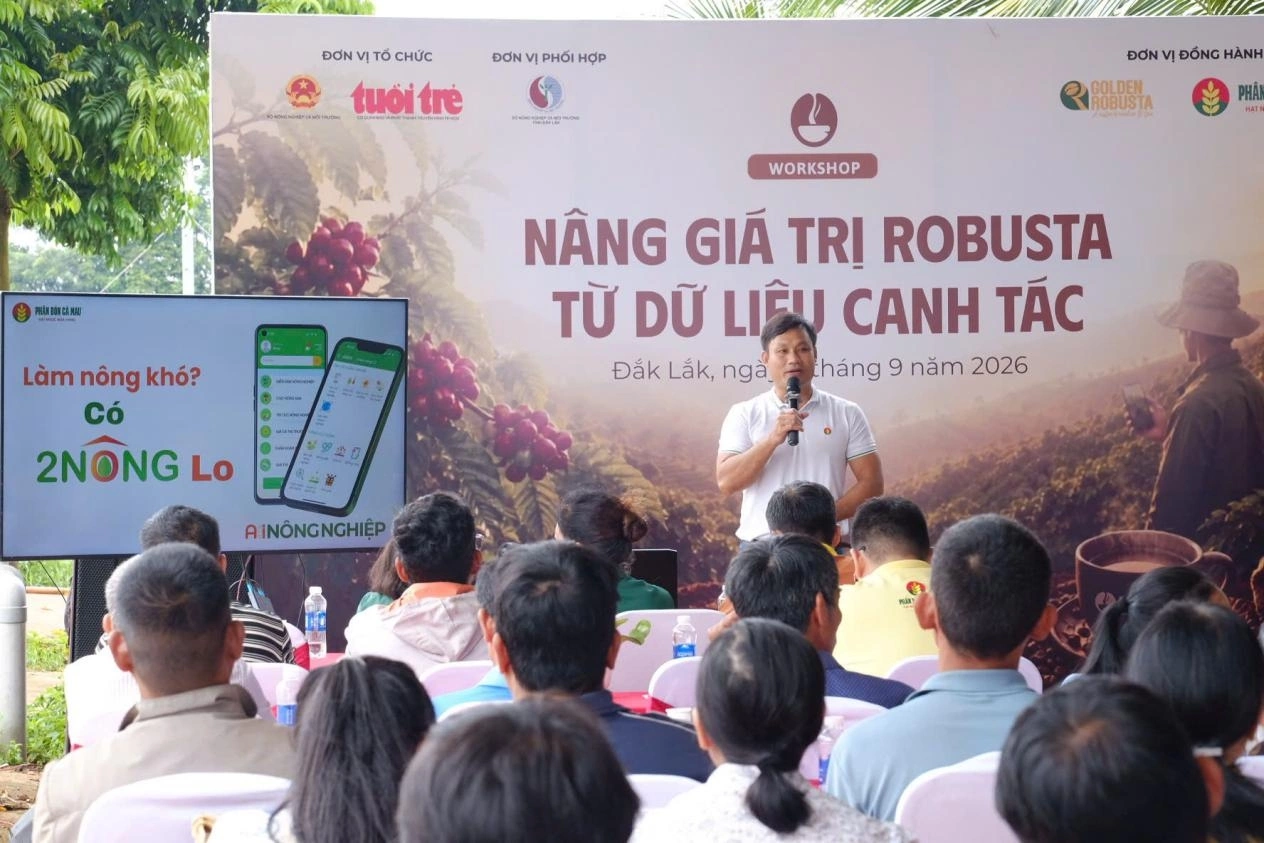 |
The workshop "Enhancing Robusta value through cultivation data" was designed with a focus on sharing and practical application, making it easily accessible to farmers. *Photo: Phan bon Ca Mau*. |
A highlight of the workshop was the practical session using the 2Nong app for cultivation data application. This allowed farmers to directly familiarize themselves with features such as pest and disease diagnosis, weather updates, and forums. Additionally, on 2Nong, growers can track supplies, plan cultivation, keep cultivation diaries, manage tasks, and monitor reports on supplies, costs, revenue, and cultivation efficiency.
Notably, with the "pest and disease diagnosis" feature, farmers can photograph the actual condition of their plants for AI to assist in identifying pests, diseases, and signs of nutrient deficiency. The system currently detects over 60 types of pests, diseases, and nutrient issues across 6 key crops: rice, coffee, pepper, oranges, passion fruit, and durian.
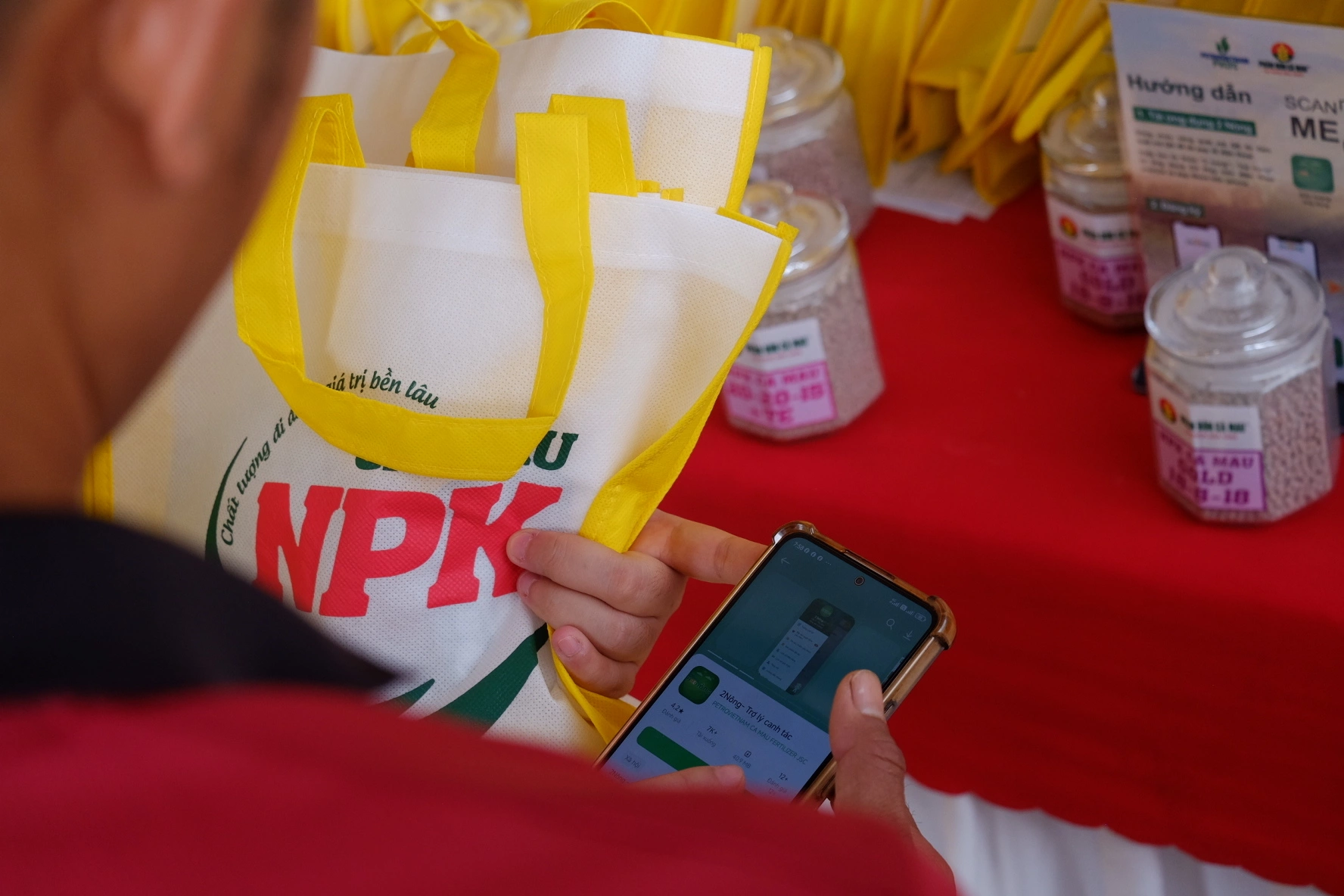 |
Farmers received guidance on installing and using data on the 2Nong application. *Photo: Phan bon Ca Mau*. |
After analyzing images, 2Nong provides reference information on causes, symptoms, treatment, and prevention methods. This assists growers in addressing plant conditions directly during cultivation. The diagnostic data is then compiled into pest and disease maps and nutrition maps, enabling users to consult local conditions and relevant plant nutrition recommendations.
Furthermore, the digitization of cultivation data contributes to building transparent production profiles for each raw material region. This creates a foundation for traceability and enhances the value of Vietnamese Robusta beans in domestic and international markets.
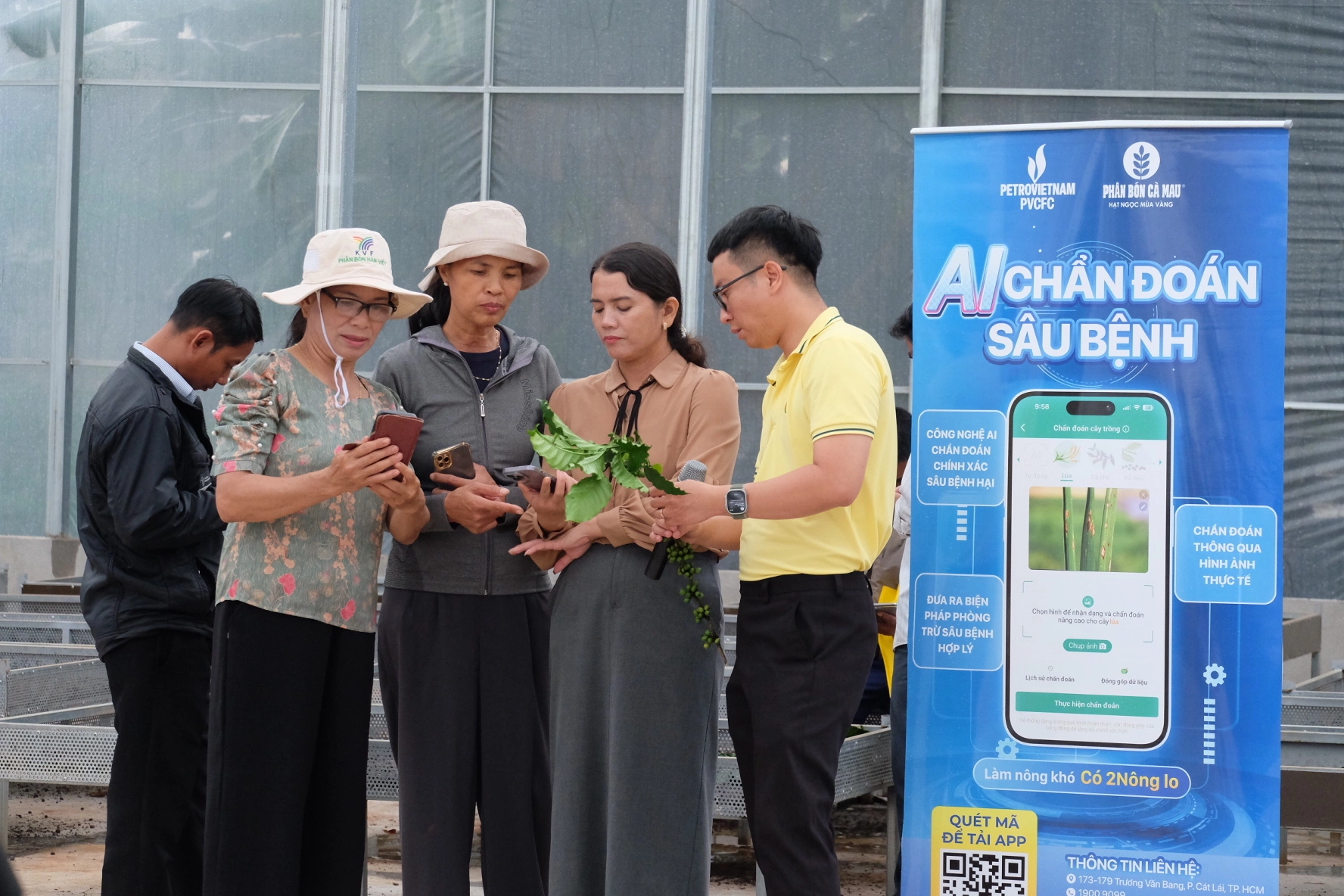 |
Farmers were guided through practicing the pest and disease diagnosis feature on the 2Nong application at a Robusta garden. *Photo: Phan bon Ca Mau*. |
The workshop organizers stated that in Tay Nguyen – the nation's largest Robusta coffee growing region – even with one plant variety, yield, bean firmness, and bean quality can vary significantly between growing areas due to differing soil conditions and cultivation methods. Many critical decisions, such as fertilizer application timing, supplementary nutrient amounts, or early pest and disease detection, currently rely mainly on grower experience. Meanwhile, climate change, rising material costs, and increasingly stringent market demands pose new challenges for farmers.
Therefore, the workshop "Enhancing Robusta value through cultivation data" introduced a practical approach by integrating data into daily coffee farming tasks to support farmers. Phan bon Ca Mau contributed to making technology a "cultivation assistant," from recording seasons, managing supplies, and monitoring nutrition to identifying pests and diseases using AI. Each piece of data accumulated through 2Nong will help growers better understand their farms, provide a stronger basis for cultivation decisions, and gradually build transparent production profiles over successive seasons.
Hai My