Late last year, a customer lost 5 billion dong after interacting with a Facebook account claiming to be a bank employee offering high-interest savings deposits. The customer insisted they did not make the transactions, but at midnight, 11 transactions totaling 5 billion dong were debited from the account, leading to a dispute between the customer and the bank.
Police in many provinces and cities have recently and repeatedly warned about scammers using high technology to solicit deposits and high-interest financial investments.
Scammers impersonate bank employees or financial companies, then send fake links, requesting the installation of unknown applications. Alternatively, they request login credentials, electronic banking passwords, one-time passwords (OTP), transaction confirmation codes, and card information. With this data, criminals can take control of accounts and withdraw money.
In some cases, scam rings even create websites and applications with interfaces similar to reputable credit institutions, then invite people to transfer money to personal accounts or participate in savings and investment packages. Initially, these rings might pay interest on time for small amounts to build trust, then entice victims to deposit larger sums before absconding with the money.
QR codes on fake flyers and publications, according to the police, can also lead to scam websites or phone numbers of individuals impersonating bank employees.
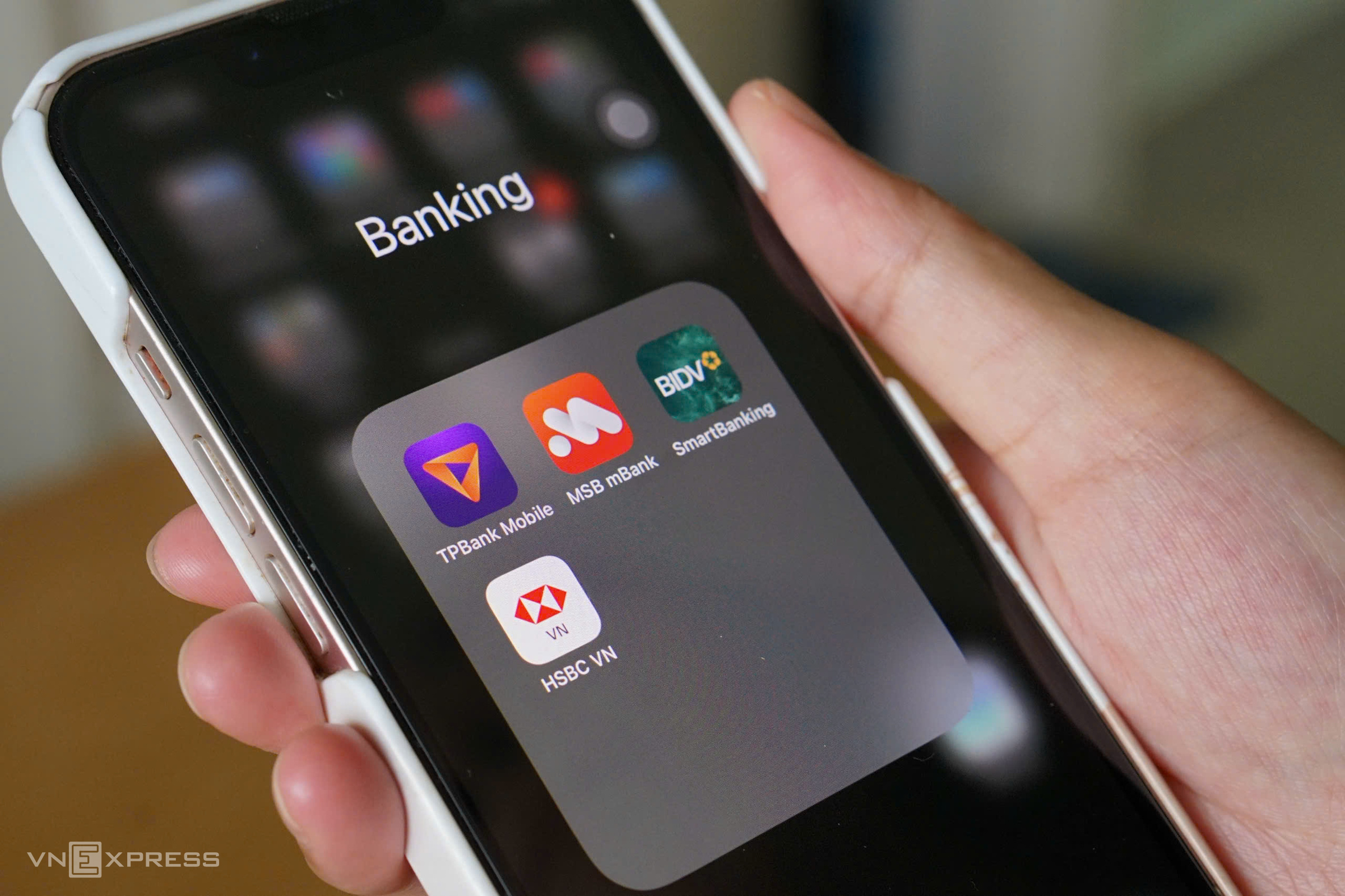 |
Mobile applications of several banks. *Photo: Phuong Dong*
As the deposit mobilization race heats up, negotiating interest rates with bank employees is becoming increasingly common, as the offered rates can be 2-3% higher than official listed rates.
On social media groups, many accounts introduce themselves as bank employees, offering savings interest rates higher than listed rates. Customers might benefit from higher interest rates this way, but it also carries risks if they are transacting for the first time with an unknown account on social media.
According to information from banks, financial scam tactics on social media are becoming increasingly sophisticated, including impersonating bank employees to offer high interest rates.
For online savings deposits using an employee referral code (if applicable), customers must first verify that they have downloaded the correct official application issued by the bank.
Savers should directly download applications from official app stores and should not download applications or log into bank accounts via links sent by strangers.
From opening an account to making online savings deposits, customers can perform all operations themselves within the bank's application. No bank employee will ever ask customers to transfer money to their personal accounts, provide passwords, or one-time passwords.
Police agencies also advise citizens to be cautious of unusually high interest rates, not to transfer money to personal accounts or accounts not belonging to a credit institution, and not to provide confidential information or conduct transactions via unknown links or applications.
Quynh Trang