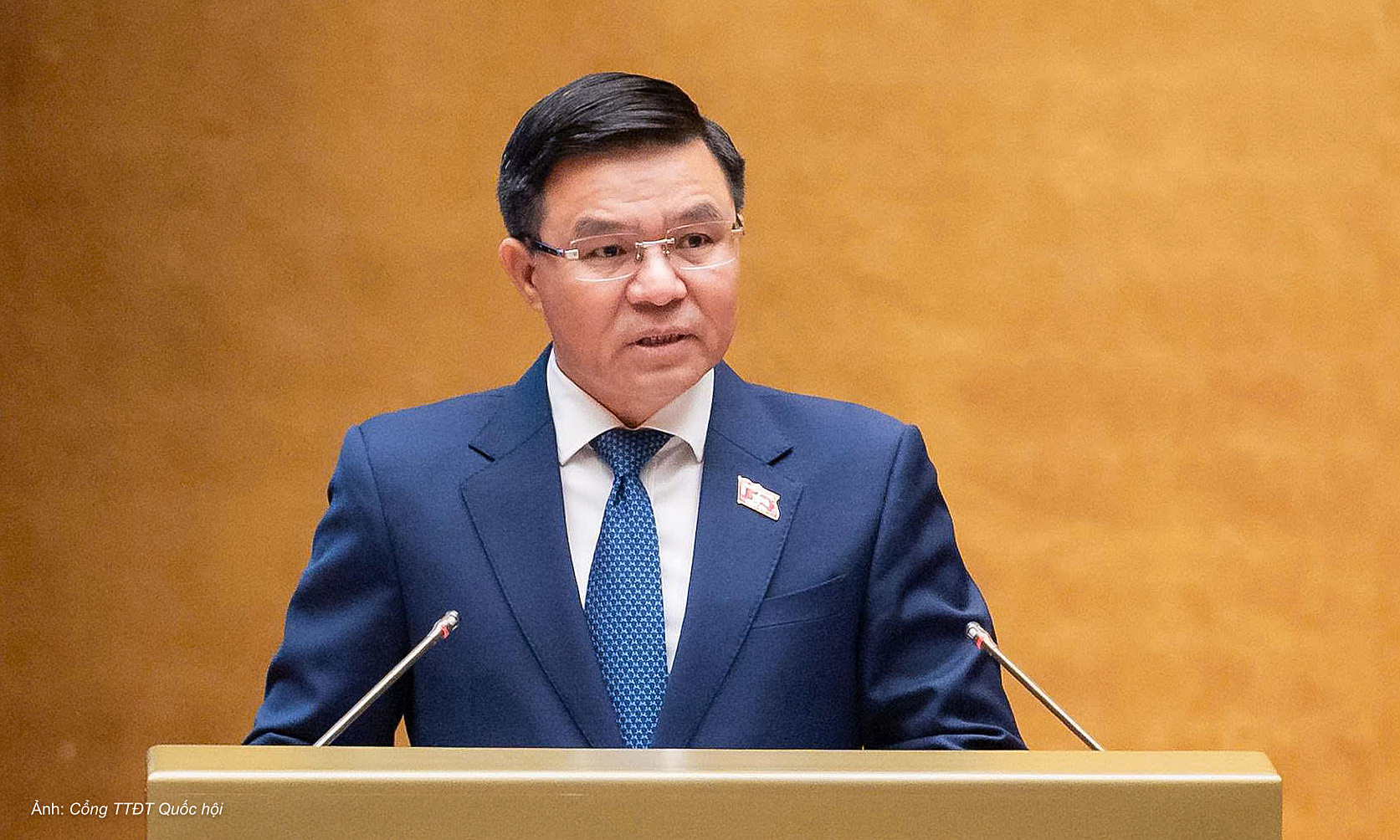
UNICEF called on businesses to prioritize investment in children as a core component of their development strategies, emphasizing its impact on long-term competitiveness and societal value. This message was delivered at the Business Leaders Dialogue program, organized by UNICEF in TP HCM on 19/8.
During the event, Silvia Danailov, UNICEF Representative in Vietnam, underscored the crucial link between economic development and investment in children. While artificial intelligence, infrastructure, and capital will shape the future of businesses, she highlighted that the most important factor is how companies invest in people, especially the children growing up today. "These children will become the workforce, innovators, entrepreneurs, and leaders who will write Vietnam's next chapter. Therefore, investing in children is investing in Vietnam's future," Danailov stated.
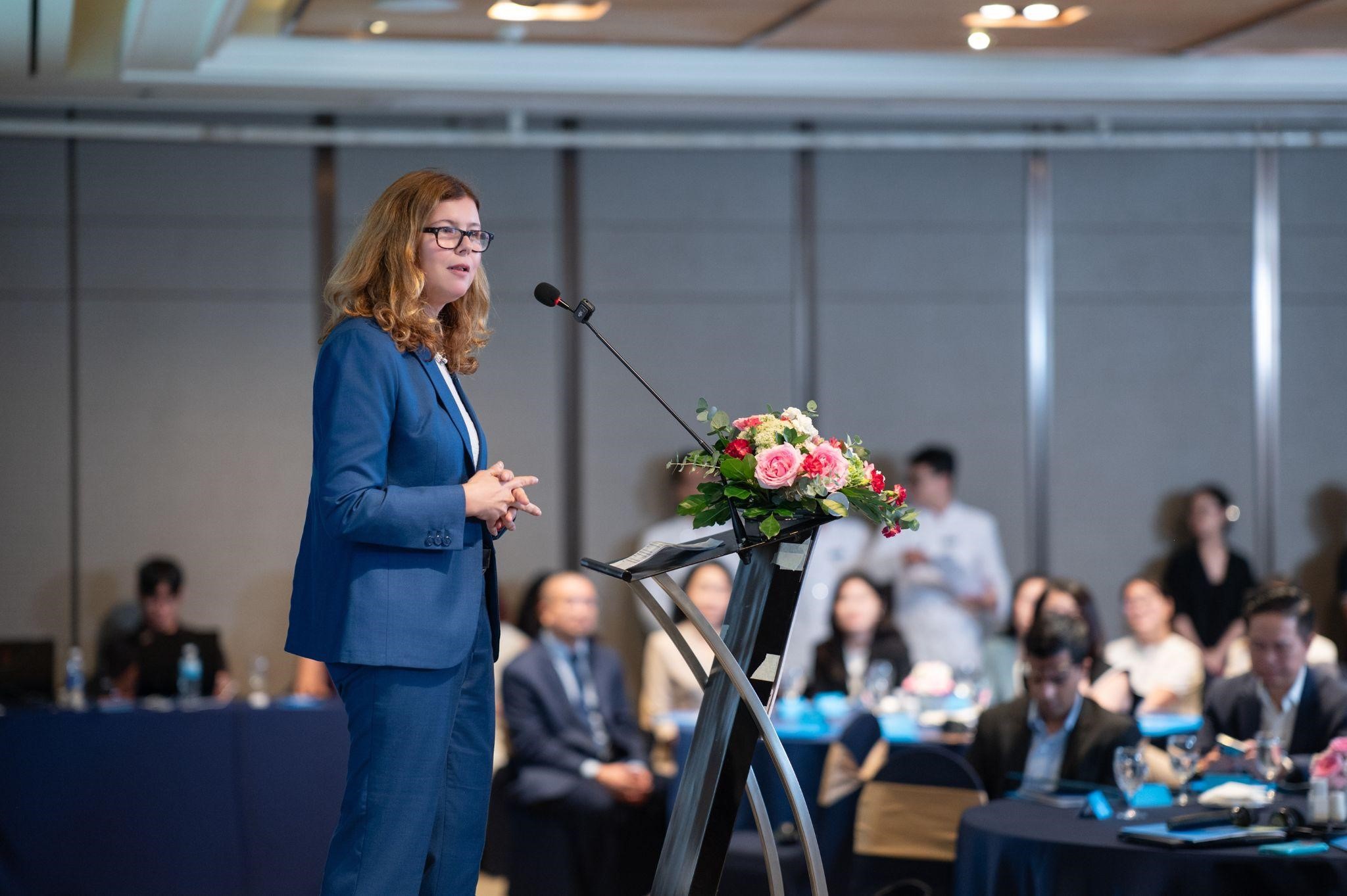 |
Silvia Danailov, UNICEF Representative in Vietnam, shares insights on the future of Vietnamese children. *Photo: UNICEF Vietnam*
This call is particularly urgent as Vietnam enters a decade marked by significant demographic, climate, and technological shifts. A shrinking workforce demands higher productivity, while communities need increased resilience against climate risks. The rapid advancement of technology also imposes new demands for knowledge and skills on the future generation. Ensuring children today grow up healthy, receive education, are protected, and equipped with essential digital skills not only affects each child's future but also contributes to shaping the human resource pool, enhancing community and supply chain resilience, and building a foundation for the sustainable development of the consumer market.
For business leaders, the challenge lies in translating this concern into concrete actions that simultaneously create social value and align with the company's long-term development strategy. Experience shared at the event highlighted one common point: businesses can create social value more effectively when they start from their areas of expertise and strength.
Kimberly-Clark, for instance, possesses experience and understanding of the needs of infants, mothers, and women. UNICEF, on the other hand, offers technical expertise, a network of collaboration with the Government, and the capacity to implement large-scale programs, especially in communities lacking essential services. According to Nitish Gupta, Southeast Asia Managing Director and General Manager of Kimberly-Clark Vietnam, the complementary expertise and resources between the two sides form the foundation of the partnership between Kimberly-Clark and UNICEF. "Working together is not just about finance. It is the combination of common goals and each party's strengths that can create lasting impacts for society," he said.
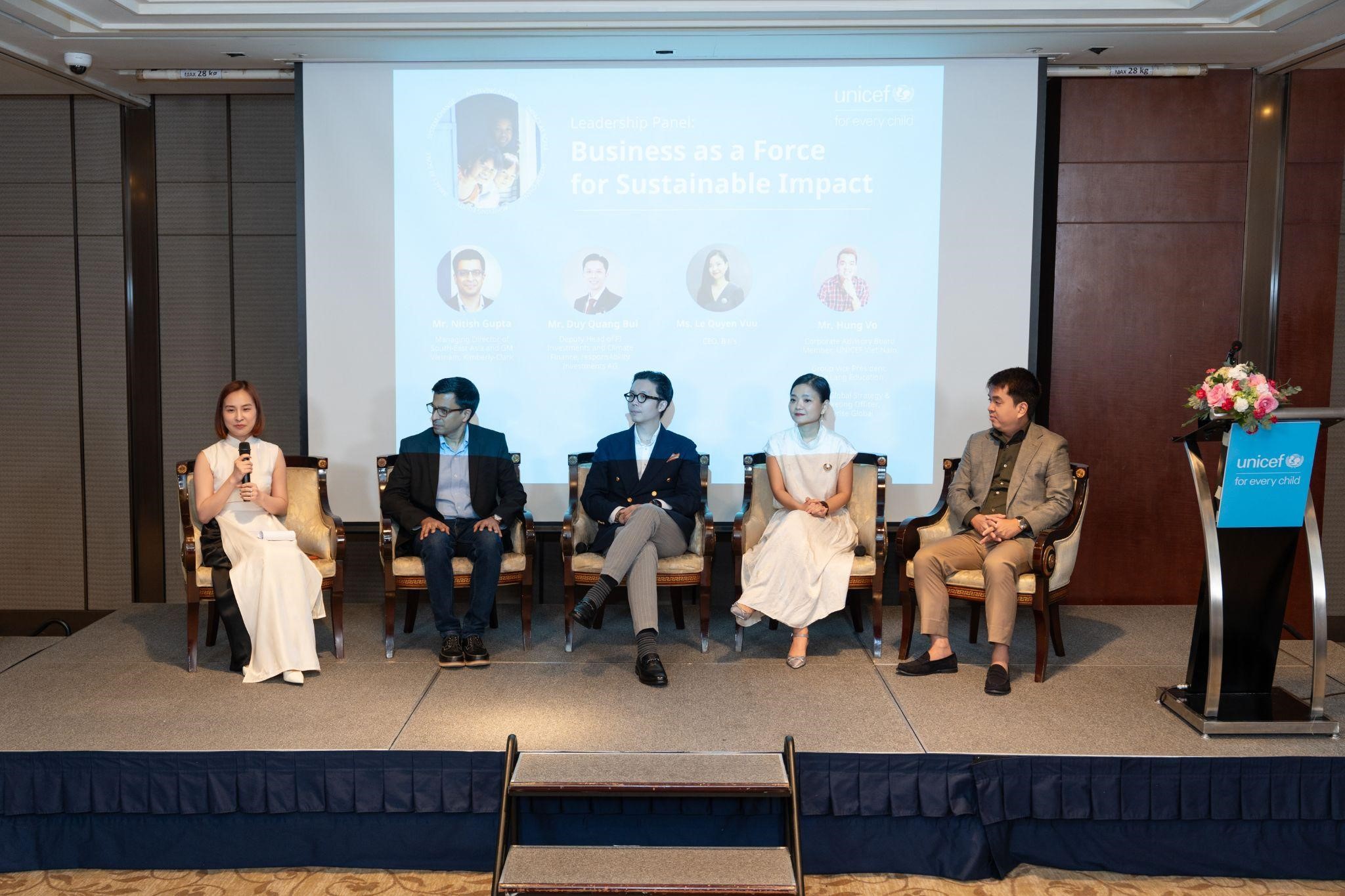 |
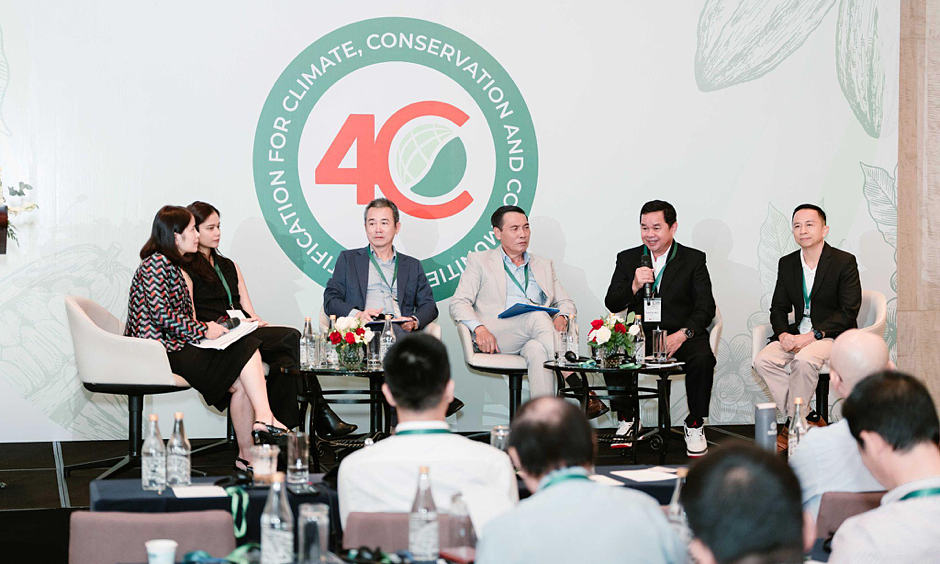
Speakers discuss the role of businesses in creating sustainable impact. *Photo: UNICEF Vietnam*
Also at the event, Vuu Le Quyen, General Director of Biti’s, affirmed: "Investing in the development and happiness of children is important because Vietnam can only achieve successful and sustainable development when we build a new generation of human resources that is healthy, happy, and has the opportunity to realize its full potential."
The approach businesses take to social issues is also evolving in the philanthropic sector. Ann Putnam Marks, UNICEF's Asia-Pacific Partnership Lead, noted that philanthropic activities are gradually shifting from single donations to longer-term partnerships. The collaboration between the Techajareonvikul family, the entrepreneurial family behind a retail, distribution, and consumer goods ecosystem in Thailand, and UNICEF Thailand, exemplifies how corporate resources, networks, and operational scale can complement UNICEF's expertise, thereby creating positive and lasting impacts for the community.
Through the BJC Big C Fund, the Techajareonvikul family integrated UNICEF's knowledge and expertise in holistic early childhood development into the operations of a large-scale retail system. Family-friendly workplace policies, on-site childcare, breastfeeding support spaces, and children's areas ensure that the values of this partnership are present in the daily experiences of employees and customers.
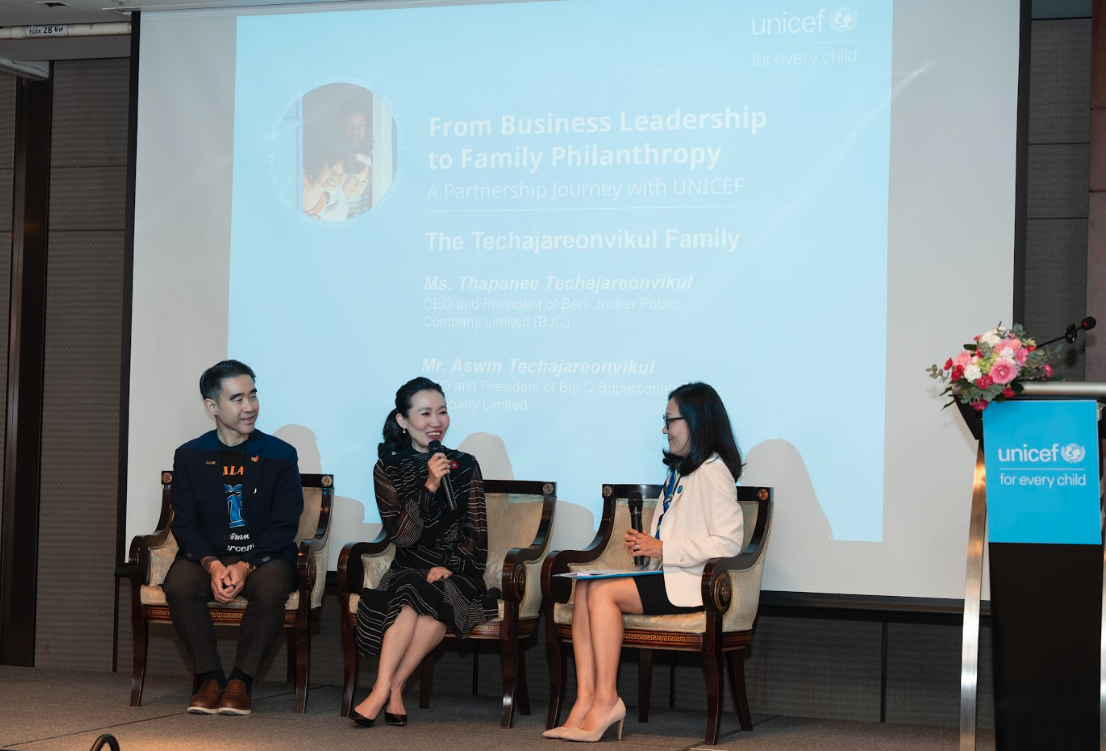 |
The Techajareonvikul family were special guests at the dialogue. *Photo: UNICEF Vietnam*
"Our employees now have the opportunity to acquire the knowledge and values we have learned from UNICEF's guidance and collaboration. Everyone also better understands the importance of caring not only for their own families but also for families in the community, and they feel proud to be part of that journey," Thapanee Techajareonvikul shared. She believes that such a positive environment is the foundation for a business to succeed and become a responsible part of society.
The stories shared at the dialogue illustrate that investing in children can begin with the daily decisions businesses make: what products to manufacture and sell, how to build a work environment, how to utilize resources, and what values to pursue long-term. Ultimately, the children growing up today are the ones who will continue Vietnam's development story tomorrow.
The Dan