Dr. Bui Thanh Minh, Deputy Professional Director of the Private Economic Development Research Board (Board IV), shared this view at the "ERP Strategy 2026: System Standardization, Transparent Management, Sustainable Transformation" workshop, organized by 1C Vietnam. He argued that the era of competing through experience or luck has passed. Businesses with a sound data strategy, capable of cleaning and mastering this resource, will secure success in the race for sustainable growth.
Drawing from his experience in policy consultation, Dr. Minh highlighted the rapid shift in mindset among both state management agencies and the business community. Previously, domestic companies primarily competed on labor costs and natural resources. However, global supply chains now prioritize security, compliance, and reliability.
"How can people trust each other? It cannot be based solely on words; it must be founded on data. That is the only sustainable, long-term trust", Dr. Minh stated.
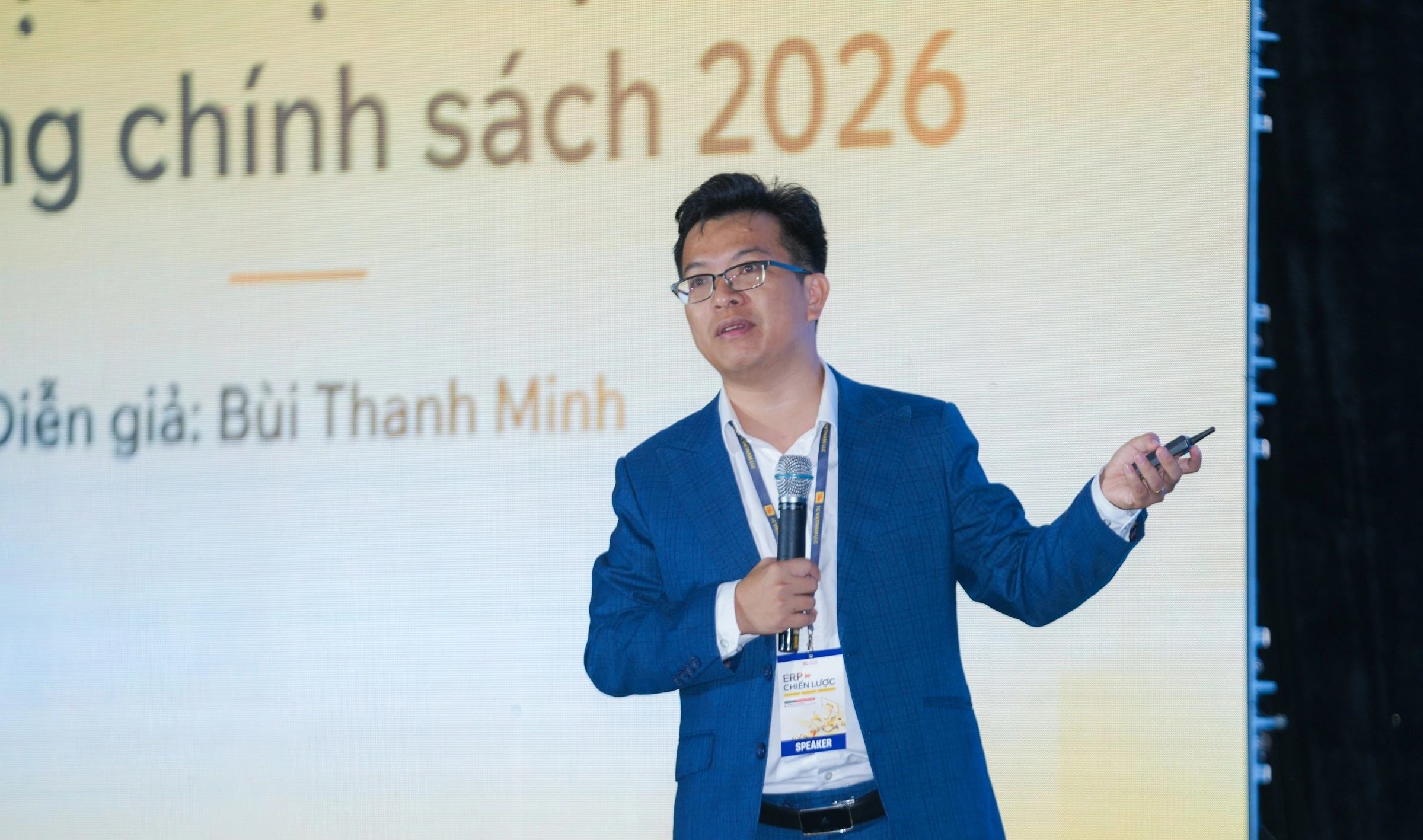 |
Dr. Bui Thanh Minh discusses data management in the new context. Photo: 1C Vietnam |
Dr. Minh noted that Vietnam is at an important juncture after 40 years of Doi Moi. To escape the middle-income trap and achieve a minimum 7% annual GDP growth, the economy cannot continue to rely on capital expansion or labor-intensive methods. Instead, it must optimize resources and leverage technological advancements. From the perspective of regulatory bodies, recent major policies like Resolution 57 and 68 recognize data as a production material and the "new fuel" of the economy, a national resource to be enriched.
According to Dr. Bui Thanh Minh, data and data management capabilities will help organizations address the inherent weakness of previous "guesswork" management methods. "Only with effective data management can businesses meet international standards, access preferential capital, verify origin, ensure financial transparency with tax authorities, and enhance their position in the global value chain", he explained.
Sharing this perspective, Pham Hoai Anh, Commercial Director of 1C Vietnam, emphasized that data is an invaluable asset for every organization. However, transforming raw data into measurable value remains a significant challenge.
The primary challenge for businesses currently is fragmented data, manual operational processes, and a reluctance to invest in initial data standardization costs. "Businesses often view this as an expense, rather than a strategic investment", Pham Hoai Anh analyzed.
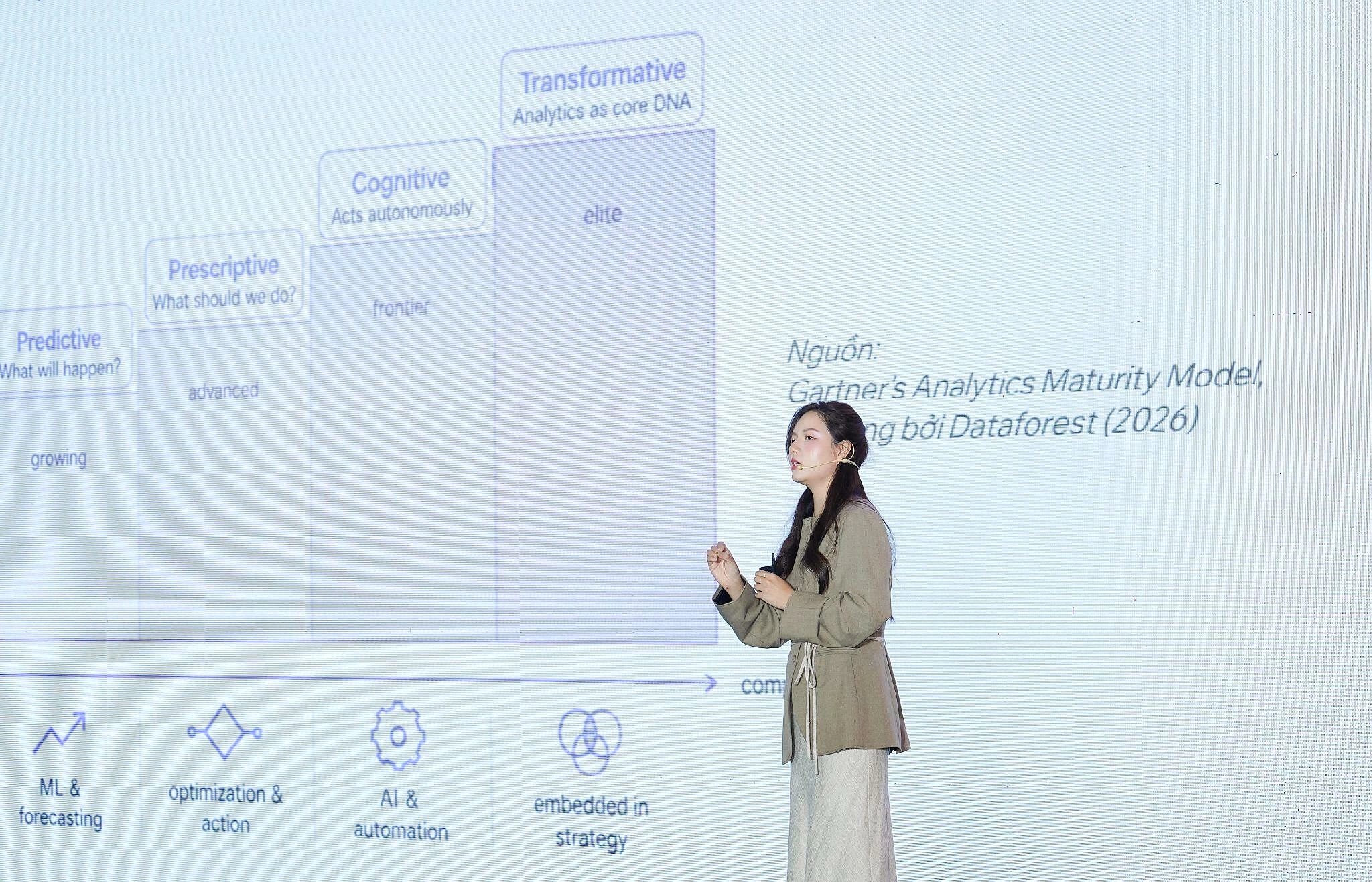 |
Pham Hoai Anh presents on the six levels of data analytics maturity in businesses. Photo: 1C Vietnam |
In her presentation, Pham Hoai Anh elaborated on the data analytics maturity model for businesses, which is divided into six increasing levels of complexity: from the most basic, using data to describe the past, delving into root causes, forecasting the future, and proposing solutions; to systems with autonomous AI-driven operations; and finally, where data analytics becomes a core DNA in the company's strategy.
Reports from Gartner, McKinsey, Databricks, and real-world observations indicate that most Vietnamese businesses remain at levels one or two, often stuck at low maturity without further development due to a lack of standardized foundations.
"Is data an asset or a liability?" Pham Hoai Anh posed, asserting that when data is accurate and effectively supports business decisions, it is undoubtedly an asset. Conversely, if information is not standardized or is inaccurate, leading leaders to make incorrect decisions, or if data stored for decades goes unused, incurring maintenance costs, then it becomes a liability.
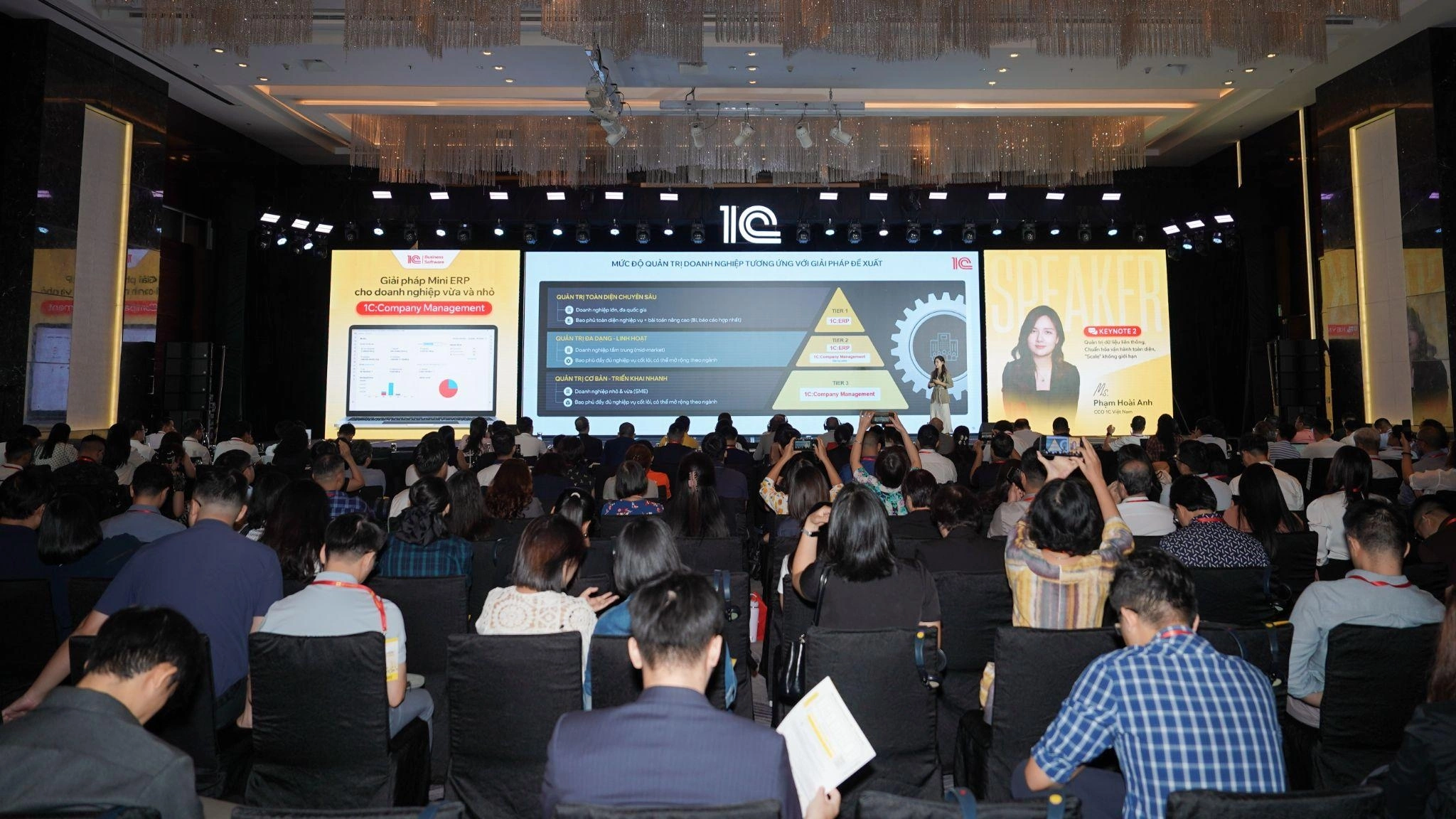 |
Pham Hoai Anh discusses solutions for integrated data across all departments on one system. Photo: 1C |
To ensure data truly becomes a revenue-generating asset, Pham Hoai Anh highlighted the crucial role of an enterprise resource planning system with real-time integrated data. When an order is approved, departments from production, purchasing, warehousing, to accounts receivable must instantly access information on the same platform, resolving issues of fragmented and unsynchronized data.
Citing practical operational examples, Tran Quoc Hung, an ERP solution implementation consultant at 1C Vietnam, explained that for large corporations and businesses, balancing resources from machinery, raw materials, to labor is often complex.
Tran Quoc Hung noted that many companies still rely on manual Excel spreadsheets for planning. In contrast, a well-implemented ERP system automatically calculates production plans based on material norms, actual inventory, delivery risks, and machine capacity, visualized through tools like Gantt charts.
"With ERP, businesses can precisely control costs, work-in-progress expenses, and optimize profit margins on each order", Tran Quoc Hung said.
According to Kairat Duisenbaev, Head of 1C:ERP Product, the distinguishing factor that allows 1C solutions to support partners is their flexible "tailoring" capability. An overly rigid platform stifles operational autonomy, while an overly free platform compromises system standardization.
To address this challenge, 1C combines established international management standards with deep customization capabilities tailored to specific business problems, operational processes, and current legal regulations. For over a decade, 1C Vietnam has provided a diverse range of ERP solutions, from mini to comprehensive, meeting the needs of organizations of all sizes: large, medium, and small.
(Source: 1C Vietnam)