According to data from the General Administration of Customs (GAC) of China, the country's total trade turnover reached 639.4 billion USD in April, marking an increase of over 14% compared to the same period last year. This figure significantly surpassed the 2.5% growth recorded in March and analysts' forecast of 7.9%.
Specifically, exports totaled over 360 billion USD, a 9.8% rise year-on-year, while imports climbed nearly 21% to 279.4 billion USD.
The trade surplus for the world's second-largest economy reached nearly 85 billion USD, up from over 51 billion USD in March.
Lyu Daliang, Director of the GAC's statistics and analysis department, stated, "Foreign trade activities have had a strong start since the beginning of the year."
Factories are driving this momentum as they ramp up production to fulfill artificial intelligence (AI) orders and to stockpile goods, amidst Middle East tensions that threaten to escalate input costs.
Machinery and electrical equipment accounted for the largest share of total exports (63.5%) and increased by 17.6% in the first four months, reaching nearly 865 billion USD.
Green and low-carbon products experienced significant growth. Specifically, exports of electric vehicles, lithium batteries, and wind turbines rose by over 68%, 43%, and nearly 41%, respectively.
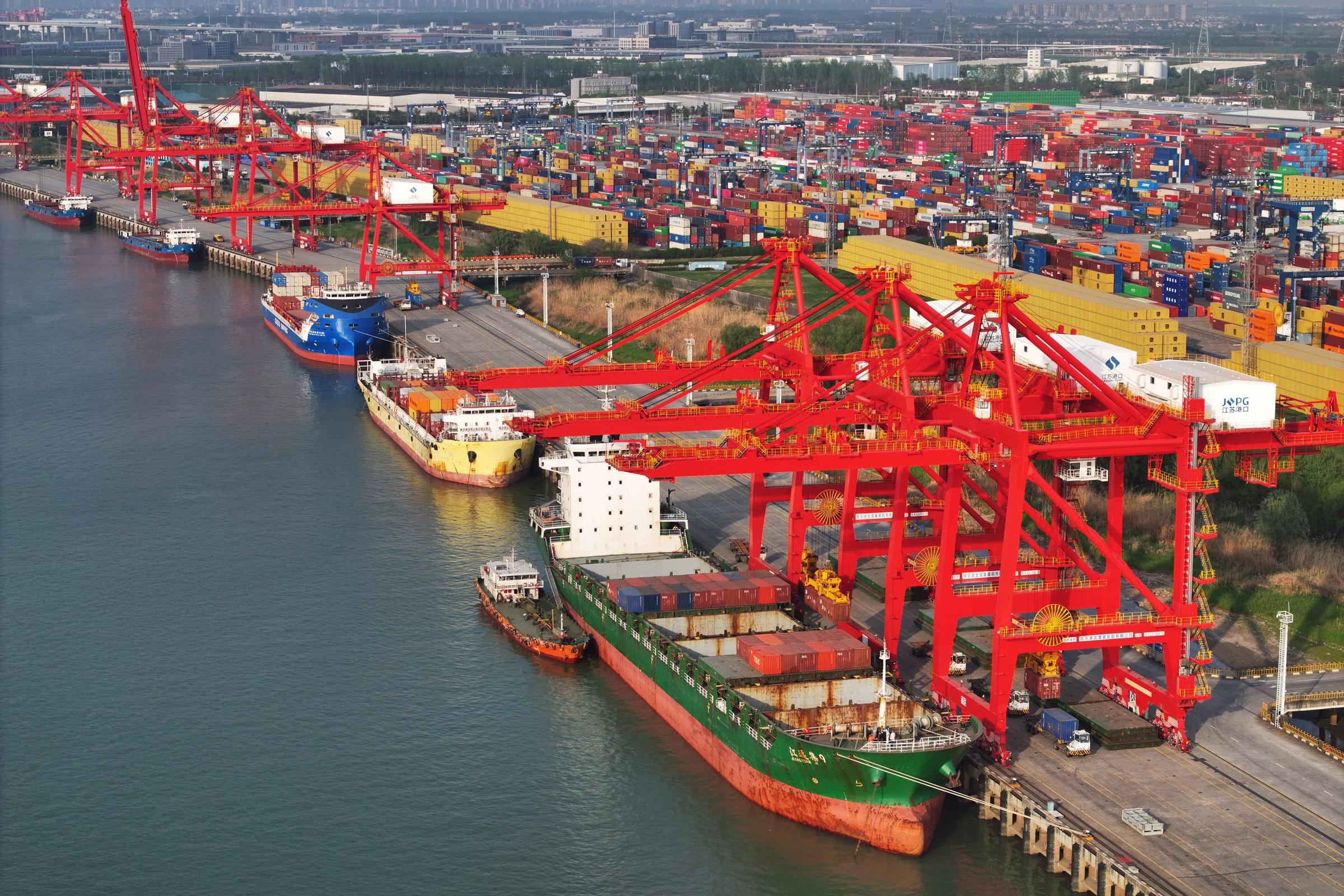 |
A container terminal at Nanjing port, Jiangsu province, China, 9/4/2025. Photo: Reuters |
In March, China announced a 2026 growth target of approximately 4.5-5%. Export growth is anticipated to continue as a main driver, especially with positive market developments in Southeast Asia, Europe, Latin America, and Africa.
In the first Quarter, China's Gross Domestic Product (GDP) grew by 5%, reaching the upper end of its full-year target. By April, factory activity data also indicated that new export orders had increased to their highest level in two years.
Lynn Song, chief economist for mainland China at ING bank (Netherlands), commented, "We expect external demand to generally remain a strong growth driver this year." He noted that semiconductor and automotive exports will likely lead this momentum.
Wei Li, multi-asset investment director at BNP Paribas Securities, observed that rising oil and fuel prices due to the Iran conflict are also driving up production and logistics costs across many factories in China. However, the economy is generally more resilient than other nations, thanks to its large oil reserves and diversified energy supply.
Phien An (AP, Xinhua)