


China's customs announced on 14/1 that the country's imports and exports both increased in december, with exports rising by 6.6% and imports by 5.7%. Both figures surpassed forecasts.
The full-year trade surplus for 2025 reached a record 1.189 trillion USD. This figure had already surpassed the 1 trillion USD mark in the first 11 months of the year.
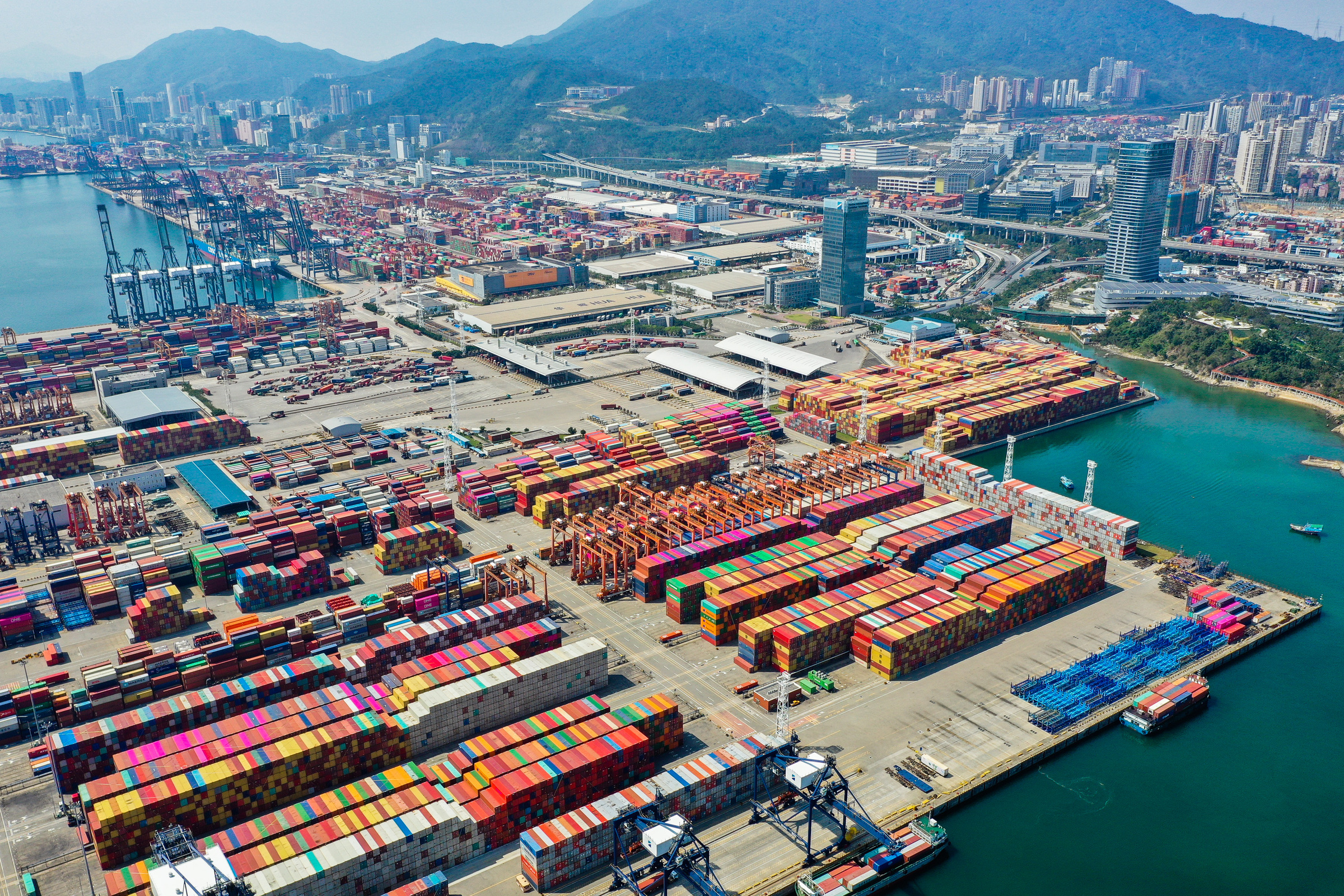 |
Containers at a seaport in Shenzhen, Guangdong, China. Photo: Reuters |
In 2025, china recorded seven months with surpluses exceeding 100 billion USD, partly due to a weaker yuan. Under pressure from US import tariffs, chinese exporters diversified away from the US market, redirecting efforts toward southeast asia, africa, and latin america.
The automotive sector, a key component of Beijing's global industrial ambitions, saw exports rise by 19.4% to 5.79 million vehicles last year. Exports of electric vehicles alone increased by 48.8%. China is likely to maintain its position as the world's largest car exporter for the third consecutive year, having overtaken japan in 2023.
Economists anticipate that the world's second-largest economy will continue to expand its share in global trade this year. Chinese companies have established production facilities in countries subject to lower import tariffs when entering the US and the European Union (EU). Demand for low-end chips and electronics also contributed to increased exports for Beijing.
The total import tariffs currently imposed by the US on chinese goods stand at about 47.5%. This is significantly higher than the 35% analysts believe chinese businesses can still profit from when selling to the US.
Beijing currently relies on exports to offset declining domestic demand and a prolonged real estate crisis. However, last year's record surplus could heighten concerns from other nations regarding China's industrial overcapacity and their dependence on the country.
Despite this, Beijing has signaled an awareness of the need to regulate exports to ensure long-term success. Leaders are increasingly focused on and vocal about achieving balance in the economy, as well as addressing image issues caused by excessive exports. After the trade surplus exceeded 1 trillion USD in 11/2025, Chinese Premier Li Qiang called for "actively increasing imports, as well as promoting a balanced trade account."


