The Vietnam Association of Seafood Exporters and Producers (VASEP) reported that China is the fastest-growing market, driving the industry's total export turnover to 3.9 billion USD in the first 10 months, a 22% increase over the same period last year.
In october alone, shrimp exports reached a record 498 million USD for the year. Shipments to mainland China and Hong Kong accounted for 140 million USD, indicating robust demand for Vietnam's live, fresh, and frozen shrimp products.
China is increasing imports to meet both domestic consumption and processing needs for re-export. Vietnam's geographical proximity, lower transportation costs, and consistent supply make its shrimp a more competitive option than other sources.
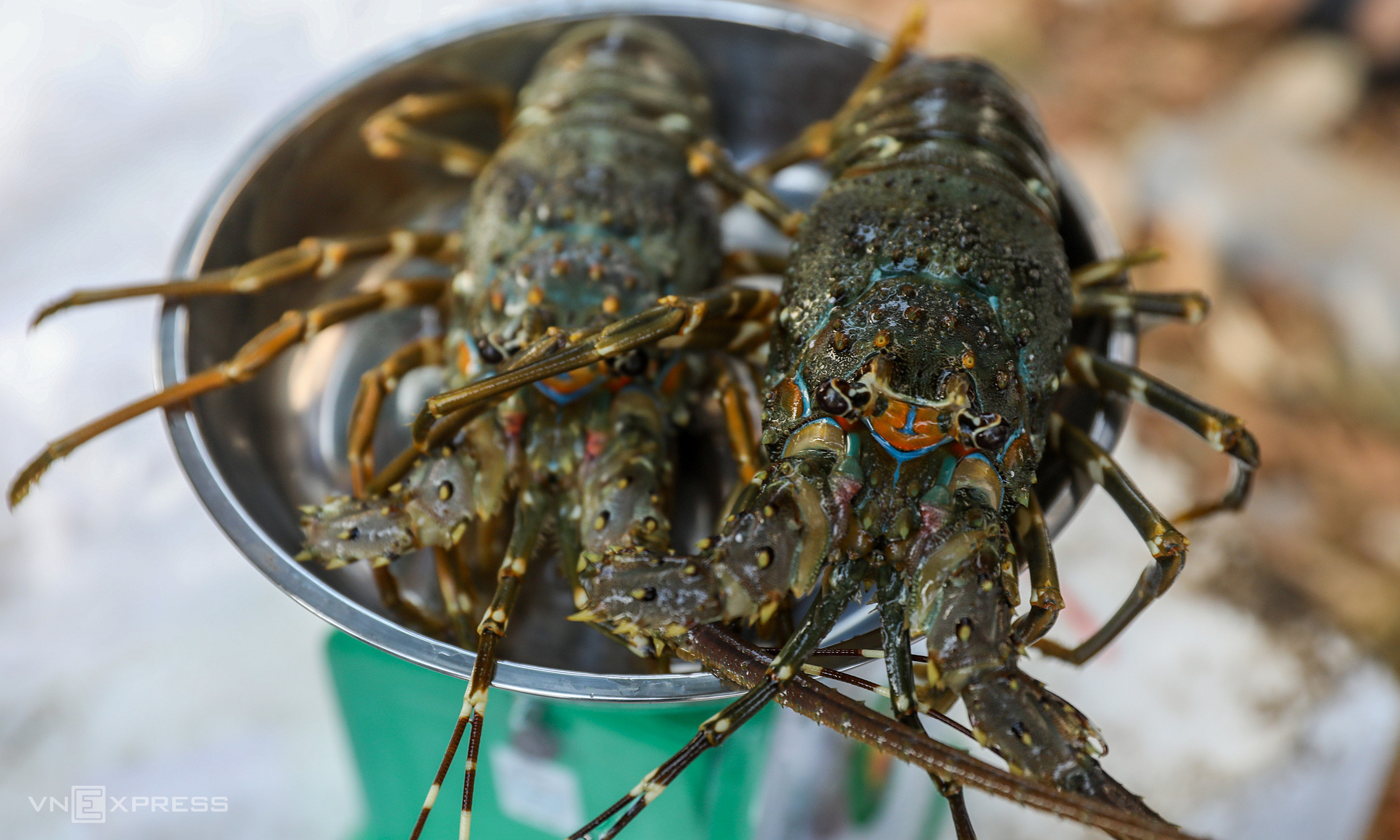 |
Lobsters sold in An Hoi Dong Ward, Ho Chi Minh City. *Quynh Tran*
Alongside China, the Comprehensive and Progressive Agreement for Trans-Pacific Partnership (CPTPP) region continues to support the industry, with exports exceeding a billion USD in the first 10 months. Stable demand from Japan, Canada, and Australia provides Vietnamese businesses a basis for market balance amid rising US trade defense measures.
US imports of Vietnamese shrimp reached 702 million USD in the first 10 months, up 9%. Despite competitive pricing pressures from Ecuador and India, vietnam's shrimp exports to the US in october were 114 million USD, signaling sustained demand. Taiwan's imports, for example, soared by nearly 80% in october, highlighting growth potential in the Asia-Pacific market.
Whiteleg shrimp remains the primary export, generating 2.5 billion USD and accounting for nearly 65% of the total 10-month turnover. Its competitive pricing, stable supply, and broad market appeal contribute to its high growth rate.
Black tiger shrimp exports totaled 385 million USD, primarily destined for Japan and the niche market for ecological and large-sized shrimp in China. Other shrimp products generated 991 million USD, reflecting a business trend toward increased deep processing to enhance added value and optimize factory capacity.
Despite positive growth, the shrimp industry is projected to slow in Quarter IV due to tariffs and trade defense measures from the US, its second-largest export market. This could impact competitiveness, pricing, and contract negotiations for new shipments.
Nevertheless, robust growth in Asia, particularly from China, which has spent over a billion USD on Vietnamese shrimp, maintains a positive outlook for the full year. Experts suggest that if businesses uphold quality, optimize high-value products, and expand market reach, any potential slowdown in the final months can be managed.
Thi Ha