During Quarter I, Vietnam exported approximately 590,500 tons of coffee, generating USD 2,75 billion. This represents a 12,5% increase in volume but a 7,1% decrease in value year-on-year.
The average export price for coffee dropped by 17,6% to approximately USD 4,657 per ton. Domestically, Robusta coffee prices last week fell to VND 85,000-86,000 per kg, a decline of about 35% compared to last year and the lowest in three years.
Rice exports experienced a similar trend, with approximately 2,3 million tons shipped in the first three months, valued at USD 1,11 billion. While volume remained stable, value decreased by 7,8%. The average export price, including fragrant and high-quality varieties, reached about USD 480 per ton, an 8% reduction. Prices for 5% broken rice traded commonly at USD 360-365 per ton, reflecting a generally low price environment.
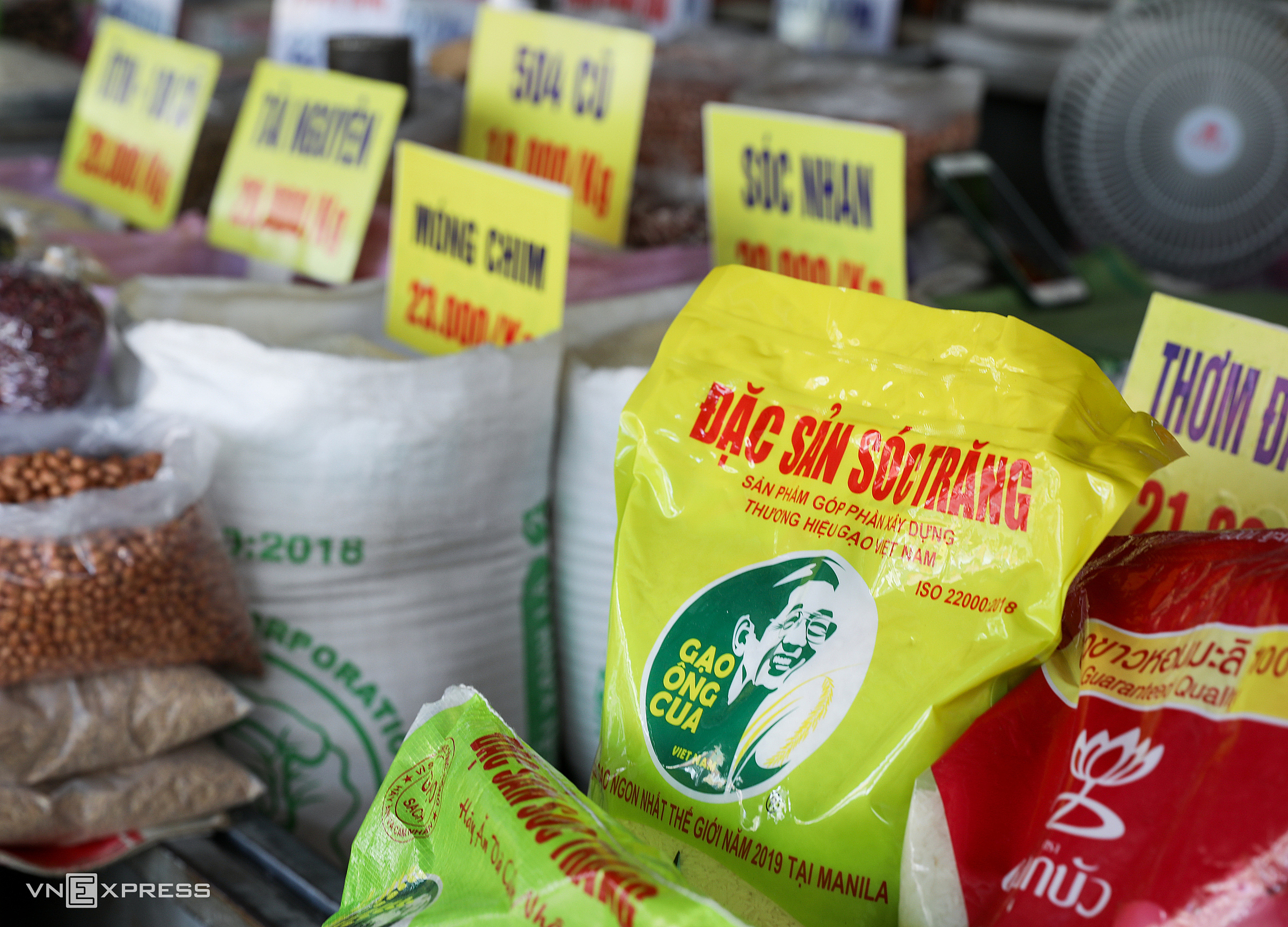 |
A rice store in Can Tho. *Photo: Thuy Tien* |
This trend stems from mounting global oversupply. For coffee, 2026 production is projected to exceed demand by about 10 million bags, as major producing nations anticipate bumper harvests. Brazil, the world's largest exporter, expects a significant increase in output from its mid-year harvest. Rising inventories on international exchanges are also prompting roasters to reduce purchases.
Nguyen Nam Hai, Chairman of the Vietnam Coffee and Cocoa Association (Vicofa), noted that the market is reacting to anticipated rapid supply growth, with demand showing no corresponding improvement. Financial and geopolitical factors also contribute to price volatility, as speculative capital exits the market following a period of sharp increases.
Price pressure extends beyond supply and demand to impact trade operations. High shipping and input costs make businesses cautious in transactions. Some companies reported that shipping rates to Europe have doubled, leading them to slow exports and weakening domestic purchasing demand.
The Vietnam Food Association attributes the decline in rice prices primarily to a surge in global supply and stagnant demand. Abundant harvests in several major producing countries, alongside the removal of export restrictions by some nations, have created market oversupply and intensified competition. Furthermore, key Asian importing markets are reducing or delaying purchases, adding to the downward price pressure.
Data from the US Department of Agriculture (USDA) for the 2025-2026 crop year forecasts continued abundant global rice supply, with high production levels maintained in major producing countries. This will intensify export competition and exert downward pressure on prices.
Broader analyses from international organizations confirm this trend. The Food and Agriculture Organization (FAO) projects global rice production for the 2025-2026 crop year to reach a record 563,4 million tons, a 2,1% increase.
While some markets, such as China, have increased purchases, this rise has not offset the overall downward price trend. The Philippines remains the largest customer, holding over one-half of the market share, but import prices are lower than previously.
In the short term, the outlook for both rice and coffee hinges on global supply and demand dynamics. Rice prices will likely remain low if supply stays abundant. For coffee, Quarter II will see continued pressure from Brazilian and Indonesian supply, while demand in the EU and US recovers slowly. Weather patterns, particularly the potential return of El Nino, could introduce a major variable, with more noticeable impacts expected from year-end.
Experts suggest that with declining average export prices for both coffee and rice, future export turnover growth will rely more on production volume, thereby limiting the potential to improve export value.
Thi Ha