During the meeting of the Steering Committee for Price Management on 9/10, Deputy Prime Minister Nguyen Van Thang observed that input material costs sometimes decreased, yet the selling prices of goods and services did not reflect these reductions.
He directed regulatory bodies to intensify inspections of price declarations and listings, particularly for essential items. Severe penalties are to be imposed on acts of speculation, hoarding, and price manipulation. Businesses are urged to promptly lower selling prices in line with reduced input material costs, thereby safeguarding consumer interests.
This directive comes as the average consumer price index for the first nine months of the year increased by 4,52% compared to the previous year, with core inflation rising by 4,26%, according to the Ministry of Finance. Market prices experienced an increase in Quarter I, a dip in Quarter II, and a subsequent rise in Quarter III. This fluctuation was driven by seasonal consumer demand, global fuel price volatility, and escalating input costs.
Entering Quarter IV, inflationary pressures remain a concern, stemming from risks in the energy market, potential supply chain disruptions, and increased public investment and consumer demand towards the year-end. The Ministry of Finance has outlined two inflation scenarios for this year, projecting increases of 4,5% or 4,8%. The State Bank of Vietnam forecasts an average rise of 4,5-5%, while international organizations estimate a range of 4,2-5,5%.
 |
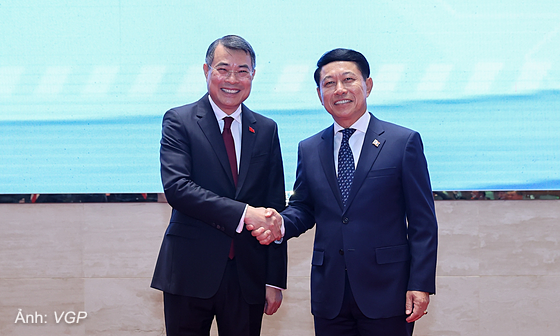
Deputy Prime Minister Nguyen Van Thang at the meeting of the Steering Committee for Price Management, 9/10. *Photo: VGP*
In light of these pressures, Deputy Prime Minister Nguyen Van Thang instructed ministries, sectors, and local authorities to closely monitor domestic and international developments. This vigilance is crucial for implementing timely inflation control measures. State-regulated prices for goods and services must be adjusted along a suitable roadmap, with careful assessment of their impact on the consumer price index and their role in supporting production and business.
Ensuring adequate supply is also critical to prevent additional price pressures. He directed the Ministry of Industry and Trade to closely monitor the energy market and guarantee the supply of petrol and oil, preventing any supply chain disruptions or hoarding. Regarding food and foodstuffs, the Ministry of Agriculture and Environment must proactively develop plans to secure supply, thereby limiting localized shortages that could trigger price fluctuations.
The Ministry of Finance will continue implementing policies for tax and fee exemptions, reductions, and extensions. These measures aim to lower business costs and support citizens. The State Bank of Vietnam will maintain flexible monetary policy management, coordinating with fiscal policy to mitigate the effects of imported inflation.
The health sector will refrain from increasing medical examination and treatment prices during the final three months of the year, a measure intended to help curb inflation.
Earlier, on 3/10, Prime Minister Le Minh Hung had called for no increase in electricity prices. He also directed efforts to ensure the supply of essential goods, intensify inspections, and address hoarding and speculation to stabilize overall price levels.
Beyond immediate solutions, the Deputy Prime Minister endorsed the Ministry of Finance's proposal to research and advise the government on assigning additional consumer price index control targets to localities, starting in 2027.
Following directives from the meeting, localities experiencing consumer price index increases above the national average must analyze the underlying causes and pinpoint product groups driving these rises. This analysis will inform appropriate management measures. Provinces and cities are also tasked with proactively stabilizing markets and ensuring adequate supply of goods during the rainy season and periods of heightened year-end consumer demand.
Thi Ha