Days after Iran's blockade of the Strait of Hormuz, two electric motorcycle dealerships in Pakistan, 1,400 km away, experienced an unexpected surge in customers. Haseeb Bhatti, who specializes in converting gasoline-powered motorcycles to battery-electric in Rawalpindi city, reported a 70% jump in sales last month.
Similarly, Ali Gohar Khan, owner of an electric motorcycle store operating for seven years, witnessed record sales. "People are worried they might not be able to afford gasoline in the near future", he said.
The Middle East conflict has driven global fuel prices upward, exacerbating inflation and post-pandemic economic recession in Pakistan. The country imports almost all its oil via the Strait of Hormuz and has 30 million gasoline-powered two- and three-wheelers, which are the dominant mode of transport.
Rumors of gasoline shortages spread, despite government assurances of supply. Following an 18% price hike last week, the average Pakistani household now spends 31% of its daily income on a liter of gasoline, according to data platforms Global Petrol Prices and Our World in Data.
"My monthly salary is 30,000 rupees (approximately 107 USD), barely enough to cover expenses for my family of six. How can I afford to fill my tank?", said Zahoor Ahmed, a security guard in Karachi city.
From commuters to university students, an increasing number of people are switching to electric vehicles. "Given the current inflation and fuel prices, I bought an electric vehicle myself", said Mehvish Qureshi, a lawyer in Hyderabad.
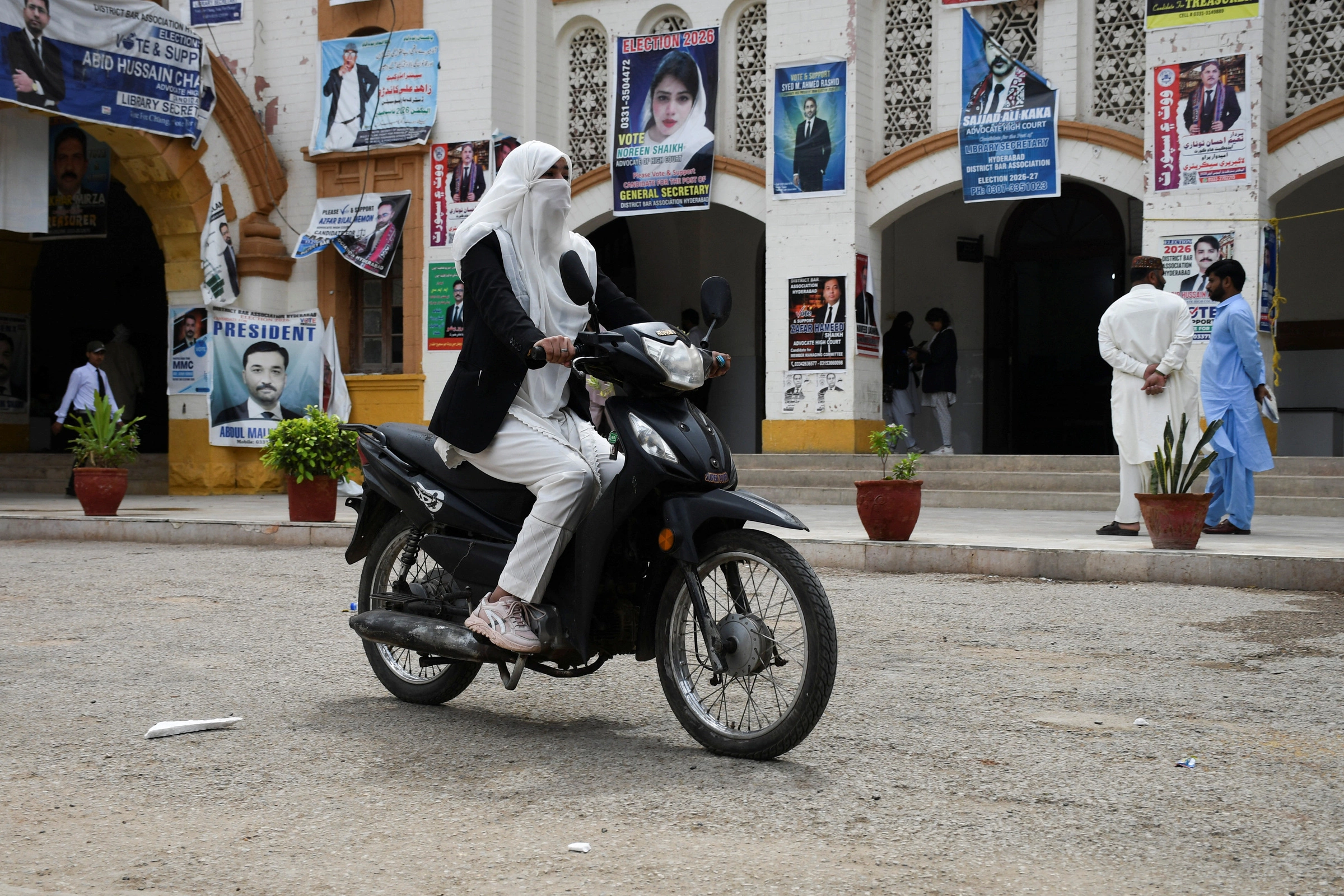 |
Mehvish Qureshi, 33, rides an electric motorcycle in Hyderabad, Pakistan on 2/4. *Photo: Reuters*
Last year, rising gasoline prices nearly tripled electric vehicle sales in Pakistan, reaching 90,000 units and accounting for 5% of total two-wheeler sales, according to data from consulting firm Renewables First.
This year, electric vehicles for the first time accounted for over 10% of monthly two-wheeler sales, according to Talha Khan, CEO of Orko. He predicts sales will accelerate further as fueling with gasoline could be 10 times more expensive than electric charging.
A typical electric motorcycle in the country costs about 250,000 rupees (895 USD) — more than half of Pakistan's annual per capita income and 56% higher than the popular Honda CD 70 gasoline model, priced at about 160,000 rupees (570 USD).
To stimulate demand, the government launched the Pakistan Automotive Electrification (PAVE) plan, effective from February, offering a 20% subsidy on the price of two- and three-wheeled electric vehicles and interest-free installments for the remainder.
Finance Ministry Advisor Adnan Pasha stated that approximately 270,000 applications have been received, nearly seven times PAVE's initial phase target, which is expected to conclude in June. In total, the government aims to subsidize 2 million electric vehicles within five years. "Electrifying just 2 million vehicles could save almost half a billion USD annually in fuel import costs", Pasha noted.
Abundant solar energy is also a favorable factor. Many families rapidly installed Chinese solar panels at home after electricity prices rose in 2023. Now, the government wants to leverage this boom to promote electric vehicles. "Using solar energy can reduce electricity costs at charging stations and make home charging more economical", Pasha said.
Ammar Habib, advisor to Pakistan's Energy Minister, believes electric vehicles are also "very good for the grid", as charging demand helps address surplus daytime solar power.
Chinese electric motorcycle brands like Yadea and Jinpeng, along with domestically assembled electric bicycles using batteries and components from AIMA and Sunra, are scrambling to meet demand. For automobiles, BYD has partnered with Pakistan's HUBCO Green to build charging stations. Pasha said the government plans to maintain a 45% reduction in electricity prices for this infrastructure.
Ahtasam Ahmad, head of energy finance at Renewables First, noted that a lack of charging station infrastructure and on-site technical expertise could hinder Pakistan's electric vehicle transition.
This expert believes electric vehicle brands in Pakistan need to strengthen their after-sales and maintenance networks, as the country's roads are often potholed. In neighboring India, electric motorcycles damaged from traveling on degraded roads are facing a shortage of repair facilities.
By Phien An (according to Reuters)