


On 26/1, ministers from 25 of the 27 EU member states approved regulations banning Russian gas imports at a meeting in Brussels. The bloc will officially end Russian liquefied natural gas (LNG) imports by the end of 2026 and pipeline gas by 30/9/2027.
The EU considers this new policy a significant milestone in achieving its goal of ending reliance on Russian energy, a commitment signed by leaders in the Versailles Declaration in 3/2022. Cyprus Minister of Energy, Commerce and Industry Michael Damianos stated that the EU energy market will be stronger, more flexible, and diverse. "We are moving away from a damaging dependence on Russian gas, taking a major step towards a self-sufficient Energy Union in a spirit of solidarity and cooperation," he declared.
Before authorizing gas imports, countries must verify the origin of goods. Non-compliance can result in penalties of at least 2.5 million euro for individuals and 40 million euro for businesses, or at least 3.5% of annual global revenue, or 300% of the estimated transaction value.
EU countries must develop national plans to diversify supply sources by 1/3 and identify potential challenges in replacing Russian gas. Businesses will need to inform national authorities and the European Commission about any valid Russian gas contracts.
The Russian gas ban was designed to pass by a majority vote, remaining in effect despite opposition from Hungary and Slovakia. These two countries rely heavily on Russian energy and wish to maintain close ties with Moscow. Hungary announced it would take the case to the European Court of Justice.
If a member state faces difficulties filling its gas storage facilities with non-Russian supplies before winter, the regulation allows for a delay in the import ban deadline until 1/11/2027 at the latest.
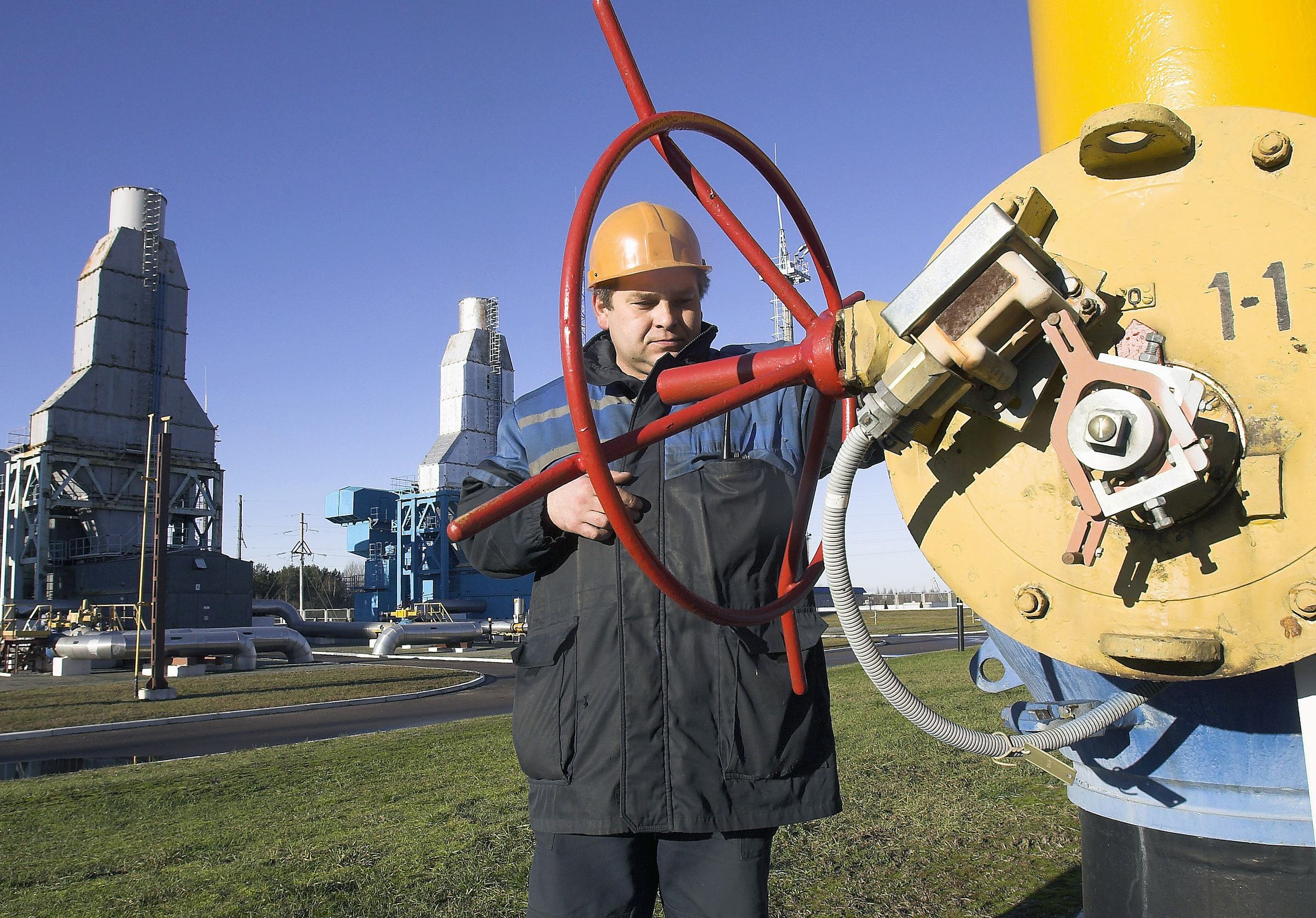 |
Workers at a gas compression station on the Yamal-Europe pipeline near Nesvizh. *Photo: Reuters*
Before the conflict in Ukraine, Russia supplied over 40% of the EU's gas. This share has dropped to about 13% by 2025, valued at over 15 billion euro annually, according to the latest EU data. The European Commission also expects to propose legislation to gradually phase out oil imports from Russia by the end of 2027.
By Phien An (according to Reuters, Council of the EU)


