According to a draft proposal from the European Commission (EC), public procurement projects for green technologies, such as batteries, wind power, solar power, and electric vehicles, must meet manufacturing standards within the region. Specifically, 12 months after the policy takes effect, storage batteries procured through tenders must be assembled within the EU. Additionally, battery management systems and other critical components must originate from within the bloc. The regulations will tighten after two years, requiring more core components, including battery cells, to be produced locally.
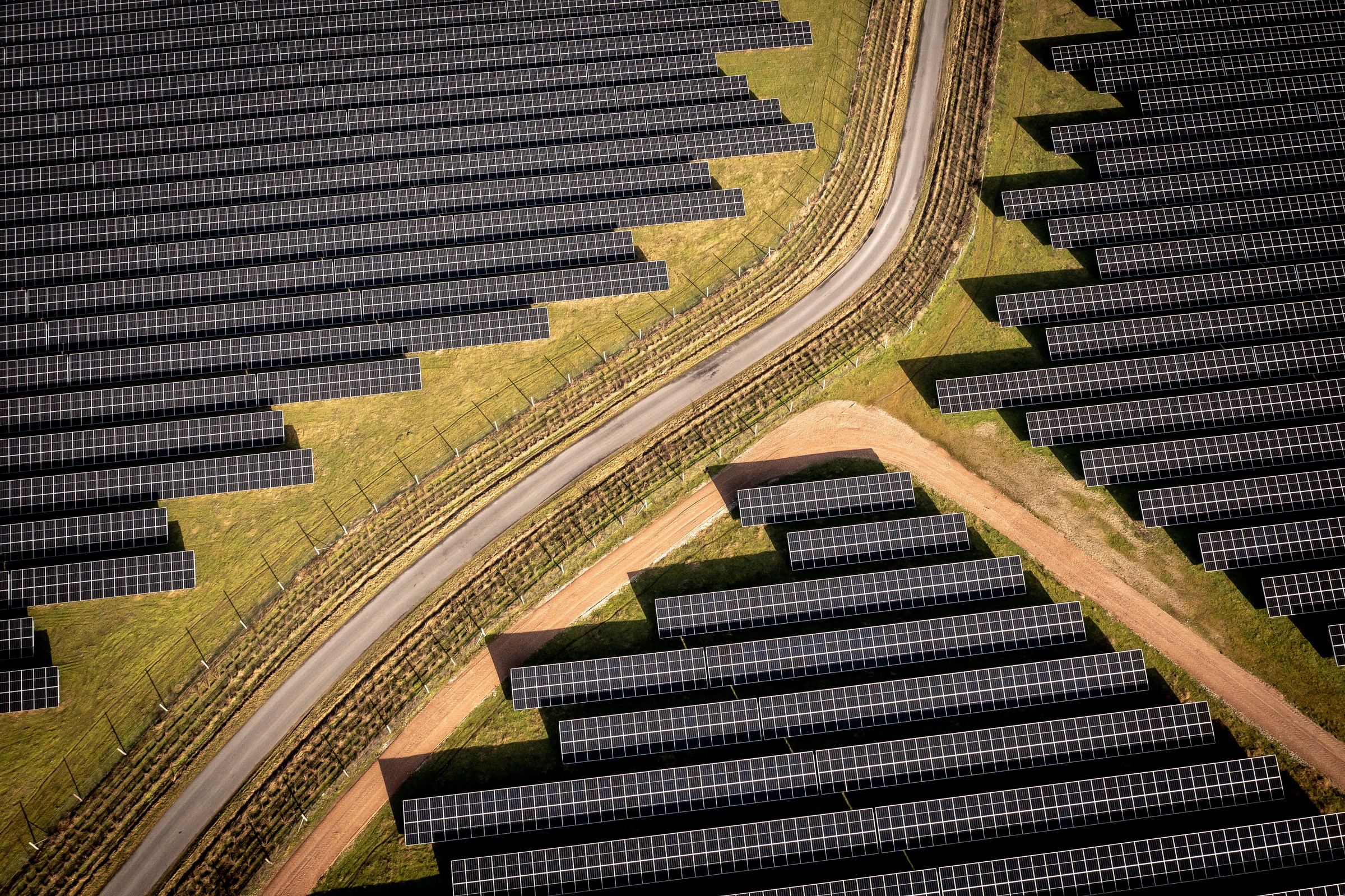 |
A solar energy park in Hjolderup, Denmark, on 21/2/2023. Photo: Reuters |
The proposal will also set a minimum percentage for low-emission industrial goods manufactured in the EU within public procurement contracts. Furthermore, electric cables and electric vehicle charging infrastructure must be produced in Europe. Foreign direct investments exceeding 100 million EUR (116 million USD) in strategic sectors will not be approved unless they meet new conditions regarding the use of European-made components and EU labor.
The detailed draft will be released next week, aiming to boost domestic industry and reduce reliance on China. China currently dominates battery and solar panel production and increasingly competes with Europe in wind turbine supply. The draft refers to this situation as a "strategic warning signal," noting that the EU's market share in the total value of global industry decreased from 20,8% to 14,3% between 2000 and 2020.
The bloc is striving to strengthen its industrial base amidst high energy costs, low-cost imports from China, and tariffs imposed by US President Donald Trump. "The EU must act strategically to strengthen its manufacturing base, long-term competitiveness, and ensure that the climate transition becomes a driver of prosperity, rather than leading to industrial decline," the draft states.
However, the "made in Europe" plan is causing division among member states. France is advocating for this policy, while Sweden and Czechia warn that it could inflate tender prices and undermine the bloc's competitiveness.
Phien An (according to Reuters)