


The EP's move follows recent escalating US-Europe tensions over Greenland. The European Parliament was scheduled to vote in the coming weeks on removing tariffs on US industrial goods, a key provision of the agreement.
The postponement does not mean the agreement has collapsed. However, this action sends a strong message of protest to the White House. EU parliamentarians believe this could cause concern among US businesses.
"This is a very strong leverage. I do not think businesses will accept giving up the European market", Valerie Hayer, chair of the centrist group of MEPs, told reporters.
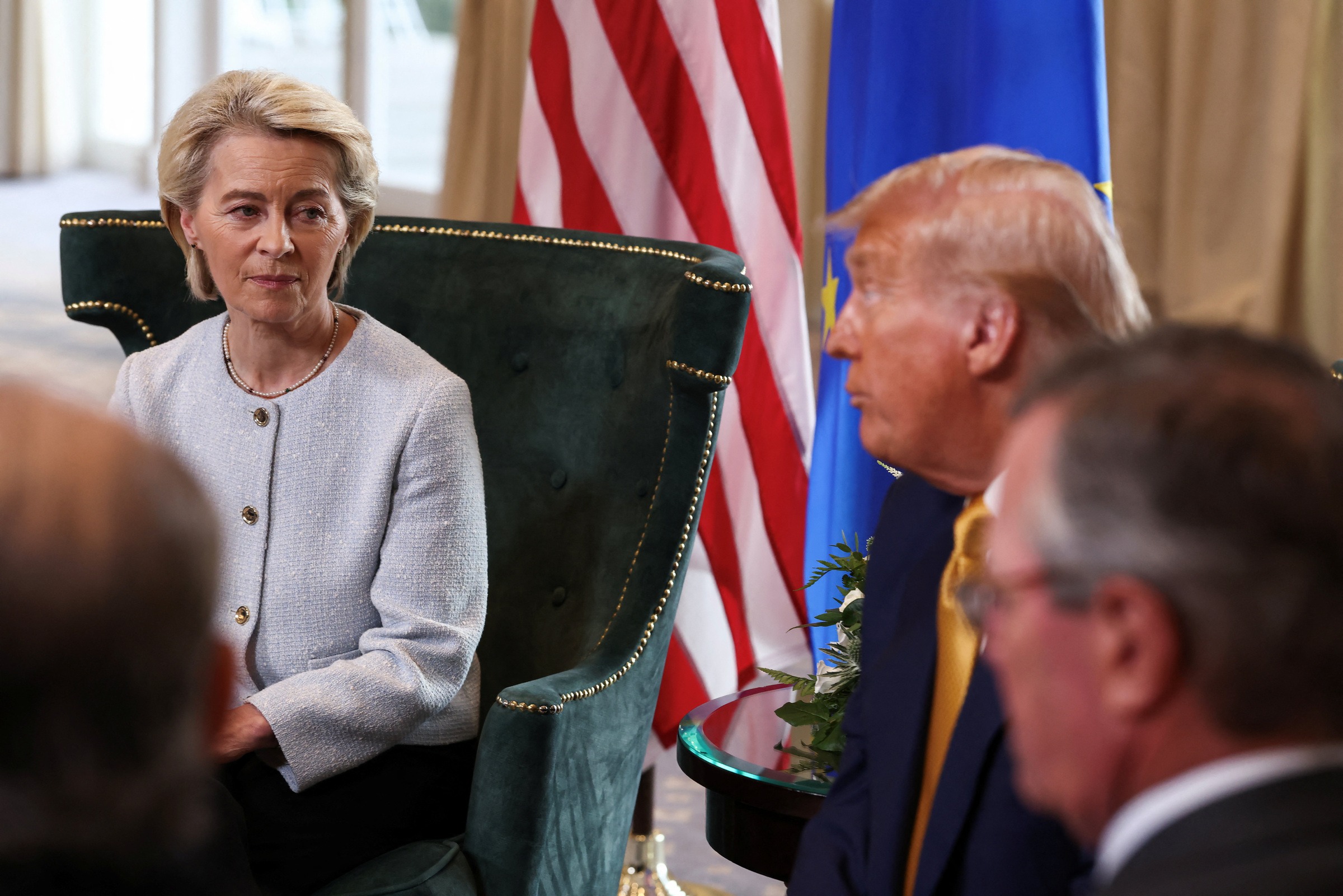 |
European Commission President Ursula von der Leyen sits with US President Donald Trump in Turnberry, Scotland, UK on 27/7/2025. Photo: Reuters |
European Commission President Ursula von der Leyen sits with US President Donald Trump in Turnberry, Scotland, UK on 27/7/2025. Photo: Reuters
Last week, President Trump threatened to increase import tariffs on eight countries over the Greenland issue. These countries include Denmark, Norway, Sweden, France, Germany, the UK, the Netherlands, and Finland. Six of these nations are EU members, including economic powerhouses like France and Germany. EU leaders are scheduled to hold an emergency summit in Brussels on the evening of 22/1 to discuss the situation.
The EU is considering various response options if President Trump does not withdraw his threat, such as suspending the trade agreement and imposing retaliatory tariffs on 93 billion euros (108 billion USD) worth of US goods. This tariff option was agreed upon last year when EU-US trade tensions peaked, but was later postponed until 6/2 to avoid a full-scale trade war.
Additionally, French President Emmanuel Macron is advocating for the activation of the EU's anti-coercion instrument (ACI), also known as the "trade bazooka". However, this instrument has never been used and could lead to significant economic and political consequences.
Ha Thu (according to AFP)


