This information was shared by Lukas Toman, Head of Information Technology Security at Home Credit Vietnam, at the World Financial Innovation Forum (WFIS 2026) on 19/5. He noted that many organizations are accelerating the adoption of new technologies to address cybersecurity risks. However, implementing solutions based on trends without a suitable strategy can introduce additional vulnerabilities into systems.
Artificial intelligence (AI) is a key priority in information security, but should not be the sole focus. "Each business operates with a different model. Organizations should not just focus on AI because everyone else is doing it; they need to determine if their current approach is truly appropriate," he stated.
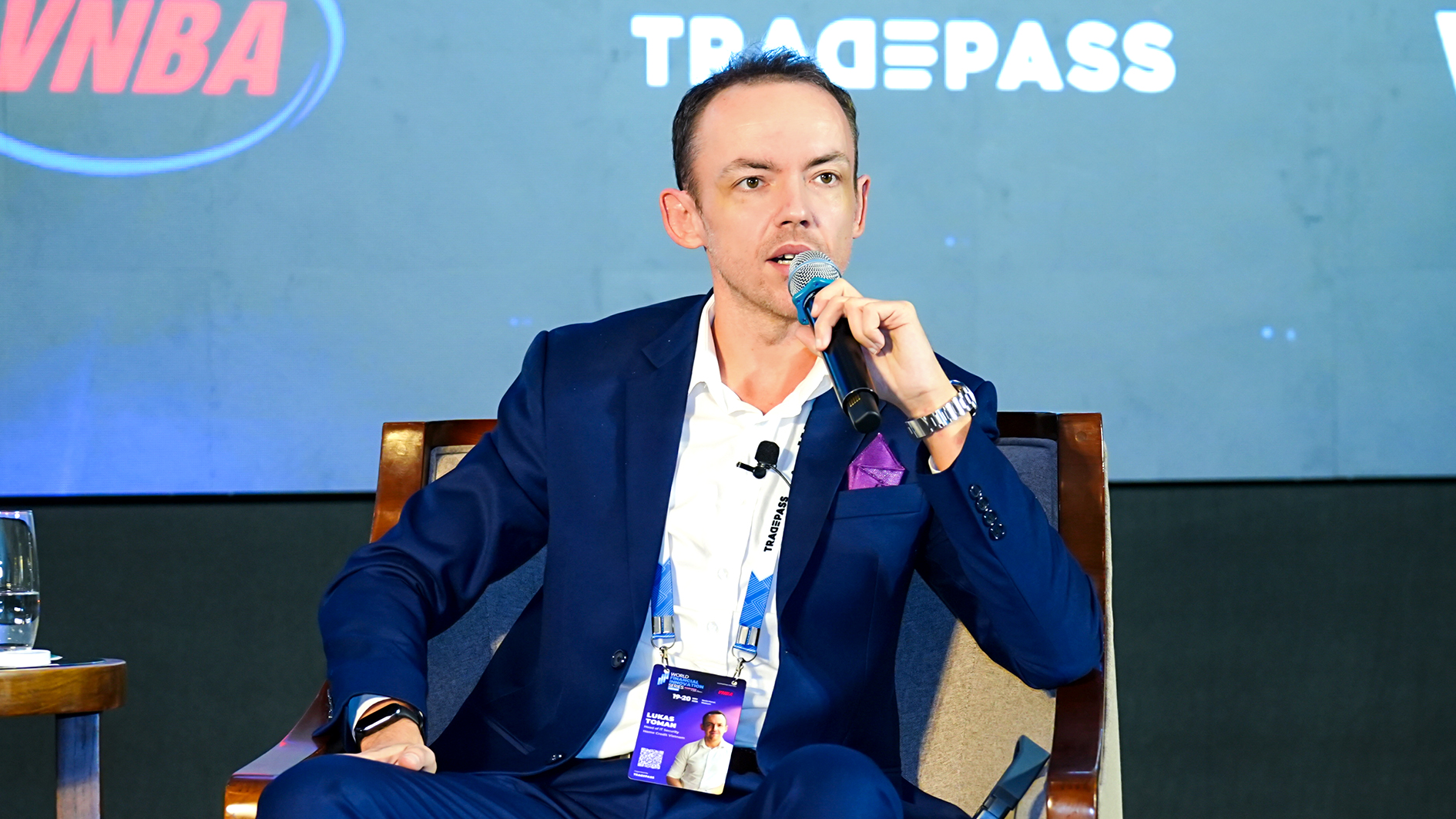 |
Lukas Toman, Head of Information Technology Security at Home Credit Vietnam. Photo: Home Credit
A Home Credit Vietnam representative emphasized that security strategies in the financial sector must begin by identifying core risks, recognizing critical assets, and assessing security gaps. Instead of creating a fixed, multi-year plan, businesses need to continuously review risks monthly or quarterly to update appropriate defense measures.
According to the expert, the infrastructure migration to cloud computing is creating additional technical risks for many financial institutions.
Lukas Toman stated that deploying hybrid cloud or multi-cloud models can lead businesses to lose comprehensive system visibility if they continue to apply traditional security management methods from physical environments.
"Many organizations have 'blind spots' in system management because they have not developed monitoring models suitable for cloud environments," the Home Credit representative said.
Furthermore, businesses also face challenges in identity management and access control. Some accounts are granted more privileges than actually needed, increasing the risk of system disruption from intentional or unintentional actions.
 |
Illustrating organizations and businesses continuously facing cyberattacks recently. Photo: Home Credit
Data governance risks also increase when information is synchronized across multiple cloud platforms but lacks strict control or does not fully comply with legal regulations.
"Before considering the speed of development on the cloud, businesses need to ask whether the implementation is correct and compliant with regulations in Vietnam," Lukas Toman remarked.
Sharing Home Credit Vietnam's experience, Lukas Toman suggested that the correct approach is always based on actual risks: clearly identifying which assets need protection, preparing for vulnerable attack scenarios, and prioritizing investment in areas that mitigate damage, rather than just chasing the latest technologies.
At the event, experts stated that technology only solves part of the cybersecurity challenge. The rest depends on the organization's management capabilities, personnel quality, and operational processes.
To mitigate risks, financial institutions need to build redundant systems and data backups, and regularly conduct incident response drills to prepare for increasingly complex cyberattack scenarios.
 |
Security and information security experts attending the World Financial Innovation Forum. Photo: Home Credit
The event took place amid a growing number of sophisticated and targeted cyberattacks. According to the Vietnam Information Security Risk Report 2025 by Viettel Cyber Security (VCS), the Viettel Threat Intelligence system recorded over 11.800 phishing domains, a 1,8-fold increase compared to 2024. The unit also issued 129 warnings about vulnerabilities with potential major impact on organizations in Vietnam.
Thai Anh