On 18/3, the Japan Petroleum Information Center reported that the average gasoline price in the country reached 190.8 yen (1.2 USD) per liter as of 16/3, marking a record high.
This figure represents an increase of approximately 18% compared to the previous week, marking the fifth consecutive week of rising gasoline prices in Japan.
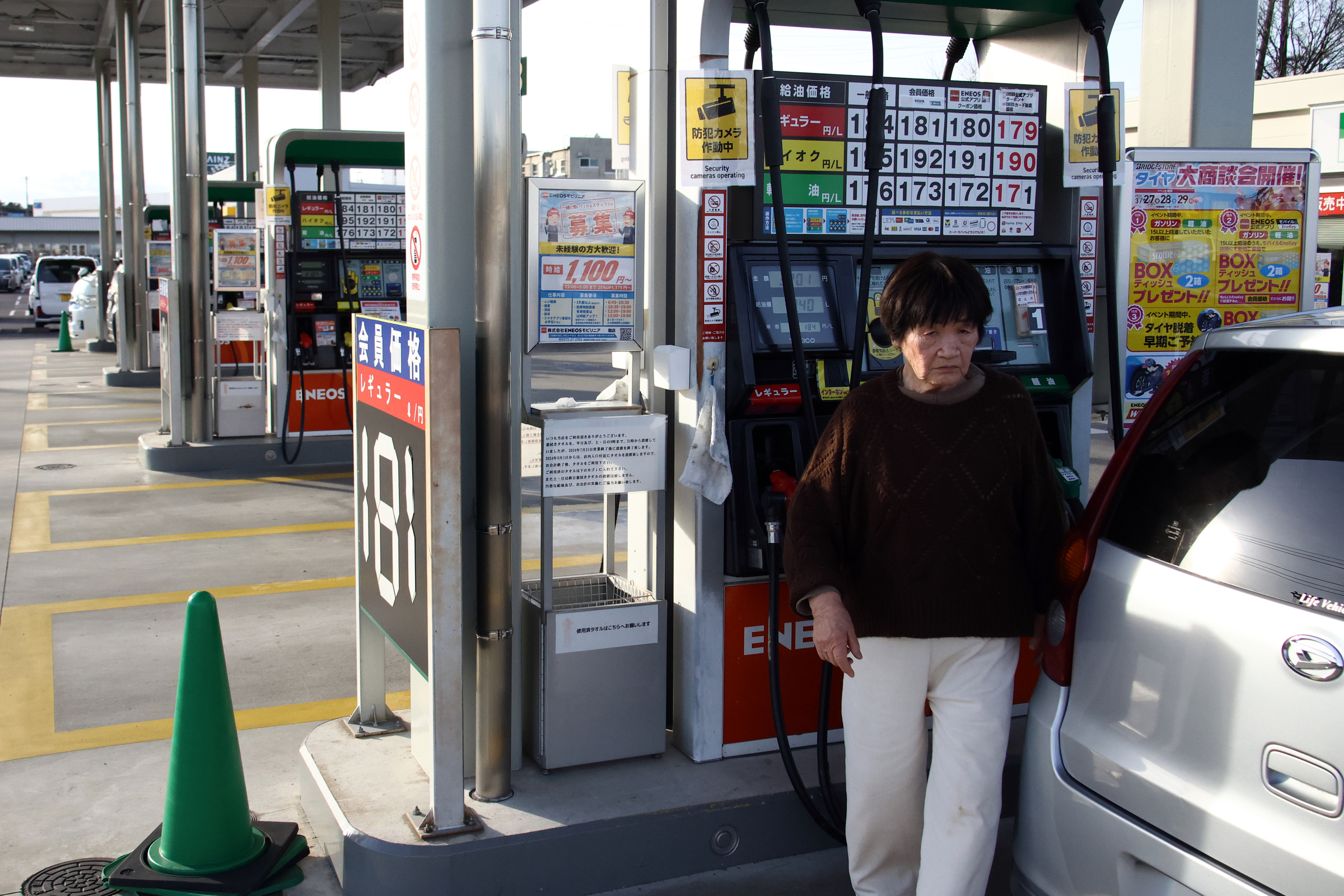 |
A woman refueling her car in Chuo (Tokyo, Japan), 15/3. Photo: Reuters |
The Japanese government plans to implement a subsidy program aimed at maintaining retail gasoline prices around 170 yen per liter. Starting 20/3, fuel suppliers will receive a subsidy of 30.2 yen per liter.
Last week, Japanese Prime Minister Sanae Takaichi announced this measure. The government anticipated that gasoline prices could surpass 200 yen per liter, necessitating the use of the support fund. The effects of the subsidy program are expected to be visible at gas stations within approximately 1-2 weeks.
Japan imports approximately 95% of its crude oil from the Middle East, with 70% transiting through the Strait of Hormuz. The nation also stands as the world's second-largest purchaser of liquefied natural gas (LNG), with 11% of its supply originating from the Middle East.
Despite crude oil reserves equivalent to 254 days of consumption and corporate LNG supplies sufficient for 3 weeks, Prime Minister Takaichi's government activated urgent response measures in anticipation of Middle East tensions. Previously discussed government actions included subsidizing gasoline and diesel costs, along with electricity and gas bills for both businesses and households.
Last week, the Japanese government also pledged to release 80 million barrels from its strategic oil reserves. This measure aims to reduce the impact of the Middle East conflict on domestic fuel prices. Additionally, domestic refineries were urged to utilize the released fuel to ensure a stable supply for the local market.
Ha Thu (via NHK, Reuters)