Market analysis firm Benchmark Mineral Intelligence (BMI) released data on 12/12, indicating a slowing growth rate in electric vehicle sales.
In November, China's electric vehicle sales hit 1,3 million units, a 3% increase, the lowest year-on-year growth since early last year. As the world's largest market, China accounts for over half of global sales. Beijing's decision to remove electric vehicles from its strategic industry list and reduce subsidies by year-end is expected to impact overall consumer sentiment.
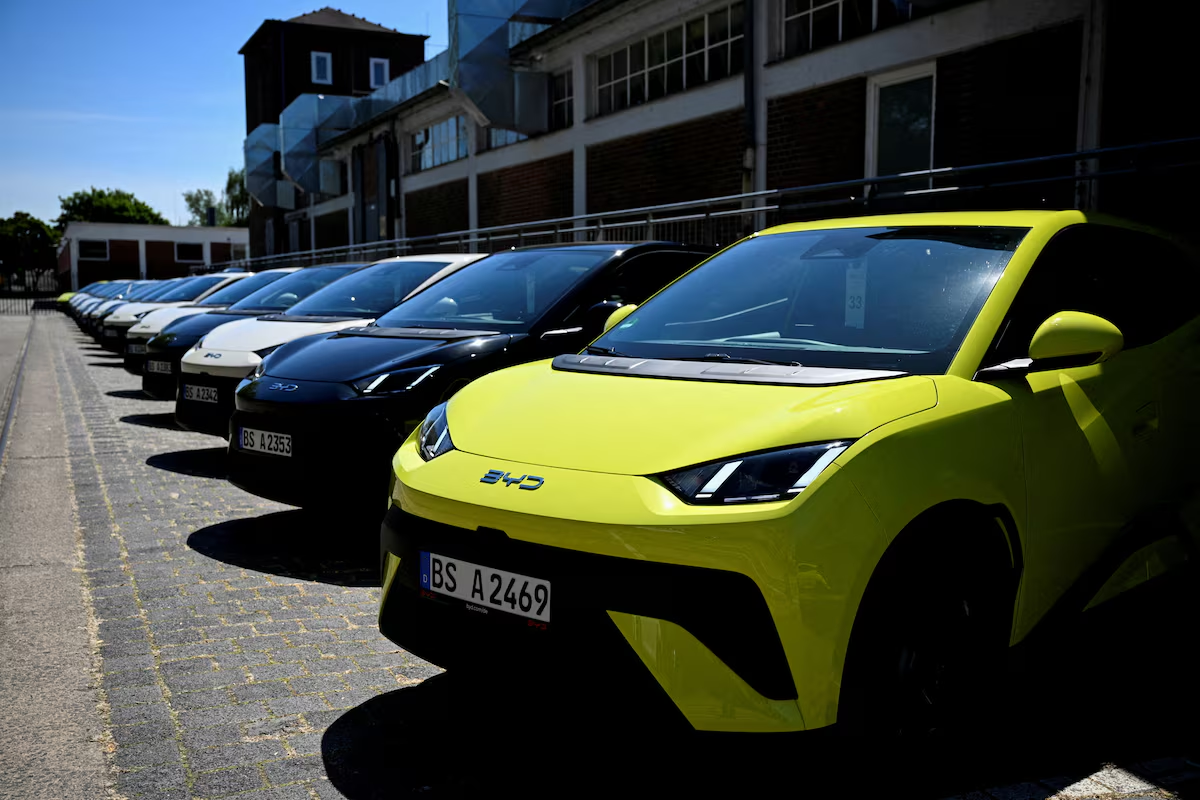 |
The BYD Dolphin Surf electric vehicle at the company's launch event in Berlin, Germany, 21/5. Photo: Reuters |
The BYD Dolphin Surf electric vehicle at the company's launch event in Berlin, Germany, 21/5. Photo: Reuters
North America continued its sharp decline from October, with electric vehicle registrations falling 42% to just over 100,000 units. This trend aligns with predictions from many automakers, following the Donald Trump administration's decision to halt incentives for these vehicles.
In contrast, Europe recorded a 36% increase, reaching 400,000 vehicles. Strong growth in battery electric vehicles and plug-in hybrid electric vehicles continued, driven by incentive programs in many member states. France's market is recovering after several months of stagnation caused by government subsidy reductions in early 2025.
Italy achieved record sales with nearly 25,000 units in November, following the launch of a program offering up to 12,000 USD to citizens who switch from gasoline to electric vehicles. To date, the program has allocated 597,3 million EUR (approximately 700 million USD), projected to replace about 39,000 fossil fuel vehicles.
Despite these monthly fluctuations, cumulative sales for the full year 2025 show China's market growing by 19% to 11,6 million vehicles, pushing global sales to 18,5 million, a 21% increase.
BMI forecasts continued growth in electric vehicle demand, albeit at varying rates, largely shaped by policy support. China and the United States remain two significantly volatile markets. 2026 is poised to mark the end of the electric vehicle incentive era, as these vehicles will begin to incur a 5% purchase tax.
Meanwhile, sales in the United States are projected to continue declining. Charles Lester, BMI's data manager, stated, "Tax credit policies significantly impact the market."
Last week, Mr. Trump reduced the corporate average fuel economy (CAFE) standards to 34,5 miles per gallon (equivalent to 6,82 liters per 100 km), down from 50,4 miles per gallon (4,67 liters per 100 km). This change means an average car can now travel 100 km on 6,82 liters of gasoline, rather than the 4,67 liters mandated by the previous administration.
The European Union (EU) is also expected to backtrack on its electric vehicle targets. Next week, the EU plans to unveil a support package for the automotive industry, which includes easing the ban on gasoline cars by 2035.
Bao Bao (according to Reuters, BMI)