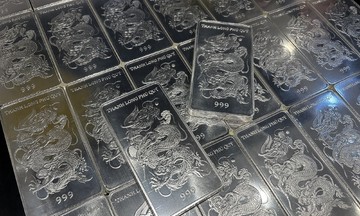
By 19h30, spot global gold prices had fallen 210 USD to 4.606 USD per ounce, marking its lowest level since early february. Silver also experienced a sharp decline, dropping 6,4 USD, or more than 8%, to 68,8 USD per ounce, its lowest since 6/2. On 18/3, silver had already lost 4 USD, falling to 75 USD per ounce.
The precious metals faced pressure as the dola strengthened and US government bond yields rose. Concurrently, the United States Federal Reserve (Fed) maintaining interest rates made gold less attractive to investors seeking yield elsewhere.
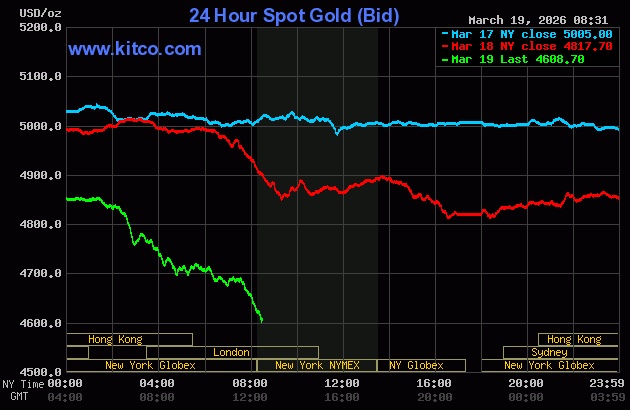 |
Global gold prices plummeted for two consecutive sessions. Chart: *Kitco* |
"Gold plummeted for the second consecutive session after falling below the important 5.000 USD support level, driven by a stronger greenback and hawkish statements from Fed Chairman Jerome Powell," said Ole Hansen, Director of Commodity Strategy at Saxo Bank.
Central banks in My, Canada, and Japan this week all expressed hawkish views, fearing that rising energy prices could spark a new wave of inflation. The European Central Bank (ECB) was also expected to maintain interest rates at its meeting on 19/3. However, the ECB also indicated its readiness to raise rates if conflict in the Trung Dong causes eurozone inflation to surge.
Brent crude oil prices on 19/3 surpassed 115 USD per barrel, due to attacks by Israel and Iran on energy facilities in the region. Rising oil prices could push inflation higher. Although gold is a hedge against inflation, elevated prices will make central banks hesitant to cut interest rates, thereby reducing gold's appeal.
However, many analysts remain confident in gold prices. "Geopolitical risks will persist and act as a strong catalyst for gold prices. Therefore, despite short-term adjustments, prices could still reach 6.000 USD by the end of this year," stated Nitesh Shah, a strategist at WisdomTree.
Ha Thu (according to Reuters)